
The conversion of the Tejas Express into a "Sprite Train" illustrates a strategic attempt to make a brand synonymous with the infrastructure it occupies daily. This evolution reflects a broader trend where companies are no longer satisfied with mere visibility; they seek to integrate their visual

Commuters at the Grand Central-Times Square shuttle are currently encountering a massive advertising takeover that swaps luxury imagery for technical transparency about tequila production. Instead of the usual high-gloss depictions of celebrity parties or sprawling agave fields, the walls are

The vibrant streets of Mumbai and Delhi have long been a canvas for massive out-of-home (OOH) displays, yet for many years, advertisers remained skeptical about the true return on investment for these high-cost installations. This skepticism stems from a historical reliance on opaque measurement
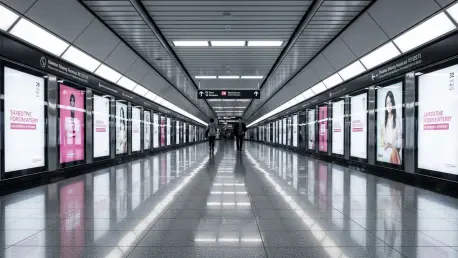
The sheer ubiquity of personal screens has paradoxically restored the prestige of the physical environment, making the skyline and the subway station the most vital stages for modern brand narratives. In the current media landscape, Out-of-Home (OOH) advertising has evolved from a medium of passive

The sidewalk you walk upon and the transit stations you frequent are no longer just pathways; they have become the most significant high-tech data points in the global advertising ecosystem. The global Out-Of-Home (OOH) advertising market is currently navigating a pivotal era of transformation,

The historical reliance on static billboards and mass-market visibility is currently being dismantled by a sophisticated ecosystem where physical advertisements function as responsive digital interfaces tailored to individual consumer identities. This shift from broad broadcasting to identity