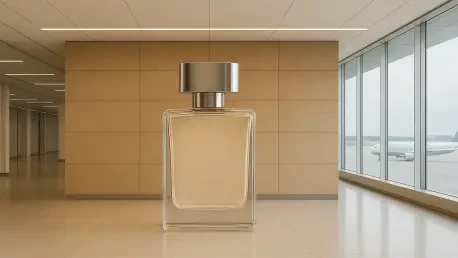

Coordinated efforts between technical teams and airport management were necessary to navigate the safety challenges of installing massive hanging structures in a live aviation environment. This ambitious project, a partnership between JCDecaux Oman, Oman Airports, and the high-perfumery house Amouage, marks a significant shift in how luxury brands engage with travelers in 2026. Rather than relying on traditional billboards, the collaboration has transformed Muscat International Airport into a curated sensory space that reflects Omani heritage. By integrating physical architecture with brand storytelling, the initiative creates a deep narrative journey for passengers moving through the Sultanate’s primary gateway. This approach signifies an evolution from simple advertising to an immersive environment where every touchpoint, from the entrance doors to the massive terminal installations, reinforces a premium identity rooted in the natural beauty and historical significance of the region’s unique geography. The project ensures Amouage remains at the forefront of luxury perfumery while significantly enhancing the visual landscape for millions of international passengers.
Architectural Integration: Crafting an Authentic Narrative
The aesthetic heart of this activation lies in the seamless fusion of the Amouage visual identity with the airport’s physical structure. For many years, airport advertising was confined to flat screens and static posters, but this installation utilizes the literal boundaries of the terminal to tell a story. The entrance and exit doors of the airport are now wrapped in specialized branding inspired by the Omani landscape, utilizing textures and colors that mimic rammed earth. This specific material language is a direct nod to traditional Omani building techniques and the rugged geology of the desert. By using these earthy palettes, the brand creates an immediate sense of place for international visitors, grounding the luxury product in its physical origin. This strategy ensures that the brand is not just seen but experienced as an integral part of the arrival and departure sequence, making a high-impact impression on travelers who value authenticity. The design does not compete with the airport’s architecture; instead, it enhances it, turning transit spaces into atmospheric galleries.
By embedding the brand within the literal entry and exit points of the country, the partnership ensures that the luxury house becomes a core component of the passenger’s physical movement through the space. This strategic placement addresses the reality of high-traffic environments where attention is often fragmented and fleeting. When travelers interact with the branding at the very moment they enter or leave the country, it solidifies a connection between the Sultanate’s identity and the perfumery’s prestige. This is particularly effective in a hub like Muscat, which serves as a vital transit point for high-net-worth individuals who seek cultural depth and premium experiences. The transition from a functional gateway to a branded environment allows the airport to promote national excellence through homegrown luxury. This shift represents a broader trend in 2026 toward experiential marketing that respects and elevates the host environment rather than simply occupying it. By focusing on quality of expression, the activation adds aesthetic value that makes the transit process feel like a premium cultural encounter.
Engineering Excellence: Technical Sophistication in Terminal Environments
Beyond the visual surface, the campaign represents a remarkable achievement in modern engineering and industrial design. The centerpiece consists of two monumental hanging installations, each weighing approximately 1,900 kilograms, or over 4,000 pounds. Suspending such massive loads over high-traffic terminal floors required a rigorous operational marathon that standard advertising projects rarely face. Bespoke engineering solutions were developed to manage the structural integrity of these hanging pieces, ensuring they remain secure while appearing weightless and elegant. This level of technical sophistication demonstrates that modern airport advertising in 2026 is no longer just about graphic arts; it is an exercise in structural calculation and architectural safety. The precision required for such a feat highlights the maturing relationship between luxury brands and specialized media providers who can execute large-scale, complex physical installations without disrupting the critical daily operations of a major international aviation hub. It proves that ambitious creative visions can be realized within the strictest frameworks.
The delivery of these massive structures involved a high level of logistical coordination between technical teams and external structural specialists. To verify the ceiling’s load-bearing capacity, rigorous mathematical modeling was employed before any physical work began. A dedicated Health, Safety, and Environment officer oversaw every phase of the project to ensure that all activities met the highest global standards for safety and compliance. This focus on engineering excellence is particularly vital in a live aviation environment where security and passenger safety are paramount. By navigating these complexities, the partners proved that sophisticated design requires equally sophisticated support systems. This commitment to technical mastery is now a prerequisite for high-end brand activations, as it allows for the creation of awe-inspiring physical landmarks that would have been deemed too risky in previous years. Such projects set a new standard for what is possible in transit-based branding, moving the industry toward a future where physics and art are inseparable in the public eye.
Strategic Synergy: The Glocal Philosophy and Future Retail
The success of this collaboration is largely attributed to a glocal philosophy, which combines global operational expertise with a profound understanding of local cultural nuances. JCDecaux has emphasized that the most impactful projects occur when international standards of quality are applied to a specific cultural context. For a brand like Amouage, which is increasingly recognized as a global leader in high perfumery, this activation provides a platform to maintain its international prestige while celebrating its Omani roots. Travel retail has become a vital point of discovery in 2026, but luxury houses remain highly selective about their locations. Muscat International Airport is uniquely positioned within this strategy because it provides a context where the brand’s origin has maximum relevance. The scale of the installation allows for a complete brand experience that is often missing in more cluttered environments, ensuring that the luxury narrative remains coherent and sophisticated throughout the entire duration of the traveler’s stay in the airport.
In the end, the partnership successfully redefined the boundaries of brand storytelling within the travel sector. The collaboration demonstrated that when airports prioritize quality of expression over simple monetization, they can significantly enhance the national identity of a country’s gateway. Moving forward, other global transit hubs should look to this model as a template for integrating cultural heritage with premium commercial interests. Future projects must prioritize the use of sustainable materials that mirror local environments while investing in the engineering capabilities required for large-scale physical art. The activation showed that the modern traveler seeks more than just a retail opportunity; they desire a meaningful cultural encounter. By combining creative ambition with technical precision, the teams involved ensured that the essence of Oman was communicated through every detail of the journey. This approach not only strengthened the brand’s position in the luxury market but also set a benchmark for how integrated experiences will shape the future of international travel retail environments.