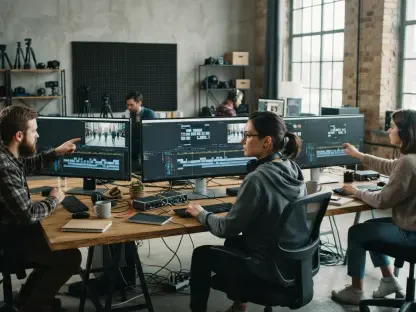

Audio quality has become a primary conversion lever, with voice cloning and high-fidelity narration often proving as important as the visual content itself. This shift marks a significant departure from the era of silent autoplay videos, as modern consumers increasingly engage with content that offers a complete and immersive sensory experience. In 2026, the digital advertising landscape has transitioned from a focus on single, high-production masterpieces to a relentless demand for high-volume, hyper-targeted creative assets. Marketing teams now face intense pressure to produce dozens of variants weekly while maintaining strict brand safety across diverse platforms like TikTok, Meta, and YouTube. The challenge is no longer just creating a quality video, but ensuring it is functional and instantly adaptable to various aspect ratios, from 9:16 vertical clips for mobile consumption to 16:9 cinematic pre-rolls for desktop and television.
To meet these modern demands, the market has bifurcated into two distinct categories: general-purpose AI generators adapted for commercial use and ad-native platforms optimized for specific performance metrics. These specialized tools utilize direct product URL ingestion and digital human avatars to streamline production workflows, allowing brands to scale without sacrificing the creative nuance that drives consumer engagement. This guide explores the top ten tools currently bridging these needs, ranked by their efficiency, versatility, and proven ability to drive conversions in a competitive digital space. By applying a rigorous testing framework based on the six pillars of marketing video production, including product-to-video workflows and the efficiency of exporting multiple aspect ratios simultaneously, businesses can identify which platforms offer the most strategic value for their unique operational requirements.
Top-Tier Platforms for Professional Results
Versatile All-Rounders and Specialists
DramaPixel stands out as a premier choice for 2026 by merging high-end cinematic capabilities with pragmatic marketing workflows that prioritize both speed and aesthetic quality. It utilizes elite models to allow teams to produce both aesthetic beauty shots and high-performance ads within a single interface, eliminating the need to jump between different software suites. A standout feature is the Visual Remix tool, which enables creators to take a single reference image and generate endless stylistic variants while maintaining the core composition of the shot. It also caters to social media trends by offering niche tools, such as character creators for high-engagement meme content, ensuring that brands can remain relevant in the fast-moving cultural zeitgeist. By bridging the gap between raw generative art and specific advertising requirements, DramaPixel provides a cohesive ecosystem where brand managers can oversee the entire creative lifecycle from a single dashboard. This integration is vital for maintaining visual consistency across multiple campaigns while still allowing for the rapid experimentation needed to capture attention in saturated feeds.
Pippit AI acts as the leading specialist for the fast-paced world of e-commerce and TikTok Shop, focusing primarily on utility and speed rather than pure artistic expression. Its primary strength lies in its URL-to-video capability, where pasting a product link allows the AI to identify key features and build a data-driven advertisement automatically. While it may lack the artistic flexibility of more cinematic tools, its integration with the CapCut ecosystem and its short-drama narrative templates make it an essential asset for high-volume sellers targeting younger demographics. This tool effectively automates the hook-body-CTA structure that defines successful social commerce, removing the friction between product listing and video deployment. The efficiency gain is substantial, as teams can now launch dozens of product-centric ads in the time it previously took to script a single concept. By leveraging real-time data from product pages, Pippit AI ensures that every generated asset is technically accurate and optimized for the specific algorithms governing modern retail platforms. The platform also includes native scheduling features, allowing marketers to move directly from production to publication without leaving the environment.
Leaders in Digital Human Realism
When a campaign requires a human face to build rapport, HeyGen remains the industry standard for photorealistic digital avatars, providing a level of realism that was nearly impossible just a few years ago. Its advanced technology produces industry-leading lip-sync accuracy, making it a favorite for founder-led brands and software-as-a-service companies that rely on a personal touch to explain complex value propositions. It is particularly powerful for international marketing, as its voice cloning and multi-language dubbing features allow a single spokesperson to speak over 40 languages fluently. This removes the need for multiple actors or expensive localized shoots when scaling a brand globally, drastically reducing the overhead associated with entering new markets. The 2026 iteration of these avatars includes subtle non-verbal cues and micro-expressions that eliminate the uncanny valley effect, fostering genuine trust between the brand and the viewer. Consequently, marketing departments can deploy spokesperson-led content across different regions simultaneously, ensuring that the brand voice remains consistent while the spoken language perfectly adapts to the local audience.
ElevenLabs serves as the essential audio foundation for modern video marketing, providing the most realistic voice cloning available on the market today. While primarily known for audio, its integration with various video models in 2026 allows for a complete creative suite where the soundscape drives the narrative just as much as the visuals. Marketers often use it as a supplementary tool, generating high-quality visuals in one platform and layering in the high-fidelity narration of ElevenLabs to ensure a professional polish that generic AI voices cannot match. Since audio is a primary conversion lever, this tool is vital for localization and influencer-style ads where the tone and cadence of the voice must be perfect to resonate with the target demographic. The ability to manipulate vocal emotion and pacing means that a single script can be voiced with variations ranging from high-energy sales pitches to calm, instructional walkthroughs. This versatility is crucial for A/B testing different narrative styles, allowing creators to identify exactly which vocal characteristics lead to higher click-through rates and customer retention in a crowded digital marketplace. The tool also provides seamless integration with video editing suites, making the final assembly process both intuitive and fast.
Specialized Tools for Creative Experimentation
Aggregators and Entry-Level Suites
Pollo AI functions as a central hub, giving marketers access to various underlying AI engines through a single, streamlined interface that simplifies the complexity of the generative landscape. This makes it an excellent tool for performance marketers who want to A/B test which specific AI model resonates best with their audience without managing multiple subscriptions or logins. It focuses heavily on batch generation and social-first templates, allowing for the rapid production of creative clusters designed for different user segments. While it lacks native avatar generation, its ability to serve as a middle ground between manual work and total automation is a significant advantage for agencies handling diverse clients with varying aesthetic preferences. By aggregating the strengths of different models, Pollo AI allows users to select a cinematic engine for one scene and a high-speed animation engine for another, combining them into a cohesive final product. This modular approach to video creation reflects the 2026 trend toward model agnosticism, where the specific technology used matters less than the speed and quality of the final output.
Magic Hour provides a user-friendly environment tailored for smaller teams that are not yet operating at a massive scale but still require professional-grade results. It features a robust face-swap workflow, which is highly effective for creating diverse user-generated content variants from a single video source, allowing a brand to appear as though it has a wide range of influencers. Although it lacks the advanced URL ingestion of its larger competitors, its built-in editor allows for the manual assembly of multi-clip ads, making it a viable all-in-one solution for teams needing a balanced, accessible toolset. This platform lowers the barrier to entry for small businesses, enabling them to produce content that rivals the quality of much larger competitors. Its focus on simplicity ensures that a marketing generalist can produce a high-quality video without needing the technical expertise of a professional editor. By prioritizing a creative playground atmosphere, Magic Hour encourages experimentation with different hooks and visual styles, which is essential for discovering what works in the ever-changing landscape of social media algorithms. The platform’s affordability and ease of use make it the go-to choice for startups looking to establish a strong video presence quickly.
Narrative and Technical Content Creation
ImagineArt utilizes specialized AI agents to automate repetitive creative tasks, such as generating b-roll or producing consistent stylistic variants across a multi-channel campaign. This makes it ideal for marketers who need a cohesive look across both static display ads and high-motion video placements, ensuring that the brand identity is never diluted. In contrast, MakeShot caters to professional editors by providing high-quality raw footage in 1080p, functioning as a supplier of elite clips rather than a finished ad generator. This distinction is important for teams with established post-production workflows who need high-fidelity source material to edit manually into complex sequences. While ImagineArt focuses on the automation of the entire creative process, MakeShot emphasizes the technical quality of the individual assets. Both tools represent different sides of the 2026 creative spectrum: one prioritizing the efficiency of the big picture and the other focusing on the granular details that define professional-grade cinematography. Together, they offer solutions for brands that either want to automate their entire visual output or simply augment their existing video production pipelines with high-end generative content.
DeeVid AI focuses on the narrative pipeline, moving seamlessly from script to storyboard to finished video with a level of structural coherence that is rare in generative tools. This approach is particularly effective for story-driven brand campaigns that require more emotional depth than a standard direct-response ad. It offers unique multi-angle scene generation, which is useful for creating dynamic testimonials that feel authentic and lived-in rather than staged in a studio. For brands that prioritize a unique visual identity, Leonardo.Ai remains a favorite, allowing for custom model training to ensure every asset adheres to a specific, unique aesthetic. This locked-in visual consistency is crucial for high-end fashion or luxury brands where the brand’s visual DNA must be present in every single frame. While DeeVid handles the structural storytelling, Leonardo ensures that the visual polish matches the brand’s long-term identity and prestige. These tools prove that AI in 2026 is not just about speed; it is also about the nuance of narrative and the preservation of brand equity in an automated world. By utilizing these specialized platforms, marketers can craft deep, engaging stories that stand out from the sea of generic, AI-generated noise that often clutter social feeds.
Essential Features for Modern Marketing
Common Trends in AI Advertising
The evolution of these tools reveals several critical trends, most notably the death of manual resizing as a standard industry practice across all major marketing firms. Top-tier platforms now utilize multi-aspect export, where the AI automatically frames shots for different dimensions, ensuring the subject remains centered and the composition remains balanced without human intervention. This shift has fundamentally changed the workflow of creative departments, moving the focus away from technical grunt work toward higher-level conceptualization and strategy. Furthermore, the integration of product-to-video workflows suggests that AI is now capable of performing sophisticated creative analysis on web pages to extract core selling points and visual themes. Instead of manually explaining a product’s benefits to an editor, marketers can now point the AI to a URL and let it determine the most effective visual hooks based on successful historical data. This level of automation ensures that the distance between a marketing insight and a live campaign is shorter than ever, allowing for real-time adjustments based on audience feedback and shifting market conditions.
There is also a significant shift toward model agnosticism, where platforms act as aggregators to give users the best engine for their specific creative needs at any given moment. In 2026, the industry has recognized that no single model is the best at everything; some excel at cinematic realism, while others are superior at rapid animation or maintaining character consistency across different scenes. By providing a unified interface that draws from multiple generative sources, these platforms allow marketers to build complex, multi-layered ads that leverage the collective strengths of several different technologies. This flexibility is essential for performance marketing, where the ability to A/B test not just different scripts, but different visual styles entirely, can lead to significant breakthroughs in conversion rates and audience retention. This trend also protects brands from being tied to a single technology provider, as they can pivot between different underlying engines as the technology evolves. The focus has moved from which AI is being used to how these tools are being orchestrated to achieve the best possible marketing outcome for the client.
Selecting the Right Tool for the Strategy
Choosing the best tool in 2026 depended entirely on a marketer’s specific strategy and long-term goals for their brand’s digital presence. For those managing high-volume e-commerce stores, speed and automation via Pippit AI or Pollo AI became the paramount considerations, allowing for a rapid-fire approach to market testing. These platforms allowed for the testing of hundreds of product-centric variants in a fraction of the time required by traditional methods, significantly lowering the cost per acquisition. Conversely, for brand storytelling that required cinematic depth and emotional resonance, DramaPixel and DeeVid AI emerged as the superior choices. They offered the granular control necessary to build long-form narratives that could sustain consumer interest beyond a simple scroll. The most successful organizations were those that did not rely on a single solution but instead built a stack of tools tailored to their unique needs. By understanding the specific strengths of each platform—from the human realism of HeyGen to the aesthetic control of Leonardo.Ai—marketers achieved a level of creative output that was previously considered impossible for internal teams to manage alone.
Moving forward, the focus for creative leaders must shift toward curation and strategic orchestration rather than manual execution of video assets. To maximize the value of these AI video tools, marketing teams should establish clear creative guardrails by training custom models on their existing brand assets to prevent stylistic drift. This ensures that even high-speed, automated production remains aligned with the brand’s core identity and long-term visual strategy. Additionally, practitioners must prioritize the integration of audio as a central component of their video strategy, utilizing advanced voice cloning to localize content for global audiences instantly. The next logical step is to integrate these video tools with real-time analytics platforms, allowing the AI to automatically iterate on video content based on live performance data. By moving away from labor-intensive editing and toward a curatorial role, ad teams can focus on the high-level strategy that drives brand growth. The transition from manual content creation to AI-augmented curation represented the most significant competitive advantage available to marketers in this era, as it allowed for unprecedented scale and personalization.