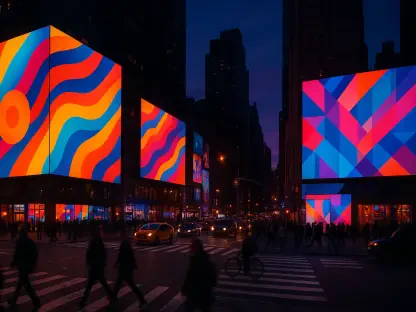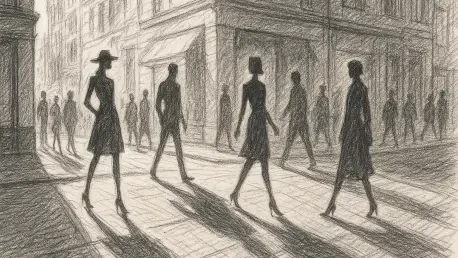

The intentional blurring of commercial messaging and physical space turned the sidewalks of New York into a living demonstration of the brand’s disruptive identity. As New York Fashion Week unfolds in 2026, the traditional saturation of digital billboards has reached a critical tipping point, leading consumers to develop a natural immunity to conventional advertising methods. Savage X Fenty has countered this growing fatigue by abandoning high-intensity light screens in favor of something more primal and architectural. By installing massive, strategically engineered structures across Manhattan, the brand has successfully harnessed the sun’s trajectory to project giant lingerie silhouettes onto the city’s concrete. This method does not merely occupy space; it transforms it into a temporary gallery. The result is a marketing strategy that breathes with the city, appearing and disappearing as the day progresses. It challenges the standard perception of what constitutes a billboard today, proving that brand visibility is achieved through negative space.
Redefining the Urban Landscape: Brand Real Estate
The core success of this initiative is rooted in the concept of environmental synergy, where the urban landscape serves as the primary canvas for the brand’s narrative. Rather than fighting for attention in the sensory overload of locations like Times Square, the campaign utilizes the existing geometry of Manhattan to create a more intimate and unexpected encounter. These shadow installations treat the city’s sidewalks and crosswalks as if they were a high-end gallery floor, forcing passersby to engage with their environment in a new way. This strategic placement ensures that the brand is integrated into the actual movement of the city, becoming part of the daily commute rather than a loud interruption. By leveraging the physical architecture of the streets, the brand manages to bypass the mental filters that modern consumers use to ignore traditional ads. This transformation of public infrastructure into a promotional medium represents a significant shift in lifestyle marketing tactics that prioritize the city’s bones over its screens.
Moreover, this approach capitalizes on the idea of a non-intrusive presence, which is increasingly valuable in a world where visual clutter is a major concern. The shadows do not require electricity, nor do they emit light pollution, aligning the brand with a more organic and environmentally conscious aesthetic. This “low-clutter” strategy provides a refreshing contrast to the high-definition noise typical of major industry events, offering an aesthetic gift to the public. Pedestrians often stop to photograph these transient shapes, not because they are being sold a product, but because the installation adds a layer of artistic intrigue to their surroundings. This shift from brand awareness to brand experience is pivotal. It fosters a deeper sense of affinity, as the audience views the brand as a creative contributor to the city’s culture. By prioritizing the viewer’s visual experience over direct sales pitches, the campaign achieves a higher level of prestige and cultural relevance that resonates across all demographics.
Strategic Implications: Temporal and Phygital Marketing
The reliance on natural sunlight introduces a temporal dynamic that is rarely seen in traditional out-of-home advertising. Because the shadows change in length, intensity, and position as the sun moves across the sky, the visual experience is never the same twice. A silhouette that appears elongated and dramatic at sunrise might become sharp and condensed by noon, creating a sense of urgency for those hoping to capture the perfect moment. This variability mirrors the fast-paced, ever-changing nature of the fashion industry itself, reinforcing the brand’s identity as a leader in innovation. Furthermore, the campaign was clearly designed with “phygital” amplification in mind, bridging the gap between a physical street encounter and global digital distribution. The high-contrast nature of the shadows makes them exceptionally compatible with social media photography, encouraging organic sharing across various platforms. This ensures a localized event reaches a global audience through the lenses of thousands of city dwellers.
The strategic decision to utilize the urban geometry of Manhattan provided a significant case study in how to bridge the gap between physical reality and digital virality. By focusing on experiential elements rather than static displays, the campaign successfully moved past the traditional barriers of consumer fatigue and advertisement blindness. Industry experts noted that the most valuable takeaway from this activation was the necessity of designing marketing that serves as an aesthetic enhancement to the public sphere. Actionable insights from this period indicated that brands found greater success when they leveraged natural and architectural elements to create a sense of place and time. The shift toward these sustainable, light-based interactions paved the way for a new era of urban advertising that prioritized creativity over repetition. Ultimately, the campaign proved that the physical environment was a dynamic participant in brand storytelling, utilizing physics to create genuine engagement.