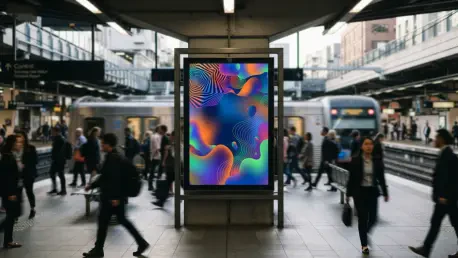

Media owners must ensure their inventory is described via machine-readable protocols to remain visible to the next generation of autonomous buyer agents. The shift from manual billboard coordination to sophisticated, automated ecosystems represents a watershed moment for the advertising industry, particularly as it embraces the era of agentic artificial intelligence. This evolution was recently demonstrated through a landmark pilot program in Singapore, where Tiger Brokers collaborated with Adzymic and Stellar Ace to modernize out-of-home media buying. By moving beyond basic generative tools that simply produce images or text, this initiative deployed specialized AI agents capable of managing entire multi-step workflows. These systems do not just follow static commands; they interpret commercial intent and coordinate complex interactions between advertisers and owners across more than 260 digital screens in real time. This project highlights a critical transition from semi-automated programmatic buying to a fully integrated agentic model that prioritizes fluid, machine-mediated coordination over manual data entry.
The Architecture: Specialized AI Roles
Defining the Buyer and Sales Agents
The technical foundation of the recent Tiger Brokers initiative rests on a distributed architecture where specialized AI agents mirror the traditional human-led advertising value chain. The Buyer Agent acts as the digital proxy for the advertiser, meticulously scanning available inventory to synthesize media plans that align with specific demographic targets and budgetary constraints. On the other side of the transaction, the Sales Agent represents the media owner, evaluating incoming proposals against commercial benchmarks, pricing strategies, and screen availability. This dual-agent interaction effectively automates the negotiation phase, transforming what was once a series of back-and-forth emails into a streamlined, machine-mediated dialogue. By simulating the expertise of human media planners and sales representatives, these agents can process massive datasets far more quickly than human teams, identifying the most efficient placements across a sprawling network of digital displays while ensuring all commercial objectives are met.
Managing Complexity: The Creative Agents
Complementing the logistical agents is the Creative Agent, which manages one of the most persistent bottlenecks in out-of-home advertising: the technical reformatting of visual assets. Digital out-of-home networks are notoriously fragmented, featuring screens with vastly different resolutions, aspect ratios, and environmental contexts. Traditionally, preparing creative content for 260 distinct locations would require dozens of manual hours to ensure brand guidelines were not compromised during the resizing process. The Creative Agent automates this translation, interpreting the core brand identity and automatically adjusting visual elements to fit each specific screen’s technical requirements. This capability ensures that the high-level intent of the campaign is preserved from the initial brief to the final broadcast. By removing the friction associated with technical production, the system allows brands to deploy complex campaigns across diverse geographic footprints with unprecedented speed, ensuring the visual impact remains consistent regardless of hardware.
Strategic Innovation: Balancing Control
Moving Beyond Basic Programmatic Rules
The fundamental innovation of agentic systems lies in their ability to handle the nuanced middle ground of advertising that standard programmatic algorithms often ignore. While traditional programmatic buying is focused on the execution of predefined, binary rules, agentic AI introduces a layer of interpretation and cognitive synthesis. These systems are designed to understand the underlying goals of a campaign, allowing them to propose creative revisions or inventory adjustments that better serve the advertiser’s ultimate objectives. This leap forward means that the AI is not just a tool for purchasing but a partner in the planning process, capable of coordinating commercial intent between multiple parties. This approach allows for a more dynamic and responsive media environment where the software can react to changing conditions on the fly. As a result, the coordination of complex media buys becomes less about following a rigid script and more about achieving a specific set of strategic outcomes through intelligent negotiation.
Maintaining Ethics: Human-in-the-Loop Authority
Despite the high degree of autonomy offered by these new systems, the implementation of a human-in-the-loop model remains a non-negotiable requirement for modern brands. In the Singapore pilot, human professionals retained the final authority, reviewing and approving every media plan and creative iteration before any financial commitments were finalized. This structural safeguard ensures that brand suitability and financial accountability are never sacrificed for the sake of speed. By delegating the repetitive, labor-intensive coordination tasks to specialized agents, human professionals are freed from the drudgery of file management and insertion orders, allowing them to focus on high-level strategy and creative vision. This consensus within the industry suggests that the future of advertising is not a choice between humans and machines, but rather a collaborative framework where AI handles the logistical friction while people provide the ethical and strategic direction. This balance is crucial for maintaining trust in automated systems.
Operational Requirements: Future Brand Success
Precision: The Modern Campaign Brief
For agentic media buying to reach its full potential, the industry must prioritize the precision of the initial campaign brief. Because AI agents operate on structured instructions and datasets, any ambiguity in the goals or constraints provided by the advertiser can lead to suboptimal or flawed proposals. In this new landscape, the ability of a marketing team to quantify their objectives becomes a primary competitive advantage. Brands must develop the internal capacity to translate their creative visions and target audience profiles into clear, machine-executable frameworks. This shift requires a departure from vague qualitative descriptions toward a more rigorous, data-driven approach to briefing. When the instructions are precise, the Buyer Agent can navigate the marketplace with extreme efficiency, ensuring that every dollar spent is aligned with the brand’s strategic priorities. Consequently, the quality of the input now directly dictates the success of the output, making data structuring an essential skill for modern marketers.
Standardizing Protocols: Inventory Visibility
On the supply side, the burden of adaptation falls on media owners who must modernize their digital infrastructure to participate in this automated ecosystem. To remain relevant, physical screens must be represented through standardized, machine-readable protocols such as the Ad Context Protocol. This technology allows autonomous agents to discover, evaluate, and purchase out-of-home inventory as seamlessly as they would buy a digital banner ad on a website. Media owners who fail to make their assets visible to these agents risk being excluded from the consideration set of modern buyer agents, regardless of the physical quality or location of their displays. Furthermore, these systems must provide full traceability, allowing human directors to understand the specific logic behind each recommendation. If an AI selects a specific set of screens at a specific time, the system must be able to explain why that choice was made. This transparency is vital for building the long-term confidence necessary for brands to shift budgets.
Measuring Impact: Performance and Results
Evaluating Economic Gains and Efficiency
The success of the Tiger Brokers pilot served as a compelling proof of concept for the integration of agentic workflows, yet the industry continues to seek more granular performance data. While the project demonstrated that AI could successfully coordinate the chain of interpretation from brief to broadcast, the next phase of development must focus on quantifying the economic benefits. Future assessments will likely focus on the reduction in total planning hours, the decrease in creative production costs, and the potential increase in campaign conversion rates. Currently, the primary innovation lies in the elimination of manual handoffs and the reduction of errors that typically occur during the technical reformatting of assets. By ensuring that the advertiser’s original intent is preserved across hundreds of digital screens, agentic systems are already proving their value as a solution for operational efficiency. However, long-term adoption will depend on the ability to deliver a superior return on investment.
Integrating Strategy: The Hybrid Conclusion
The transition toward agentic out-of-home media buying provided a clear roadmap for the future of the advertising value chain. It was established that a hybrid model, combining the analytical power of AI with human strategic oversight, offered the most effective path forward for global brands. Advertisers who successfully structured their brand guidelines into machine-executable formats gained a significant head start in navigating the complex digital landscape. Meanwhile, media owners who invested in machine-readable protocols secured their positions in the next generation of automated marketplaces. The industry recognized that the success of these campaigns depended as much on the clarity of human intent as it did on the sophistication of the underlying algorithms. Ultimately, the integration of autonomous agents reduced the technical friction of media buying, allowing professionals to reclaim their time for creative and strategic innovation. These developments ensured that the out-of-home sector remained a responsive and vital component of the broader marketing mix.