
Anastasia Braitsik has spent her career at the intersection of SEO, content, and analytics, so she reads the signals beneath the noise. She views email—now 55 years old—not as a relic, but as the most resilient, owned bridge between brands and buyers in an AI-first era. Her playbooks connect audience intent to revenue with discipline: precise segmentation, rigorous testing, and an unblinking focus on engagement that compounds over time.
Email just turned 55, yet remains core to ecommerce. What keeps it uniquely effective today, and how has its role shifted from early days of simple messages to modern lifecycle marketing? Please share concrete examples, metrics, and a specific campaign evolution that shows this change.
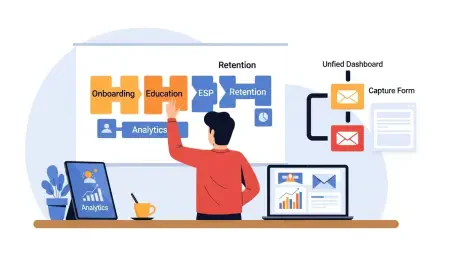
Email endures because it’s the rare channel you truly own—no algorithm stands between you and your audience. Think about the arc from 1971, when a single message jumped from party A to party B, to 2026, when a lifecycle program connects onboarding, education, and retention. The shift is from one-off “send and hope” to orchestrated sequences that blend content with timely offers. I’ve taken a basic product blast and evolved it into a topic-led newsletter: week one teaches a concept, week two addresses a problem, week three showcases a solution, and week four invites a purchase. Over time, readers learn to expect both useful content and relevant recommendations, and that trust turns into repeat sales.
In a world moving toward AI-driven search, recommendations, and agentic shopping, how should brands reposition email as a direct, owned channel? Walk us through a practical roadmap for protecting reach, including organizational changes, tooling, and measurement.
Start by declaring email an owned media pillar and giving it a seat at the same table as SEO and paid. Centralize list growth, content, and CRM under one leader who owns the funnel end-to-end. Tooling should connect capture to content to conversion: forms and onsite modals feed your ESP, your ESP powers newsletters and lifecycle flows, and analytics roll up to a single dashboard. Measurement should prioritize audience health—growth rate, engagement, and revenue per subscriber—because protecting reach means growing a list that actually wants to hear from you as discovery shifts to AI.
Algorithms gatekeep visibility on social and search, while email lists are owned. How do you quantify that control advantage in dollars and risk reduction? Share a framework for estimating dependency risk and the ROI uplift from shifting spend into owned audiences.
I quantify control with a simple lens: volatility versus ownership. If an algorithm update can cut your visibility overnight, your revenue is rented. With email, the list is yours; the path from your outbox to the inbox is direct. Build a risk score by weighting how much revenue flows through algorithmic gates versus owned channels—if most of your sales come from gatekept sources, you’re overexposed. The ROI uplift appears when you reallocate part of that spend to list growth and engagement; your cost per incremental sale drops as your audience compounds, and your exposure to platform swings recedes.
Some teams launch newsletters from scratch; others use outside providers’ subscribers; others buy established lists. How do you compare these three paths on cost, speed, deliverability, and brand fit? Please include due diligence steps and red flags for each option.
Starting from scratch gives you perfect brand fit and clean deliverability, but audience growth is the hardest part. Working with providers who supply their own subscribers accelerates speed, yet you must assess intent alignment and engagement to avoid list fatigue. Buying an established newsletter via marketplaces like LetterTrader, Flippa, or Acquire.com can deliver immediate reach, but diligence is everything: ask for acquisition sources, engagement by cohort, and content archives. Red flags include opaque list growth, sudden spikes that aren’t explained, and content that doesn’t map to your products or customers’ jobs-to-be-done.
Marketplaces now list newsletters for sale. What’s your playbook for evaluating a target: audience quality, engagement, list acquisition sources, and revenue per subscriber? Describe the exact data you request, the tests you run, and deal structures that align incentives.
I request a full data room: list size and growth history, acquisition channels, engagement trends by cohort, and monetization methods. I run an inbox placement test to verify deliverability and a content resonance test by sending a single co-created issue to a segment. I also ask for the timeline of major list-building pushes so I can connect tactics to outcomes. Deal structures should align incentives with an earn-out tied to engagement and revenue per subscriber over a defined period, so everyone wins only if the audience stays healthy and responsive.
Many growth programs rely on paid tactics like sponsoring other newsletters, running Meta or LinkedIn ads, and using recommendation networks. Which channels scale best by niche and AOV, and how do you structure experiments? Share budgets, creatives, and optimization cadences that consistently work.
Sponsoring adjacent newsletters works well when your niche is clear and your product ties naturally to the content. Meta and LinkedIn shine when your audience congregates by interest or role, and recommendation networks such as SparkLoop help you tap into readers already primed to subscribe. I structure tests with tight creative hypotheses—promise, proof, and preview—and rotate formats to match audiences who prefer short blurbs and images versus those who crave longer analysis. Optimization cadences focus on message-market fit first, then scaling; once content and offer sequencing lock in, you can expand placements without eroding intent.
Newsletter growth agencies have emerged. When does it make sense to hire one versus build in-house? Outline selection criteria, performance benchmarks, and a 90-day onboarding plan that ensures accountable goals and knowledge transfer.
Hire an agency when you need speed-to-scale and you don’t yet have in-house list growth muscle. Select partners who show transparent acquisition sources, deep experience in your topic, and a plan to hand you the keys, not just rent progress. Benchmarks should emphasize audience quality and engagement, not vanity totals. A 90-day plan includes governance, content alignment, test calendars, and weekly reviews; by day 90, you should own the playbooks, templates, and a repeatable process for compounding growth.
Teams already spend to drive immediate sales. How do you decide when to reallocate budget to subscriber growth instead? Give a revenue-per-subscriber model, break-even math, and a timeline showing payback periods by industry and list size.
The decision hinges on whether long-term revenue per subscriber will outpace the next click’s return. If your sales plateau on gatekept platforms, shifting spend to grow an owned list is a hedge with upside. I model scenarios by projecting content-driven touchpoints that nudge repeat purchases and by stress-testing with conservative assumptions on engagement. Because email compounding is real, even a modest cadence can turn into a reliable engine once readers expect useful content paired with relevant product links.
Engagement is the profit lever. How do you align content with audience intent so recommendations feel natural? Provide a step-by-step content mapping process, from personas and JTBD to formats, CTAs, and offer sequencing, with sample metrics to watch.
Start with personas and jobs-to-be-done: what are readers trying to achieve, avoid, or learn? Map each job to a content series that blends education and product discovery—teach first, recommend second. Choose formats that match attention patterns: short blurbs and images for quick scanning, longer analysis when the audience seeks depth. Offers should follow demonstrated interest; watch engagement signals issue by issue to confirm you’re earning the right to recommend.
Some audiences prefer short blurbs and images; others want long-form analysis. How do you test and lock in format-market fit? Describe the exact experiments, sample sizes, and statistical thresholds you use, and how you adapt creative for mobile-first readers.
I run parallel format tests across similar cohorts, holding topic constant while varying structure and visual density. For mobile-first readers, I design scannable sections with clear hierarchy so value lands fast, then layer depth below the fold. The decision standard is consistency across multiple sends, not a single spike—if the short format repeatedly outperforms with the same audience and topic, that’s a strong signal. Once the winner emerges, I standardize templates and let creativity shift to storytelling and sequencing.
Delivering useful content alongside product links trains readers to expect both. What cadence, ratio of value to promotion, and placement tactics maximize clicks without fatiguing subscribers? Please include real numbers, examples, and a rubric for throttling or accelerating sends.
The magic is in rhythm: lead with value, weave in recommendations that feel like the logical next step, and close with a gentle nudge. Place your primary offer after you’ve delivered context, not before; the narrative should earn the click. I monitor engagement patterns across multiple issues—if interest builds as content deepens, I’ve likely hit the right balance. When I see fatigue signals, I throttle cadence and elevate pure value until curiosity returns.
Deliverability can make or break results. What are your non-negotiables on authentication, list hygiene, and engagement filtering? Share a quarterly checklist, remediation steps for spam folder issues, and specific thresholds for pruning or reactivation.
Authentication and hygiene are non-negotiable—treat them like uptime for your store. I maintain a quarterly checklist that audits setup, list sources, and engagement cohorts, then trims the dead weight and re-engages the “maybe.” If inbox placement falters, I pause broad sends and rebuild reputation with the most engaged segments before expanding. Reactivation deserves a thoughtful series; if interest doesn’t return, I let those addresses go to protect the rest.
How do you measure revenue per subscriber accurately across campaigns, flows, and time? Explain attribution choices, cohort analysis, and how you separate incremental lift from halo effects. Please include tool recommendations and dashboard must-haves.
I anchor on revenue per subscriber because it captures both audience quality and program execution. Attribution blends time-based windows for flows with direct connections for newsletters; cohorts by acquisition source and content theme reveal where value compounds. To isolate incremental lift from halo effects, I compare engaged versus control cohorts over consistent intervals. Dashboards must surface audience growth, engagement, and revenue per subscriber together so you can see cause and effect, not just noise.
For a store launching its first newsletter in 60 days, what is your day-by-day plan? Detail list capture, welcome series, content calendar, segmentation, offers, and initial paid growth tests, with milestones and go/no-go decision points.
In the first stretch, I implement onsite capture with clear promises and design a welcome series that introduces the brand’s point of view. Midway, I build a content calendar that alternates teaching with product discovery and segment by intent so readers get what they came for. I turn on small-scale paid tests—sponsoring adjacent newsletters, light Meta or LinkedIn placements, and a recommendation network pilot—and watch how each source behaves once inside the list. At 60 days, the go/no-go is simple: is audience growth healthy, are readers engaging, and is revenue per subscriber trending up? If yes, scale; if no, refine the promise or the content and try again.
What is your forecast for email marketing in ecommerce?
Email will matter more, not less, as AI reshapes discovery. In 1971 the first message proved a direct line could exist; in 2026 the value is that your direct line is owned. Expect newsletters to become the backbone of lifecycle and community, where education and recommendations live side by side and readers count on both. My advice to readers: treat your list like a product—design it with care, protect its quality, and remember that engagement is the compounding engine that powers everything else.