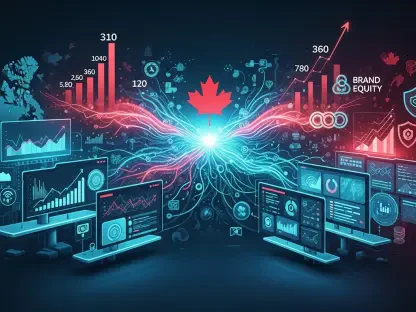

The convergence of sophisticated machine learning and real-time consumer intent data has fundamentally altered the way global brands approach their digital storefronts today. As the global advertising market matures, Google continues to occupy a central role, moving away from manual bid management toward fully automated environments. This shift impacts everyone from massive enterprise corporations to specialized PPC agencies and independent advertisers. The upcoming Google Marketing Live on May 20 stands as the industry’s annual bellwether, signaling how commercial technology will dictate market winners.
The Evolution of the Digital Advertising Ecosystem and the Role of AI
The transition from granular, manual controls to machine-learning-driven environments has redefined the advertiser’s daily workflow. In this new landscape, the platform’s ability to process billions of signals in milliseconds allows for a level of precision that human intervention simply cannot match. This evolution has democratized access to high-tier optimization for smaller businesses while challenging larger agencies to redefine their value proposition.
Google Marketing Live serves as the pivotal moment where these technological shifts are codified into accessible tools. For digital marketers, the event is a roadmap for navigating the complexities of modern commerce. By aligning the summit with the technical breakthroughs presented at Google I/O, the industry gains a comprehensive view of how foundational search advancements translate into tangible commercial success.
Emerging Frontiers in Automated Marketing and Predictive Analytics
Technological Shifts and the Rise of Generative Creative Assets
The industry is currently witnessing a definitive move toward black box advertising models where AI dictates asset optimization. Generative AI has moved beyond simple text suggestions to the full-scale production of high-fidelity images and video content for YouTube and the Display Network. This enables brands to maintain a constant presence without the traditional overhead of manual creative production.
Consumer behaviors are simultaneously shifting toward conversational search and highly personalized experiences. Users now expect the platform to anticipate their needs through intuitive interactions. Consequently, the primary market driver has become a demand for hyper-efficiency, forcing advertisers to rely on real-time campaign adjustments that only automated systems can execute effectively.
Quantifying Growth: Market Projections and Performance Indicators
Data suggests a significant surge in AI-driven ad spend extending from 2026 into 2028. Automated campaign types, most notably Performance Max, have consistently outperformed traditional models by leveraging cross-channel synergies that were previously siloed. These tools are no longer experimental; they are the baseline for any competitive digital strategy.
The synergy between the foundational breakthroughs at Google I/O and the marketing tools at Google Marketing Live creates a robust pipeline for innovation. Next-generation key performance indicators are moving beyond simple clicks. Instead, the focus has shifted toward deep-funnel value signals, allowing businesses to optimize for long-term customer lifetime value rather than immediate, isolated transactions.
Navigating the Complexities of an Automated Advertising World
Maintaining control within an increasingly automated system remains a primary concern for transparency-focused advertisers. While the machine handles execution, the human element is required to steer the strategic direction and ensure brand safety. The challenge lies in providing the algorithm with enough high-quality data to learn while keeping a firm hand on the creative identity that prevents brand dilution.
Data fragmentation in a post-cookie environment further complicates the measurement of success. Marketers must now bridge the gap between various platforms and devices without the reliance on traditional tracking methods. Technological hurdles in real-time attribution require a more sophisticated approach to modeling, blending human intuition with algorithmic rigor to find the true source of conversion.
The Regulatory Framework and the Future of Data Privacy
Adapting to global privacy standards has become a non-negotiable aspect of digital advertising. The implementation of the Privacy Sandbox and the prioritization of first-party data strategies are now the standard operating procedures. This shift ensures that while ads remain personalized, they do not compromise the integrity of the user’s personal information or violate tightening regional regulations.
Maintaining consumer trust also requires rigorous oversight of AI-generated content to prevent the spread of misinformation. Security measures within the cloud infrastructure have been tightened to protect proprietary business data. Ensuring that business intelligence remains confidential while being used to train internal models is a critical priority for keeping the ecosystem secure and compliant.
Vision 2026: The Next Phase of Brand-Consumer Interaction
Multi-modal AI is changing the discovery process, allowing users to find products via visual and auditory cues on Search and YouTube. This creates a more immersive shopping experience that feels natural rather than intrusive. While Google remains a dominant force, the rise of niche AI competitors and decentralized networks keeps the market dynamic and forces continuous innovation in ad delivery.
Interactive virtual storefronts and predictive customer journey mapping are emerging as the next growth frontiers. These tools allow brands to meet the consumer at the exact moment of need, often before the user has explicitly stated their intent. The integration of developer tools from Google I/O into marketing applications provides the technical backbone for these highly interactive and intelligent brand experiences.
Synthesis of the 2026 Advertising Outlook and Strategic Priorities
The findings from the May 20 summit clarified that the future of commerce depends on a symbiotic relationship between human strategy and machine execution. Marketers recognized that high-quality data inputs became the most valuable currency in an automated world. Organizations moved to reorganize their internal structures to prioritize data science and creative direction over manual campaign management. This shift allowed brands to focus on long-term investment in AI-centric platforms rather than short-term tactical fixes. Strategists identified that maintaining a competitive edge required an embrace of generative tools while strictly adhering to new privacy standards. Ultimately, the industry moved toward a model where predictive analytics and interactive storytelling defined the successful brand-consumer relationship.