
The Stakes: Why Dealership Data Strategy Is Being Rewritten
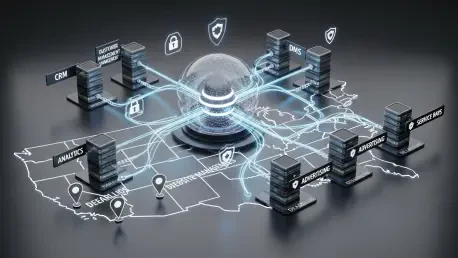
Customers bounce between search, OEM portals, dealer websites, third‑party marketplaces, and service apps while CRM notes, DMS records, website behavior, and ad signals remain scattered in silos that refuse to speak the same language at the speed demanded by modern retail. That fragmentation drains media budgets, muddies attribution, and slows response when a shopper’s intent is hottest. In this context, Cox Automotive’s planned acquisition of Fullpath reads less like a bolt‑on and more like a bid to standardize data strategy for a vast dealer network.
Where the Market Stands Now
Auto retail has leaned on point solutions for lead gen, BDC routing, digital retailing, and service reminders. However, as third‑party identifiers fade and media costs fluctuate, the value has shifted toward unified first‑party data, identity resolution, and activation that works across channels in real time. OEM programs, compliance constraints, and legacy integrations complicate this shift, but the direction is set: connected retail is table stakes, and AI is the routing engine.
What the Cox–Fullpath Combination Signals
Cox brings reach, workflow depth, and relationships; Fullpath supplies an AI‑native CDP, predictive modeling, and automated orchestration tuned for automotive. Together, the promise is faster time to insight, fewer handoffs, and campaigns that adapt to live shopper and owner signals. That means dealers could move from static monthly pushes to event‑triggered journeys with closed‑loop measurement baked into everyday tools.
Moreover, consolidation around platforms that deploy at network scale will likely accelerate. As margins compress and inventory normalizes, dealers demand media efficiency, smarter frequency control, and service marketing that anticipates needs. A unified stack reduces friction and sharpens accountability.
Trends, Data, and Expected Outcomes
Adoption of CDPs and marketing automation in auto retail has climbed steadily, propelled by identity resolution gains and cleaner feeds from CRM, DMS, and web analytics. Benchmarks point to lower cost per lead when first‑party audiences anchor media, while predictive models lift conversion by improving timing and offer fit. With rollout across a large Cox footprint, penetration could ramp quickly, compounding data network effects and enabling smarter lookalike and suppression strategies.
Investment is also shifting to privacy‑safe activation: clean rooms, hashed IDs, and server‑side tagging. Dealers that connect media, retailing tools, and the showroom floor realize clearer ROI signals and more confident budget reallocation.
Execution Realities and Risk Controls
Success hinges on data hygiene, identity stitching, and latency management. API maturity varies across partners and OEM programs, so some real‑time use cases may begin near‑real‑time. Attribution will remain complex, given offline transactions and shared incentives, making governance and modeling choices critical.
Compliance sits at the core. State privacy laws, FTC guidance, and UDAP/UDAAP risk require explicit consent handling, transparent data use, and strict roles for processors and controllers. Security controls—encryption, role‑based access, and audit trails—must be standard, not optional.
Strategic Playbook for Stakeholders
Dealers should start with a data audit, map identities across CRM/DMS/website sources, and prioritize real‑time triggers that drive revenue: abandoned deal recovery, equity mining, and service retention. Align KPIs to lifecycle outcomes, not just form fills: show rates, PVR impact, and service RO growth. Evaluate vendors on interoperability, deployment timelines, and measurement discipline; phase implementation through pilots, then scale with clear governance.
Outlook and Conclusion
The deal concentrated AI, data, and activation into a single operating layer for retail, reshaped expectations for speed and precision, and set a higher bar for attribution clarity. The next steps called for rigorous consent frameworks, disciplined data stewardship, and continuous model tuning. Dealers that operationalized unified data, real‑time engagement, and creative automation captured measurable gains in efficiency and lifetime value, while those waiting on the sidelines ceded ground to platforms that learned faster and executed sooner.