
The paradox of the modern digital marketplace lies in the fact that while global spending on influencer marketing is projected to exceed $40 billion this year, over half of social media users openly admit they do not trust the content appearing in their feeds. This skepticism is not a peripheral concern but a central crisis for a channel that has become the fourth most frequently used form of marketing communication, even surpassing traditional television in markets like Poland. As corporate budgets expand, the distance between brands and their audiences seems to widen, leading to a critical realization that reach alone is no longer a viable currency for building lasting consumer relationships.
Industry bodies like IAB Polska are responding to this disconnect by establishing rigorous standards that move beyond the superficial metrics of follower counts. The recent publication of comprehensive guides, supported by consumer protection authorities like UOKIK, signals a shift toward a more regulated and transparent ecosystem. These frameworks are designed to help marketers navigate a landscape where only 30% of users currently declare trust in influencers, with the highest levels of skepticism found among consumers over the age of 30. By professionalizing the segment, market players aim to bridge the gap between high-level digital advertising and the grassroots reality of social interaction.
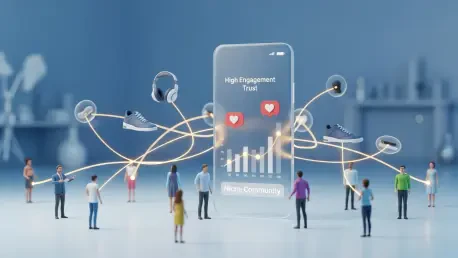
Understanding this shift requires a move away from the broad, celebrity-driven campaigns of the past toward highly localized, niche engagement strategies. In the current digital advertising ecosystem, the emphasis has transitioned from the loudest voice to the most credible one. This evolution is driven by the need for authenticity in an environment where consumers are increasingly adept at filtering out corporate scripts. Consequently, the focus has landed squarely on nano-influencers as the primary agents for restoring credibility through genuine, experience-based advocacy.
Emerging Dynamics and the Economic Value of Small-Scale Creators
Driving Engagement Through Social Search and Short-Form Video
Consumer behaviors are undergoing a fundamental transformation as platforms like TikTok and Instagram evolve into primary search engines for the younger generation. This rise of social search means that users are no longer just browsing; they are actively looking for answers, tutorials, and reviews. In this context, nano-influencers act as niche experts who provide educational, guide-style content that serves as a functional resource rather than just entertainment. Their posts often function as mini-blogs that remain visible in platform search results long after the initial publication, providing enduring value to brands.
The dominance of short-form video formats, including Reels, TikToks, and Shorts, has further solidified the role of these small-scale creators. These formats allow for a fast-paced yet authentic narrative that feels more like a recommendation from a friend than a high-production advertisement. Because nano-influencers typically produce content based on personal experience, their videos resonate with a sense of honesty that larger accounts often lose. This creates new opportunities for brands to engage in digital product co-creation, where creators contribute to the development of e-books or limited-edition products tailored for their specific communities.
Furthermore, multi-channel distribution strategies are becoming the norm as creators naturally cross-pollinate their content across various platforms. A single creator might share a product test on TikTok while providing more detailed behind-the-scenes insights on Instagram Stories. This approach allows brands to achieve a broader cross-platform reach without the need for multiple, expensive production cycles. By leveraging the natural agility of small creators, companies can maintain a consistent and pervasive presence in the digital spaces where their target audiences spend the most time.
Quantifying Growth and Performance Indicators for Nano-Influencers
The global influencer marketing industry is on a clear trajectory toward a $40 billion valuation, but the nature of that growth is shifting toward performance-driven metrics. Comparative data consistently shows that micro and nano-influencers often outperform celebrities in terms of engagement rates, sometimes maintaining a 3% to 5% interaction level that larger accounts cannot sustain. This high engagement is a direct result of the personal relationships these creators maintain with their followers, who view them as accessible peers rather than distant icons.
Return on investment in this sector is increasingly measured through sophisticated conversion tracking rather than just impressions or reach. Marketers are now utilizing UTM links, affiliate codes, and pixel data from Meta and TikTok to tie creator content directly to sales figures. This transition allows for a more granular understanding of how specific niches contribute to the bottom line. It also encourages a move away from one-off campaign tactics toward long-term ambassador models, where a creator’s sustained association with a brand builds deep-seated trust over months or years.
The scalability of nano-influencer campaigns is another factor driving economic value. Modern management platforms allow brands to activate thousands of creators simultaneously, generating a collective reach that can rival traditional media while maintaining the intimacy of individual recommendations. This model relies on automated reporting and selection tools to manage the logistical complexity of high-volume collaborations. As a result, the industry is seeing a professionalization of the “enthusiast” tier, where passion-driven content is backed by rigorous analytical verification.
Overcoming the Crisis of Confidence and Operational Barriers
Addressing the trust deficit requires a strategic pivot toward transparency and relatability. With 52% of social media users expressing skepticism, brands must move away from polished, corporate-style messaging and toward the “imperfect” authenticity of real-life users. Strategies now focus on positioning creators as experts or genuine enthusiasts who have used a product in their daily lives. By prioritizing creators who offer inspiration derived from personal experience, brands can bypass the psychological barriers that many users have developed toward traditional advertising.
Managing mass-scale campaigns involving thousands of nano-influencers presents significant operational challenges, yet specialized platforms have emerged to solve these complexities. These tools automate the selection, communication, and reporting processes, making it possible for a small marketing team to oversee an army of creators. While inconsistent content quality used to be a major deterrent for brands, the use of clear briefs and automated approval workflows has standardized the output. This ensures that while the content remains authentic and diverse, it still aligns with the overarching brand strategy and legal requirements.
Bridging the demographic gap is particularly crucial, as users over 30 remain the most skeptical segment of the social media population. For this group, influencer marketing must move beyond trendy aesthetics and focus on utility, expert knowledge, and documented results. Tailoring strategies for these users involves selecting creators who share their life stages and values, such as parenting experts, financial advisors, or tech reviewers. By focusing on professional-grade content that provides tangible value, brands can slowly dismantle the cynicism prevalent among older, more discerning demographics.
Navigating Legal Frameworks and Compliance Standards
As the industry matures, the importance of standardized disclosure guidelines has become a central focus for regulatory bodies across Europe. Mandatory labeling protocols are no longer optional suggestions but legal requirements intended to protect consumers from covert advertising. In markets like Poland, Croatia, and Germany, industry associations have published detailed guides to ensure that every paid collaboration is clearly identified. These protocols help build a foundation of honesty, ensuring that when a consumer sees a recommendation, they are fully aware of the commercial nature of the relationship.
Understanding tax obligations is equally vital for maintaining a professional and legally compliant ecosystem. Collaborations typically fall under different legal structures, such as B2B models or civil law contracts, each carrying specific withholding tax and social insurance implications. For creators operating as registered businesses, the responsibility for tax and social insurance lies with them, whereas civil law contracts require the commissioning brand to handle income tax advance payments. Compliance with these rules prevents legal friction and ensures that both brands and creators are protected during financial audits.
The complexity increases when dealing with international collaborations, where VAT thresholds and tax residency certifications come into play. Polish companies, for instance, must navigate the reverse charge mechanism and verify the status of foreign creators through systems like VIES. Furthermore, the introduction of certification systems and interactive industry maps has helped professionalize the market. These resources allow brands to verify the legitimacy of agencies and creators, ensuring that they are working with partners who adhere to both ethical standards and legal mandates.
The Future of Influencer Marketing and Strategic Brand Integration
The influencer marketing landscape is entering what experts describe as a “Mature Development” phase, characterized by the rise of professional associations and ethical benchmarks. This period is marked by a move away from the “wild west” era of social media promotion toward a structured environment where accountability is paramount. Organizations like the Association of Influencer Marketing Professionals (SPIM) are setting the tone for this evolution, emphasizing that long-term sustainability in the market depends on ethical conduct and the protection of both the creator and the consumer.
Emerging technologies, particularly Artificial Intelligence and Large Language Models, are playing a transformative role in optimizing performance marketing. AI is being used to analyze vast amounts of data to identify the perfect creator-brand match based on audience demographics, sentiment analysis, and historical performance. These tools allow for more precise influencer selection, reducing the risk of mismatched partnerships. Additionally, AI helps in performance tracking, allowing brands to adjust their strategies in real-time based on how different audience segments are responding to specific content formats.
Consumer preferences are clearly leaning toward community proximity over celebrity status. Modern audiences value the ability to interact with a creator and receive a personalized response, a dynamic that is only possible with smaller-scale influencers. This preference for “real people” over corporate scripts is driving a surge in user-generated content (UGC), which brands are increasingly integrating into their official marketing channels. The future of strategic brand integration lies in this direct-to-consumer insight, where creators serve as both the promotional voice and the source of valuable market feedback.
Strategic Recommendations for Restoring Public Trust
The analysis of the current marketing landscape revealed that authenticity and expert positioning are the most effective tools for counteracting widespread consumer skepticism. Prioritizing nano and micro-influencers allowed brands to penetrate niche communities with a level of credibility that traditional advertising could not achieve. By focusing on creators who maintained high engagement rates and personal connections with their followers, companies successfully turned passive viewers into active participants. The shift from reach-centric metrics to engagement and conversion-based data proved that the value of an influencer was not in their total audience size, but in the depth of their influence.
Effective creator selection emerged as a cornerstone of successful brand restoration, requiring a systematic alignment of brand values with creator demographics. Best practices dictated that marketers look beyond the creator’s own profile to the specific interests and behaviors of their audience. The utilization of analytical tools for authenticity verification helped brands avoid the pitfalls of inflated follower counts and artificial engagement. By establishing clear goals—whether for product testing, brand awareness, or direct conversion—marketers were able to build more focused and effective campaigns that resonated with skeptical audiences.
Ultimately, nano-influencers functioned as the essential link between expanding marketing budgets and meaningful consumer relationships. They provided a human face to corporate entities, delivering messages that felt both personal and trustworthy. Future-proofing a brand in this environment required a commitment to transparent collaboration models and documented compliance with evolving legal standards. By treating small-scale creators as professional partners rather than just distribution channels, the industry laid the groundwork for a more ethical and sustainable future where trust was treated as the most valuable asset in the digital economy.