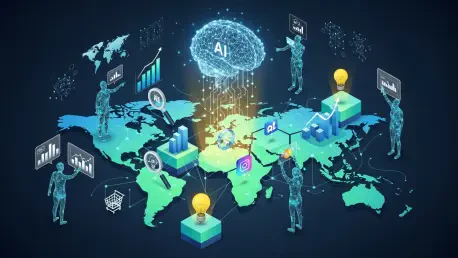

The landscape of global consumer marketing is currently enduring a tectonic displacement that renders the classic thirty-second television commercial nearly obsolete for massive snack conglomerates. The strategy commonly known as the “hope for the best” approach, which relied on broad-spectrum broadcasting to reach a generic audience, has been formally retired by industry leaders. In its place, a sophisticated architecture of data-driven engagement is emerging, designed to navigate a digital environment where consumer attention is both fragmented and fiercely guarded. This shift is most visible in the recent strategic maneuvers of Mars Snacking, which has signaled a departure from the linear marketing of the past toward a model built on algorithmic precision and real-time interaction.
Modern marketing within the Consumer Packaged Goods sector must now account for a reality where the consumer is no longer a passive observer but an active gatekeeper of their own digital experience. For a powerhouse managing iconic names like M&M’s and Snickers, the challenge lies in maintaining the cultural relevance of these brands without relying on the blunt force of mass-market television. The transition from legacy models to personalized engagement is a response to this new environment, where success is defined by how well a brand can integrate itself into the specific niches of a user’s daily routine.
The Seismic Transformation of Global Consumer Marketing
The current evolution of the snacking industry is significantly influenced by the massive scale of corporate expansion, evidenced by the thirty-six billion dollar acquisition of Kellanova. This merger has not only widened the brand portfolio to include staples like Pringles and Pop-Tarts but has also necessitated a radical rethink of global reach. Managing such a diverse range of products requires more than just high-production value; it demands a technological infrastructure capable of delivering content that feels bespoke rather than manufactured. The movement away from “one-size-fits-all” campaigns is a calculated effort to ensure that these expanded resources are used to build deeper, more meaningful connections with varied demographics.
Technological advancements have played a pivotal role in this transformation, specifically the transition from standard commercials to content enhanced by artificial intelligence. While television still holds value for general brand awareness, the digital landscape offers a far more granular level of interaction. By leveraging AI to generate and distribute content, companies can now produce hundreds of variations of a single campaign, each tailored to different platforms and user behaviors. This allows a global brand to maintain its massive scale while appearing as a niche participant in localized digital conversations.
Furthermore, the strategic shift is a direct response to the diminishing returns of traditional advertising waste. In previous decades, a significant portion of an advertising budget was spent on audiences who were unlikely to purchase the product. However, the rise of a fragmented digital space means that brands must be more surgical in their deployments. The focus has moved from merely being seen by everyone to being relevant to the specific groups most likely to drive growth. This transition signals the end of the broadcast era and the beginning of a cycle defined by calculated, data-backed engagement.
Pivoting from Mass Reach to Algorithmic Precision
Emerging Paradigms in Consumer Engagement and Personalization
The modern era of consumer engagement is defined by the concept of “precision at scale,” a strategy that balances the need for wide brand penetration with the necessity of targeted relevance. Marketing theory has long suggested that brand growth is fueled by reaching light buyers across the broadest possible spectrum. However, the method of achieving this has changed fundamentally. Instead of one message sent through one channel, the new paradigm involves splitting a singular creative idea into multiple, personalized threads that live across various social and interactive platforms. This ensures the brand remains a constant presence in the consumer’s life without becoming a repetitive or intrusive noise.
Consumer behaviors have evolved in tandem with these technological shifts, moving from passive consumption to a desire for active participation. Younger demographics, notably Gen Z and Millennials, increasingly reject traditional advertising in favor of “co-creation” and interactive experiences. Iconic brands like Snickers and M&M’s are capitalizing on this by utilizing Generative AI to facilitate social banter and digital interactions. For instance, creating AI-driven environments where fans can generate their own humor or personalized messages allows the brand to become a tool for social expression rather than just a product for sale.
Moreover, these technological drivers allow for a level of interactive “banter” that was previously impossible. Through AI-powered chatbots and personalized voice interactions, a brand can engage in a dialogue that feels personal to millions of users simultaneously. This shift is not just about the medium; it is about a change in the brand’s posture. By moving from a monologue to a persistent digital dialogue, companies can leverage niche audience segments and turn everyday consumption into a collaborative event. This strategy ensures that even the most established brands remain vibrant and culturally connected in a fast-paced market.
Analyzing Market Performance and Data-Driven Growth Projections
The backbone of this new marketing efficiency is the implementation of advanced data systems like the “Connected ID” framework, which currently manages over two billion consumer data points. This massive dataset allows for a granular understanding of consumer behavior that goes far beyond simple demographics. By identifying specific growth audiences based on psychographics and purchasing intent, brands can launch campaigns with a much higher probability of success. The utilization of such a system significantly reduces advertising waste, as it allows marketers to bypass disinterested segments and focus resources on individuals who are actively searching for or open to new snacking experiences.
Performance indicators in this data-driven landscape are increasingly tied to the ability to optimize campaigns in real-time. The role of agencies like Publicis has been central to this, as they provide the logistical and technological support needed to consolidate global media businesses. This consolidation enhances market efficiency by ensuring that a brand’s presence is harmonized across different geographic regions. When data-backed insights are applied consistently, they influence long-term return on investment by creating a more predictable and scalable model for growth in the snacking sector.
Forward-looking projections suggest that the ability to synthesize this data will be the primary differentiator between market leaders and those who fall behind. As companies continue to refine their internal datasets, the reliance on third-party cookies or generic tracking will likely decrease in favor of proprietary, first-party data systems. This transition allows for a more secure and accurate way to map out consumer journeys, ensuring that every marketing dollar is spent with the intent of driving a specific action. The result is a more resilient business model that can adapt to changing market conditions with high precision.
Navigating the Technical and Creative Hurdles of Digital Modernization
Transitioning to a highly automated marketing model introduces several technical complexities, most notably the risk of AI “hallucinations” and brand safety. Automated systems, while efficient, lack the innate human understanding of social nuance and brand heritage. There is a persistent danger that an AI could generate content that is factually incorrect or culturally insensitive, which would be disastrous for a legacy brand. To combat this, companies are implementing multi-layered safeguards and rigorous monitoring systems to filter user-generated prompts and ensure that every piece of synthetic content remains within the guardrails of the established brand voice.
Another significant hurdle is overcoming the “uncanny valley,” where AI-generated content feels slightly off-putting or artificial to the human eye and ear. Maintaining relatability is crucial for snack brands that rely on emotional connections and humor. To address this, human creativity must remain the “North Star” of the process. The machine is viewed as a tool for delivery and personalization, but the original creative spark and the final editorial oversight must remain with human professionals. This balance ensures that while the execution is highly technical, the output remains grounded in human emotion and relatable experiences.
Managing the sheer complexity of multi-platform campaigns also requires a high degree of organizational agility. Maintaining brand consistency across hundreds of different AI-generated assets is a logistical challenge that requires a unified creative vision. Without strong centralized governance, a brand risks becoming a fragmented collection of disjointed messages. Consequently, the focus is not just on producing more content, but on producing harmonized content that reinforces a singular brand identity regardless of the platform or the level of personalization involved.
Governance and Ethics in the Age of Automated Advertising
As brands rely more heavily on identity tracking and consumer data, the regulatory landscape has become increasingly stringent. Navigating global data privacy standards requires a proactive approach to compliance, ensuring that systems like the “Connected ID” operate within the bounds of international law. Protecting consumer privacy is no longer just a legal obligation; it is a critical component of brand trust. Companies must demonstrate digital transparency by clearly communicating how data is used and providing consumers with a sense of security regarding their personal information.
Ethical AI use is another cornerstone of modern brand governance. This involves ensuring that automated campaigns do not inadvertently promote bias or target vulnerable populations in an exploitative manner. Adhering to global standards for ethical technology deployment helps protect the integrity of legacy brands during experimental phases. Security measures must be robust enough to prevent bad actors from manipulating AI-powered consumer interactions, which could lead to misinformation or the spread of harmful content under the brand’s name.
The impact of data regulations on proprietary datasets is also a significant consideration for future strategy. As jurisdictions around the world implement stricter rules on data portability and consent, companies must ensure their marketing infrastructure is flexible enough to adapt. Implementing rigorous protections for AI interactions and maintaining a transparent data policy are essential for long-term viability. By prioritizing ethics and governance, a brand can innovate with confidence, knowing that its technological advancements are built on a foundation of consumer safety and legal integrity.
The Next Frontier of Interactive and Connected Brand Management
Looking ahead, the next frontier of advertising will likely be defined by the integration of AI-generated audio and personalized voice interactions. As consumers become more comfortable with voice-activated assistants and digital dialogue, brands will move from visual advertising toward more persistent and conversational experiences. This move from monologues to interactive social audio allows snacks to be integrated into the social fabric in a more organic way. These harmonized digital experiences will blur the line between a marketing campaign and a social utility, making the brand a useful participant in the consumer’s digital life.
Potential market disruptors, including shifts in global economic conditions, will also influence how marketing budgets are allocated. High-precision marketing allows for more flexible spending, as campaigns can be scaled up or down based on real-time performance data. This adaptability is crucial in a volatile economy where consumer spending habits can change rapidly. The focus on long-term innovation will involve scaling human-centric ideas through the lens of automated personalization, ensuring that even as the technology evolves, the brand’s core message remains clear and impactful.
Future growth areas will likely see a deeper integration of snacks into the digital “meta-ecosystems” where people spend their time. Whether through gaming, social media, or interactive storytelling, the goal is to create a seamless connection between the digital message and the physical product. This requires a “connected” mindset that treats every digital touchpoint as an opportunity for engagement rather than just an impression. The companies that successfully navigate this transition will be those that view technology not as an end in itself, but as a means to enhance the human experience of their brands.
Synthesizing the Future of the Snacking Powerhouse
The examination of current marketing shifts indicated that the industry has decisively moved away from the “hope for the best” era in favor of a “calculate for the best” methodology. This transition was marked by a fundamental change in how global brands manage their reach, emphasizing the critical importance of a “connected” mindset to maintain market leadership. By integrating vast data points and leveraging the efficiency of automated systems, the industry successfully reduced waste while increasing the relevance of its messaging across a fragmented digital landscape. The findings established that while technology provided the delivery mechanism, human creativity remained the indispensable core of brand identity.
Investment in safe innovation and data-driven infrastructure is the most viable path forward for maintaining global competitiveness. Organizations must continue to prioritize the development of proprietary datasets and multi-layered AI safeguards to protect brand integrity while exploring new frontiers like personalized audio and interactive co-creation. The sustainability of the current strategic blueprint depends on a brand’s ability to balance massive scale with intimate consumer engagement. By fostering a culture of digital transparency and ethical governance, the snacking industry is well-positioned to turn these technological challenges into enduring market advantages. Future efforts should focus on refining these automated processes to ensure they continue to serve the human-centric goals of the brand.