
The digital advertising landscape has undergone a seismic transformation where the mere presence of a brand on a glowing rectangle no longer guarantees a moment of genuine human thought or consideration. In an era where digital noise is at an all-time high, the traditional metric of reaching a screen is no longer enough to guarantee marketing success. As the digital landscape matures, the industry is witnessing a significant pivot away from a device-centric approach toward a more sophisticated focus on consumer attention. This transition represents a fundamental shift in how technology companies interpret user behavior, moving beyond the hardware to understand the psychological and intent-driven nuances of the modern consumer.
This article explores the evolution of this engagement by integrating advanced Artificial Intelligence, mastering cross-screen journeys, and expanding a global footprint within the current market environment. By prioritizing the quality of engagement over the quantity of devices, the standard for AdTech value propositions is being redefined. In the current 2026 fiscal landscape, the “attention economy” is reshaping advertising budgets, proving that the future of digital interaction lies in the seamless integration of intelligence across every touchpoint in a consumer’s life. Readers will find that the shift is not merely a trend but a structural necessity for maintaining relevance in a saturated market.
Navigating the New Digital Paradigm
The modern digital ecosystem demands more than just visibility; it requires a deep understanding of the moment when a user is most receptive to a message. Historically, marketing success was measured by the sheer volume of impressions, but this metric has lost its luster as consumers develop “banner blindness” and digital fatigue. Navigating this new paradigm involves moving from a broad-spectrum approach to a high-precision model that values the depth of interaction. This shift is characterized by a move toward “human-centric” data, where the goal is to identify the specific context in which a user is operating.
As the industry moves through 2026, the focus has settled on the ability to capture and hold attention in a world where synthetic content is becoming ubiquitous. This requires a transition from being a delivery mechanism to becoming an intelligence layer that sits between the brand and the consumer. By analyzing the subtle patterns of interaction, companies can now predict intent with higher accuracy than ever before. This new paradigm treats every digital touchpoint as a conversational opportunity rather than a static display, ensuring that the brand message aligns with the user’s immediate needs and cognitive state.
The Evolution of Mobile Advertising and Industry Shifts
The journey of digital advertising transitioned through several distinct phases, beginning with simple web banners and moving into the explosive mobile-first era of the previous decade. Historically, the success of an advertising platform was tethered to the adoption rates of smartphones and the sheer volume of new screens entering the market. However, as global smartphone penetration reached a plateau and replacement cycles lengthened due to rising device costs, the industry reached a critical crossroads. Foundational concepts that once prioritized broad impressions or simple clicks are being replaced by a demand for deeper accountability and measurable outcomes.
Strategic historical context is rooted in this mobile-first world, but current strategies acknowledge that hardware is merely a delivery mechanism for a much more valuable commodity. The real value has shifted to the connected-device patterns of the user, which provide a window into their lifestyle and purchasing triggers. Understanding this shift is critical for grasping why modern AdTech companies are investing less in tracking devices and more in decoding the human intent behind the screen. This evolution ensures that advertising models remain resilient even when hardware sales slow down, as the focus remains on the persistent digital identity of the consumer across multiple hardware generations.
Decoding the Strategic Architecture of Modern Engagement
The architecture of modern engagement is built upon a foundation of data integrity and behavioral science. It is no longer sufficient to simply place an ad; the timing, the medium, and the verification of the audience must all be perfectly aligned to achieve a conversion. This section breaks down the specific technological and strategic pillars that allow for this high level of precision in a complex digital environment.
Harnessing AI to Distinguish Human Intent in a Synthetic World
A critical pillar of modern strategy is the move beyond basic automation toward what is termed strategic AI. As generative AI continues to flood the digital ecosystem with synthetic content, a primary challenge for advertisers is ensuring that their messages are reaching real people rather than automated agents or bots. Robust technological frameworks have been developed to focus on content provenance and interaction verification, creating a “trust layer” for digital spend. By distinguishing between human-generated and AI-generated interactions, platforms provide a layer of transparency that is becoming indispensable for premium brands.
This AI-native approach does not just seek to lower operational costs; it aims to protect the integrity of the advertising spend in an increasingly complex environment. The challenge lies in the increasing sophistication of non-human traffic, but the benefit of solving this is a significantly higher conversion rate and a more trustworthy data feedback loop. This technical depth ensures that engagement metrics are a reflection of genuine human interest, which is the most valuable commodity in the digital market today. Consequently, advertisers are shifting their budgets toward platforms that can guarantee “human-only” engagement, effectively filtering out the noise of the synthetic web.
Prioritizing Consumer Time Over Device Ownership
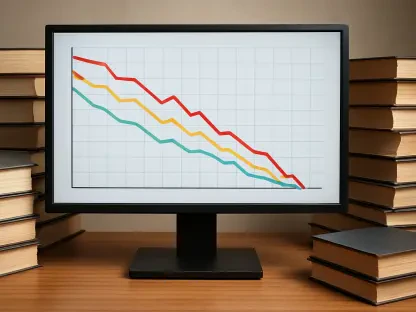
A notable trend observed in 2026 is the decoupling of advertising growth from the sale of new smartphones. Despite a global cooling in smartphone adoption, digital consumption continues to rise because existing users are spending more time on their devices and interacting with a wider variety of apps. Metrics have pivoted to reflect this reality, treating consumer attention and time spent as the primary drivers of revenue rather than the number of unique devices sold. This allows for sustained profitability even in maturing markets where device growth has hit a ceiling.
By focusing on the depth of engagement, a company can drive more conversions per user, regardless of whether that user is on the latest flagship phone or a three-year-old model. This comparative analysis shows that the industry is moving toward a quality over quantity model. The risk of remaining device-centric is obsolescence, while the opportunity in an attention-centric model is the ability to capture value across the entire lifecycle of a consumer’s digital presence. This shift acknowledges that a loyal user on an older device is often more valuable than a transient user on a new one.
Integrating the Cross-Screen Journey through Connected TV
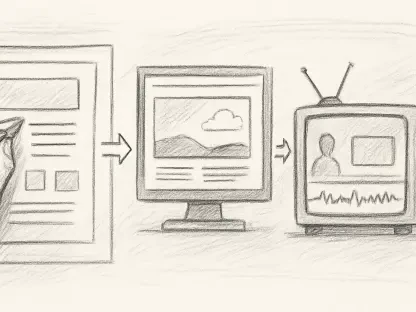
Modern strategy treats the consumer journey as a fluid movement across multiple environments rather than a series of isolated sessions on a single device. A central component of this is the integration of Connected TV into a broader performance-marketing ecosystem. Traditionally, television was a lean-back medium used for broad awareness, but innovative models are transforming it into a lean-forward conversion tool. By utilizing smart QR codes and mobile-linked engagement models, the gap between the living room screen and the mobile checkout is being bridged.
This holistic view addresses the complexity of modern consumer behavior, where a user might see an advertisement on their smart vehicle screen, research it on their phone, and eventually make a purchase triggered by a television prompt. Addressing common misunderstandings that television is only for big-budget branding, it is now proven that these large screens can be high-precision tools for driving measurable outcomes when integrated into a unified data platform. The seamless hand-off between screens ensures that the narrative of the brand remains consistent and the path to purchase remains frictionless for the user.
Anticipating the Era of Agentic Intelligence and Global Expansion
The future of the industry is leaning toward what is described as agentic autonomous intelligent devices. This represents a shift from the traditional Internet of Things to an Internet of Intelligence, where screens are not just passive displays but active participants that recognize context and persona. Emerging innovations like gesture-based advertising and contextual AI-native engagement suggest a world where digital touchpoints react to the physical presence and behavior of the consumer in real-time. This level of responsiveness will likely become the new baseline for consumer expectations within the 2026 to 2028 period.
Furthermore, the focus is shifting geographically toward developed markets like the United States and Europe. While emerging markets provided the initial scale for many AdTech players, developed markets still hold more than half of the world’s total advertising budgets. Through strategic acquisitions and the deployment of robust software development kits, companies are positioning their consumer intelligence platforms to capture high-value sectors such as gaming, healthcare, and e-commerce on a global scale. Regulatory changes regarding data privacy will likely accelerate the need for first-party technology integration, making privacy-by-design a significant competitive advantage.
Leveraging Conversion-Centric Models for Measurable Growth
The most actionable takeaway from the current evolution of AdTech is the transition to the Cost Per Converted User model. This strategy moves beyond superficial metrics like clicks or views and aligns the interests of the technology provider directly with those of the advertiser. For businesses and professionals, the recommendation is clear: focus on outcome-based marketing. By integrating proprietary audience intelligence with an advertiser’s first-party data, companies can create a self-optimizing feedback loop that maximizes the return on advertising spend.
To apply this in real-world scenarios, brands should move away from fragmented agency-led models and toward direct technology integration. This ensures that every dollar spent is traceable to a specific consumer action, providing a level of transparency that was previously unattainable. Best practices now involve using cross-screen data to identify the moment of highest attention and delivering the message on the screen where the user is most likely to convert. This approach reduces advertising fatigue and ensures that the marketing remains relevant to the consumer’s current context, ultimately leading to higher loyalty and lifetime value.
A Holistic Vision for the Future of Consumer Intelligence
The strategic shift from screens to consumer attention represented a sophisticated maturation of the digital advertising industry as it moved through 2026. By focusing on AI-led verification, the depth of user engagement, and the integration of cross-screen journeys, a resilient framework was built to thrive independently of hardware cycles. The core insight remained that in a world of infinite content, human attention is the only truly finite resource. This analysis demonstrated that those who successfully decoded human intent gained a massive competitive edge over those still chasing device counts.
The significance of this topic persisted because it mirrored the broader technological trend toward ambient intelligence, where technology serves the user subtly and effectively across all environments. For brands and marketers, the strategic takeaway was that success no longer depended on how many screens could be occupied, but on how intelligently the consumer’s journey could be navigated. Moving forward, the industry must continue to refine the distinction between human and synthetic interactions to maintain trust. The ability to turn fragmented attention into a cohesive, measurable journey will remain the ultimate differentiator in the global marketplace for the foreseeable future.