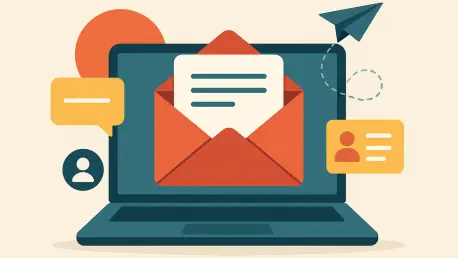

In a digital landscape where consumers are bombarded by hundreds of marketing messages daily, the necessity for relevance has moved from a competitive advantage to a fundamental requirement for engagement. Using a single customer profile to store purchase history and website behavior prevents the delivery of conflicting messages, such as promoting a product the customer has already bought. Modern email marketing has evolved far beyond the simple insertion of a first name into a subject line; it now encompasses a dynamic ecosystem where content, offers, and delivery timing shift fluidly based on individual data points. By leveraging real-time interactions, organizations can ensure that a new subscriber receives a helpful setup guide while a long-term customer is presented with care instructions for a recent high-value purchase. This level of sophistication transforms the email from a generic broadcast into a tailored service that anticipates needs and solves problems before the user even articulates them. Ultimately, mastering these personalized techniques involves a disciplined approach to data collection and an unwavering focus on the specific actions that drive business growth and customer satisfaction in 2026.
1. Establishing: Strategic Campaign Objectives
Effective personalization begins with a clear understanding of the desired outcome rather than the technical capability to change text. Before diving into data sets, it is critical to identify the specific customer action or business result that needs improvement. For instance, a campaign might focus on recovering abandoned shopping carts, helping new users navigate a complex software setup, or increasing the frequency of repeat purchases from high-value clients. A well-defined goal provides the necessary direction for selecting which audience to target and which metrics will define success. Without this initial clarity, personalization efforts often become fragmented, leading to a collection of “neat” features that do not actually move the needle on core business objectives. By starting with a specific target, such as increasing the number of first-time buyers who return for a second purchase within thirty days, a marketer can work backward to determine exactly what information is required to make that message resonate.
Once the objective is set, the focus shifts to identifying the metrics that will be used to track progress. It is not enough to simply send more personalized emails; the strategy must be rooted in measurable growth. This means looking beyond basic open rates and focusing on conversion metrics that align with the initial goal, such as total revenue generated or the completion rate of an onboarding sequence. Identifying these key performance indicators early ensures that the data collection process remains lean and purposeful. Furthermore, a clear objective helps in communicating the value of the campaign to stakeholders, as the results can be directly linked to broader corporate priorities. Whether the aim is to bring inactive subscribers back into the fold or to cross-sell a specific category to existing fans, the objective serves as the North Star for every subsequent technical and creative decision made during the campaign development phase.
2. Gathering: Essential Customer Information
The success of any tailored email depends entirely on the quality and relevance of the data supporting it. However, a common mistake is attempting to collect every possible data point from the outset, which often leads to analysis paralysis and increased privacy risks. Instead, the focus should remain on gathering the smallest set of information that directly supports the established campaign goal. For example, an automated email designed to recover an incomplete checkout only needs the recipient’s address, the specific items left in the cart, and confirmation that the transaction was not finalized. It does not require the customer’s job title, birthday, or decade-long purchase history. By prioritizing essential data, organizations can simplify their technical workflows and ensure that the information they do have is accurate and actionable, rather than allowing their databases to be cluttered with redundant or outdated details.
Data sources are typically categorized into zero-party and first-party information, each offering different levels of insight. Zero-party data is information that a subscriber intentionally shares, such as their stated interests in a signup quiz or their preferred email frequency in a preference center. This type of data is highly valuable because it represents a direct request from the consumer for specific types of content. On the other hand, first-party data is gathered through direct interactions, such as website browsing patterns, purchase history, and email engagement metrics. Combining these two sources allows for a comprehensive view of the customer journey. It is vital to ensure that this information is centralized into a single, unified profile. When data is siloed across different platforms—such as a separate system for the online store and the email marketing software—the risk of sending conflicting or repetitive messages increases significantly, which can quickly erode consumer trust.
3. Creating: Specific Subscriber Segments
Segmentation serves as the foundational architecture for personalization, allowing marketers to group individuals based on shared traits or behaviors. Instead of treating the entire subscriber list as a monolithic block, segmentation breaks the audience into manageable cohorts that require different types of communication. For example, a travel company might create one segment for customers who frequently book luxury international flights and another for those who primarily look for budget-friendly domestic weekend getaways. While both groups are interested in travel, the content, tone, and offers that will appeal to them are vastly different. Effective segmentation ensures that the right message reaches the right person at a time when they are most likely to find it useful. In 2026, dynamic segmentation has become the standard, where users are automatically moved in and out of groups based on their most recent actions, ensuring that the marketing remains relevant as their needs evolve.
Beyond simple demographics like age or location, behavioral segmentation offers a much deeper look into a customer’s current mindset. This involves grouping people based on how they interact with the brand, such as separating first-time buyers from long-term loyalists. A new customer might need educational content and a “welcome” discount to encourage their next purchase, whereas a repeat buyer might respond better to an exclusive early-access offer or a request for a product review. By creating these specific boundaries, marketers can tailor the entire email experience to the customer’s current stage in the lifecycle. This approach prevents the awkwardness of sending a “new user” discount to someone who has been a loyal patron for years. Ultimately, well-executed segments allow for a more surgical approach to marketing, where resources are focused on the individuals who are most likely to respond to a particular prompt or value proposition.
4. Modifying: Relevant Email Components
Once the audience segments are established, the next step involves adjusting the actual components of the email to reflect the unique interests of each recipient. Adaptive messaging allows different sections of the email—such as the hero image, the body copy, or the call to action—to change dynamically based on the subscriber’s data. For a retail brand, this might mean showing winter coats to subscribers in colder climates while simultaneously displaying swimwear to those in tropical regions, all within the same campaign deployment. This level of relevance ensures that the moment a user opens the email, they see something that immediately connects with their current reality. This technique is far more effective than generic messaging because it reduces the friction between the initial interest and the final purchase, making the entire experience feel personalized and curated rather than mass-produced.
The call to action (CTA) is perhaps the most critical element to personalize, as it directly dictates the next step in the customer journey. A generic “Shop Now” button may be effective for a broad sale, but a more specific prompt can significantly improve conversion rates. For instance, a customer who has been browsing a specific category of electronics might see a CTA that says “View Latest Headphones,” while a customer who has an item in their cart might see “Complete Your Order.” Even the subject line and the greeting can be modified to better capture attention. However, it is important that these modifications feel natural and helpful rather than forced. Over-personalization, such as mentioning too many specific details about a user’s browsing history in the subject line, can sometimes feel intrusive. The goal is to use the data to improve the utility of the email, ensuring that every element serves a purpose in guiding the recipient toward the intended outcome.
5. Determining: Activation Rules and Scheduling
The timing and delivery of a message are just as important as its content, and modern marketing relies on specific activation rules to ensure emails are sent at the most impactful moments. Action-based automated emails, often called “triggers,” are sent in response to a user’s behavior. Common triggers include signing up for a newsletter, downloading a whitepaper, or abandoning a shopping cart. By setting these rules, marketers can engage with customers exactly when their interest is at its peak. For example, a follow-up email sent thirty minutes after a user leaves a site without purchasing is much more likely to recover that sale than a generic promotional email sent three days later. These automated workflows allow the brand to remain present and helpful throughout the customer’s decision-making process without requiring manual intervention for every single interaction.
In addition to behavioral triggers, scheduling messages based on the recipient’s local time zone and historical activity patterns can drastically improve open and click-through rates. Instead of sending a global blast at 9:00 AM Eastern Time, which might arrive in the middle of the night for international subscribers, a personalized schedule ensures the email lands in the inbox when the user is most likely to be checking their phone or computer. Advanced platforms in 2026 can even predict the specific hour an individual is most likely to engage based on their past three months of email activity. This level of precision helps the message avoid getting buried under a mountain of other communications. By combining smart triggers with individualized scheduling, organizations can create a communication rhythm that feels respectful of the user’s time and highly responsive to their immediate needs.
6. Evaluating: The Impact of Marketing Efforts
To understand if personalization is truly driving better results, it is necessary to move beyond surface-level metrics and engage in rigorous evaluation. Click-through rates and open rates provide some insight, but the ultimate measure of success is whether the campaign met its original objective, such as increasing revenue or improving customer retention. One of the most effective ways to measure this impact is through the use of a control group. By sending a personalized version of an email to 90% of a segment and a standard, non-personalized version to the remaining 10%, marketers can clearly see the “lift” provided by their personalization efforts. This data-driven approach prevents the team from relying on gut feelings and provides concrete evidence of which tactics are actually worth the investment of time and technical resources.
Evaluating results also involves looking for patterns that can inform future strategies. If a particular personalized offer consistently underperforms in one segment but excels in another, it provides a valuable clue about the preferences of those different audiences. Furthermore, analyzing the long-term impact on customer lifetime value is often more important than the immediate results of a single campaign. A highly aggressive personalized “win-back” campaign might drive a quick surge in sales but could also lead to higher unsubscribe rates if the tone is too pushy. By taking a holistic view of the data, marketers can refine their activation rules, segment definitions, and content strategies. This continuous loop of execution, measurement, and adjustment is what allows a personalization strategy to remain effective over several years, ensuring that the brand continues to grow alongside its audience.
7. Implementing: Key Personalization Methods
Successfully executing a personalized strategy requires a diverse toolkit of methods, ranging from simple text replacements to complex algorithmic recommendations. Adaptive messaging stands out as one of the most powerful techniques, where entire blocks of content are swapped out depending on who is viewing the email. This can include changing the language of the email based on the recipient’s stored location or showing different product categories based on their previous purchase history. For example, a fitness brand might send a single email template that displays yoga gear to one group and weightlifting equipment to another. This approach reduces the need to create dozens of separate campaigns, as a single dynamic template can cater to a wide variety of interests, making the marketing department much more efficient while increasing the relevance for the end-user.
Another essential method involves journey-specific communications, which adapt the messaging based on the duration and depth of the customer’s relationship with the brand. A user who has just signed up for a trial of a SaaS platform requires a completely different set of information than a power user who has been using the software for two years. The new user needs “how-to” guides, basic setup tips, and perhaps a prompt to book a demo. In contrast, the long-term customer might benefit from advanced feature updates, case studies on maximizing ROI, or early access to a new module. By mapping the email strategy to these different lifecycle stages, marketers can ensure they are always providing value. This prevents the common frustration of receiving “beginner” content when the user has already mastered the basics, thereby maintaining a high level of engagement and reducing the likelihood of churn.
8. Utilizing: Behavioral Recommendations and Post-Sale Follow-Ups
Leveraging past browsing and buying data to suggest specific products is a hallmark of sophisticated email marketing. Rather than sending a generic list of “top sellers,” predictive personalization uses an individual’s history to recommend items they are genuinely likely to need or want. For instance, if a customer recently purchased a camera, a personalized follow-up might suggest compatible lenses, tripods, or carrying cases. This “next-best-offer” logic turns the email into a helpful concierge service that anticipates the customer’s needs. When these recommendations are based on actual data rather than broad assumptions, they significantly increase the average order value and reinforce the idea that the brand understands the customer’s specific interests and requirements.
Post-sale communications represent another high-value opportunity for personalization that often goes overlooked. Once a purchase is made, the relationship should not go silent until the next sale; instead, this is the perfect time to provide shipping updates, care instructions, or installation guides. Personalized follow-ups can also be used to gather feedback or request reviews for the specific products the customer bought. For example, an outdoor equipment retailer could send a guide on how to waterproof a newly purchased tent two weeks after delivery. This type of communication provides immense value to the customer without asking for anything in return, which builds long-term loyalty. By focusing on the post-purchase experience, brands can differentiate themselves from competitors who only reach out when they want to push a new promotion, creating a more balanced and positive relationship with their subscribers.
9. Prioritizing: Current Behavior over Demographics
While basic demographic data like age, gender, and location can provide a starting point for personalization, modern marketers in 2026 recognize that current behavior is a much more powerful indicator of intent. A person’s zip code or job title tells you very little about what they are interested in right now, whereas their recent website activity reveals their immediate needs. If a subscriber spent twenty minutes yesterday looking at high-end mountain bikes, that action is a far better trigger for a personalized email than their age or gender. Prioritizing these “behavioral signals” allows for marketing that feels timely and relevant. It acknowledges the customer’s current state of mind and responds to their curiosity or needs in real-time, which is essential for capturing attention in a crowded inbox where generic, demographic-based offers are often ignored.
Furthermore, relying too heavily on general traits can lead to inaccurate assumptions that alienate customers. People are complex and their interests frequently change; a person who bought a gift for a child three years ago should not be indefinitely categorized as a “parent” if their subsequent behavior shows no interest in children’s products. By focusing on recent actions—such as links clicked in the last three emails or pages viewed in the last week—the personalization remains fresh and accurate. This approach also allows for “interest-based” pivots. If a long-time buyer of office supplies suddenly starts browsing for home furniture, the email system should be able to recognize this shift and adjust the content accordingly. Staying focused on the “here and now” of customer behavior ensures that the marketing remains a reflection of the customer’s actual life rather than a static profile from several years ago.
10. Ensuring: Quality Control and Technical Integrity
As personalization becomes more complex, the risk of technical errors increases, making rigorous quality control a non-negotiable part of the process. Every dynamic element, from the first name tag to the product recommendation block, must have a reliable fallback option. If a subscriber’s name is missing from the database, the email should never display broken code or empty brackets; instead, it should default to a natural alternative like “Hi there” or “Hello.” Similarly, if a personalized product recommendation is out of stock, the system needs to be smart enough to either pull a different recommendation or show a set of standard best-sellers. Testing these “edge cases” ensures that the brand always appears professional and that the personalized experience never turns into a technical failure that frustrates the recipient.
Beyond simple fallbacks, the actual content generated by automated systems or AI-driven tools must be reviewed to ensure it matches the brand’s voice and standards. While AI can significantly speed up the creation of personalized subject lines or body copy, it is not infallible. Marketers should implement a human-in-the-loop review process to verify that the language is appropriate, accurate, and aligned with the campaign’s goals. Additionally, it is vital to verify every link and image across various devices and email clients. What looks perfect on a desktop might be unreadable or broken on a mobile device, which is where the majority of emails are opened in 2026. Maintaining this high level of technical integrity is what separates elite marketing teams from those who simply “set and forget” their automations, ensuring that the investment in personalization actually leads to a better user experience.
11. Avoiding: Common Personalization Pitfalls
One of the most frequent mistakes in email marketing is using “superficial personalization” to mask generic or irrelevant content. Simply adding a customer’s first name to a subject line does not make an unappealing offer useful; in fact, it can highlight the lack of relevance if the rest of the email has nothing to do with the recipient’s needs. Marketers should also avoid making false claims, such as stating that items were “handpicked for you” when the same list is being sent to every subscriber. These tactics are easily spotted by modern consumers and can lead to a loss of credibility. Authenticity is key; if a message is being personalized, the underlying data should genuinely reflect an understanding of the customer’s preferences, rather than being used as a hollow psychological trick to increase open rates.
Another significant pitfall is the failure to respect the customer’s privacy and comfort levels. While using data to be helpful is encouraged, using overly specific or “creepy” tracking details can make a subscriber feel like their privacy is being invaded. For example, mentioning a specific timestamp of when they visited a website or citing their exact physical location too frequently can be off-putting. The goal should be to create a seamless, helpful experience where the personalization feels like a natural part of the service. Additionally, organizations must be careful not to overwhelm subscribers with too many automated messages at once. If a user triggers a cart abandonment email, a browse abandonment email, and receives a weekly newsletter all on the same day, they are likely to become annoyed and hit the unsubscribe button. Setting “frequency caps” and “priority rules” ensures that the most important message takes precedence without flooding the inbox.
12. Advancing: Strategic Analysis and Future Considerations
Refining the approach to personalized messaging required a shift from broad assumptions to data-driven precision. Teams that succeeded in this transition focused on actionable insights rather than simply accumulating vast amounts of unused information. They implemented robust testing protocols to ensure every dynamic element functioned correctly across all devices and platforms. Furthermore, the most effective strategies prioritized the customer’s current psychological state, particularly by pausing promotional content for those with unresolved support issues. By maintaining dynamic audience segments that automatically updated in response to new behaviors, these organizations avoided the trap of sending outdated or irrelevant offers. The move toward more thoughtful, behavior-based communication resulted in higher engagement rates and a more sustainable relationship with the subscriber base. These marketers viewed every email not as an isolated event, but as a critical touchpoint within a broader, multi-year customer journey.
Future success in this field was dependent on the ability to balance automation with genuine human oversight. As the tools for personalization became more sophisticated, the most successful practitioners were those who used technology to enhance, rather than replace, the creative strategy. They avoided the common error of confusing a single click with a permanent interest, instead building systems that recognized the difference between a fleeting curiosity and a long-term preference. By constantly auditing their automated workflows and updating their data sets, these organizations ensured their messages remained fresh and valuable. They also realized that the true value of personalization was not found in the technology itself, but in the trust it built with the audience. Moving forward, the focus remained on using information to make the customer’s life easier, proving that when used correctly, data is the most effective tool for building a lasting brand.