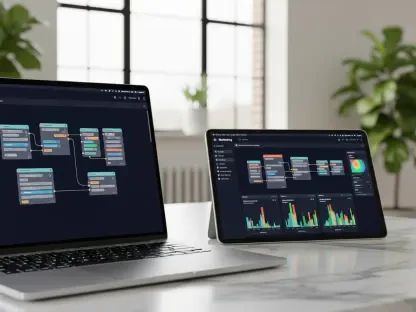

A marketing manager sits at a desk, staring at a complex flowchart of a campaign decision tree that would normally take a specialized developer weeks to translate into a functional tool. Instead of drafting a technical ticket for a backlogged engineering team, the manager simply uploads a photo of the whiteboard to an artificial intelligence interface and describes the desired outcome in plain English. Within seconds, a fully operational script emerges, ready to categorize search queries and adjust bids based on nuanced human intent. This is the reality of vibe coding, a shift where the “vibe”—or the specific intent and design vision of the marketer—serves as the primary programming language.
The significance of this evolution cannot be overstated for the search engine marketing industry, which has long been divided between those who can code and those who cannot. For years, the majority of practitioners were forced to rely on cookie-cutter automation or rigid third-party software that lacked the flexibility to adapt to unique business needs. Vibe coding effectively democratizes technical power, allowing anyone with a clear strategic vision to generate on-demand software. This transition from Software-as-a-Service to on-demand software generation means that the competitive advantage in digital advertising has shifted from technical syntax mastery to the ability to articulate high-level strategy to an intelligent machine.
The End of the Copy-Paste Era in Search Engine Marketing
For a generation, pay-per-click managers operated like digital mechanics, splicing together pre-written scripts they didn’t fully understand to maintain accounts they didn’t truly control. While Google Ads scripts provided a glimpse into the potential of automation, the formidable barrier of JavaScript knowledge left nearly 95% of practitioners sidelined, forced to use someone else’s “secret sauce” rather than their own. This dependency created a ceiling for innovation, as marketers were restricted by the limitations of whatever public scripts were available on industry blogs or forums.
Today, the script is being flipped by a movement where the marketer’s intuition is the only prerequisite for building complex systems. The reliance on deterministic logic, which often broke when faced with the messy reality of human language, is fading. By moving away from the era of manual copy-pasting, professionals are reclaiming their time and their creative agency. They are no longer just operators of a platform but architects of their own bespoke ecosystems, capable of building specific solutions for individual client problems without waiting for a developer’s approval.
Moving Beyond Deterministic Logic to On-Demand Software
Traditional automation has historically relied on rigid if-then structures that fail when confronted with the nuances of modern search behavior. Identifying a competitor’s brand name in a sea of search queries, for instance, requires a level of linguistic understanding that standard code struggles to achieve without thousands of lines of exceptions. Vibe coding marks a definitive transition toward true on-demand software generation, where the intelligence of the model handles the ambiguity of the real world. Rather than following a fixed path, the software adapts to the context provided by the user, solving problems that were previously considered too “human” for automation.
This shift addresses the “traditional script problem” by making automation flexible, intuitive, and, most importantly, instantaneous. Instead of spending months waiting for a development team to build a proprietary tool, marketers can now translate a meeting’s brainstorm directly into functional code using multimodal large language models. This immediate turnaround allows for a level of experimentation that was once impossible. If a strategy does not work, the software can be discarded or rewritten in minutes, effectively turning software development into a fluid part of the daily workflow rather than a separate, high-stakes project.
Defining the Vibe Coding Workflow for PPC
The transition from plain English to functional tools begins with understanding that describing a goal is now a technical skill. When a marketer explains a design vision or a specific campaign goal, the AI handles the heavy lifting of the technical implementation, from backend logic to user interface design. This process has led to the rise of “micro-apps”—temporary software built for tasks that might only take 90 minutes to complete manually. While building a tool for a one-off task once seemed like overkill, the speed of vibe coding makes it more efficient than manual execution, ensuring that even minor chores are handled with precision.
Furthermore, this new framework allows managers to move beyond frequent, repetitive chores and tackle “wish-list” items that were previously ignored due to time constraints. Leveraging large language models enables the resolution of nuanced PPC problems that traditional programming couldn’t handle, such as sentiment analysis of ad copy or complex persona scoring based on demographic data. By identifying which tasks to automate through this lens, practitioners can build a library of custom tools that reflect their specific brand voice and strategic priorities, moving away from a one-size-fits-all approach to digital management.
Expert Perspectives: Building in Minutes, Not Months
Frederick Vallaeys, a veteran who spent a decade building foundational tools at Google, notes that the competitive edge no longer belongs to those who know JavaScript, but to those who can prompt effectively. He suggests that a client meeting should be viewed as a prompt-engineering session, where the requirements discussed become the instructions for a new custom tool. In this environment, managers can build seasonality trackers, Chrome extensions for redacting sensitive data during live demos, or persona scorers in under an hour. The most impactful element of this workflow is the ability to iterate in real-time, telling the AI to “add five more audiences” and seeing the update instantly.
Expert consensus emphasizes that the “mind-blowing” aspect of vibe coding is not just the speed of initial creation but the lack of technical friction during the refinement phase. When a practitioner treats the AI as a junior developer, they can ask questions about the technical approach or request alternative logic without ever looking at the underlying code. This conversational relationship with technology allows for the creation of sophisticated enhancements, such as integrating different forecasting methods or adding interactive help text, which previously required specialized expertise and significant financial investment.
A Practical Strategy for Adopting Vibe Coding
Adopting this methodology requires a strategic selection of tools tailored to the complexity of the task. Entry-level platforms like ChatGPT and Claude are exceptional for data visualization, simple calculators, and script generation. For more ambitious projects involving databases or user login systems, specialized platforms like Lovable, V0.dev, or Replit provide the necessary infrastructure. Using an iterative prompting framework, marketers can use “chat mode” to explore multiple technical approaches before committing to a final build. This ensures the most efficient path is taken, saving resources and improving the final output’s reliability.
Successful implementation also hinges on contextual prompting, where including the specific use case—such as a “seasonality tool” rather than “time series analysis”—helps the AI make better assumptions about the user’s needs. The typical build process involves gathering resources, writing the prompt, and testing the result directly in a browser environment, removing the need for local installations. By turning these AI-generated insights into executable action items and adding custom branding, marketers evolved from data analysts into creators of high-value, proprietary assets. This journey from conceptual “vibe” to functional application ensured that agencies stayed ahead by providing solutions that their competitors simply couldn’t replicate manually.
The shift toward vibe coding represented a fundamental change in how marketing professionals interacted with technology. Instead of viewing code as a barrier, practitioners began to see it as a flexible medium for their strategic intent. The ability to generate custom tools on the fly allowed for a more responsive and creative approach to campaign management, where no task was too small to be optimized. Ultimately, the industry moved toward a future where the most successful managers were those who could best bridge the gap between human intuition and machine execution.