
The rapid migration of digital advertising budgets toward the living room screen has reached a critical tipping point as eight out of ten Performance Max advertisers now find their campaigns serving impressions on connected television devices. This shift marks a significant departure from the traditional mobile-first approach that dominated the previous decade, forcing marketers to reconsider how their automated assets appear to audiences in a lean-back environment. As Google continues to integrate YouTube and various streaming partners into its core performance products, the distinction between social video and broadcast-quality advertising has blurred almost entirely for the average consumer. Most advertisers are currently receiving these television impressions through the YouTube app on smart TVs, yet a surprising number remain unaware of how much of their daily budget is being diverted away from search or shopping grids and toward these large-format displays. The reality is that the automation driving these campaigns is prioritizing reach on the most prominent screen in the household, often without explicit creative optimization from the brand itself.
1. The Evolution of Visual Assets in Automated Campaigns
Since the second quarter of 2026, Google has significantly lowered the barrier to entry for television advertising by allowing Performance Max to serve ads using standard product feed images rather than requiring high-production video files. This technical evolution means that any business with a Google Merchant Center account is technically a television advertiser, as the system automatically generates video-like motion graphics from static catalog photos to fill inventory gaps on streaming platforms. While this democratization of access allows smaller retailers to compete for eyeballs on high-definition screens, it also introduces a massive quality control risk for brands that have not vetted their assets for such a large scale. A low-resolution product shot that looks acceptable on a smartphone screen can appear pixelated or unprofessional when stretched across a sixty-five-inch television, potentially damaging brand perception in the very moment a consumer is most engaged. Automated creative generation is now the default setting for many, making it essential to audit what the algorithm is actually displaying.
The introduction of shoppable connected television formats earlier in 2026 has further complicated the landscape by turning the passive viewing experience into a direct-response opportunity through the use of integrated QR codes and product carousels. Viewers can now scan their screens to browse entire product catalogs or complete a purchase without ever putting down their remote or picking up a secondary device for a separate search. This seamless integration leverages the Google Merchant Center feed to provide real-time pricing and availability, ensuring that the television ad remains as functional as a standard search advertisement. However, the success of these shoppable units depends heavily on the clarity of the call to action and the visual hierarchy of the generated ad. Many advertisers are seeing their Performance Max spend shift toward these interactive formats because the algorithm identifies high engagement rates, yet without a dedicated strategy for television-specific creative, they may be missing out on the full conversion potential that these high-intent placements offer in a modern retail environment.
2. Strategic Oversight and Performance Measurement
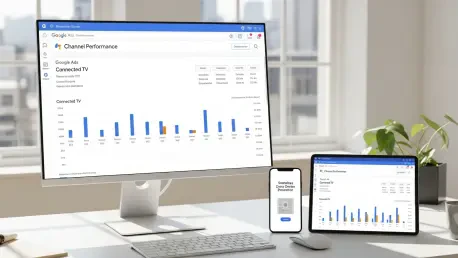
Monitoring performance in this new era requires a disciplined approach to reporting that goes beyond the surface-level metrics provided in the primary Google Ads dashboard. Advertisers must actively pull their Channel Performance reports to uncover the specific breakdown of spend allocated to connected television versus search, display, and standard YouTube placements. Without this level of granular visibility, it is impossible to determine if the cost-per-acquisition on the big screen justifies the investment or if the budget is being exhausted on low-intent impressions that do not lead to long-term customer value. Recent data indicates that Demand Gen campaigns incorporating television screens can drive an average of seven percent incremental conversions at a consistent return on investment, but these results are not guaranteed for every vertical or product category. Identifying these trends early allows a marketing team to make informed decisions about whether to lean into the automated television placements or to tighten the reins through negative placements and refined asset groups that exclude lower-performing segments.
Beyond just looking at the numbers, the physical quality of the creative assets must undergo a rigorous audit to ensure they meet the standards of a premium viewing environment. The shift toward television as the primary device for YouTube viewing—which surpassed mobile and desktop in the United States earlier this year—means that the majority of a brand’s video reach is now happening in a high-fidelity context. Relying on the floor of auto-generated images should be viewed as a temporary measure rather than a long-term strategy, as custom-built video assets optimized for the television screen consistently outperform generic slideshows. Investing in high-definition video that accounts for the safe zones required for shoppable overlays and QR codes can significantly improve the user experience and drive higher click-through rates. As the competition for streaming inventory increases, the winners will be those who treat their Performance Max television spend with the same level of creative scrutiny once reserved for traditional broadcast spots, ensuring every dollar spent contributes to a cohesive and professional brand narrative.
Proactive Strategies for Television Integration
The transition of Performance Max into a dominant player within the connected television space necessitated a fundamental shift in how digital marketers approached their budget allocation and creative development. Successful practitioners moved away from a passive reliance on automated settings and instead adopted a rigorous methodology for auditing their channel-level performance. They recognized that the visual demands of the living room were far higher than those of the mobile feed, leading to a surge in the production of high-resolution video content specifically designed for the shoppable TV experience. These advertisers focused on optimizing their Merchant Center feeds to ensure that the data being pulled into QR code formats was accurate and compelling for a lean-back audience. By treating television as a distinct pillar of the performance mix rather than a secondary afterthought, brands managed to capture incremental growth and maintain a competitive edge in a crowded marketplace. The focus remained on continuous testing of different asset types to determine which visual styles resonated best with viewers on the largest screens available.