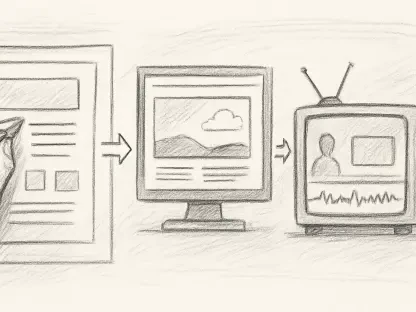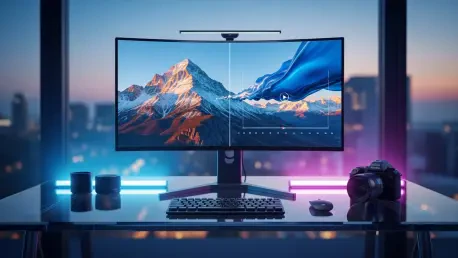

The boundary between a static photograph and a cinematic sequence has effectively dissolved, ushering in a period where a single pixel can dictate the trajectory of a complex visual narrative. While traditional animation once required a dedicated studio and weeks of painstaking keyframing, the current landscape of generative artificial intelligence allows creators to synthesize high-definition motion from a single reference image in less time than it takes to brew a cup of coffee. This technological leap is not merely about convenience; it represents a fundamental shift in how digital depth, lighting, and physics are simulated through neural networks. By analyzing the structural data of a still frame, modern AI models can now predict the fluid dynamics of water, the subtle micro-expressions of a human face, and the complex interplay of light and shadow with startling accuracy.
This review explores the current state of image-to-video technology, evaluating how these tools have moved beyond simple “wiggle” filters to become sophisticated engines of creative expression. The focus remains on how these platforms manage temporal consistency—the ability to keep subjects looking the same from the first frame to the last—and the specific technical benchmarks that differentiate a professional-grade output from a mere novelty. As the digital economy increasingly demands high-velocity video content, understanding the mechanics and limitations of these generative tools is essential for any creator looking to maintain a competitive edge.
The Evolution and Principles of Image-to-Video AI
Generative video technology functions on the principle of latent diffusion, where the AI interprets the semantic meaning of an image to forecast subsequent frames. Unlike early iterations that often resulted in “hallucinated” artifacts or melting limbs, contemporary systems utilize advanced depth mapping and optical flow algorithms. These models analyze the geometry of the input image, identifying which elements should remain static—like a background mountain—and which should move, such as the hair of a character caught in a breeze. This predictive capability allows the software to maintain the structural integrity of the subject while introducing realistic physics.
The transition from manual, high-cost animation software to accessible, web-based interfaces marks a democratization of visual effects. In the past, achieving a professional parallax effect or a realistic character turn required specialized knowledge of 3D environments and skeletal rigging. Today, the complexity is hidden behind a simple upload button. This shift has removed the technical barriers to entry, allowing writers, designers, and small business owners to produce content that previously would have required a five-figure production budget. The core innovation lies in the model’s ability to “understand” the world, applying gravity and momentum to static pixels without human intervention.
Key Platforms and Technical Performance Benchmarks
Realistic Motion and High-Efficiency Generation with Kling AI
Kling AI has emerged as a frontrunner by prioritizing high-fidelity movement that adheres strictly to real-world physics. Its model architecture is particularly adept at handling complex human kinesis, such as walking or gesticulating, which are traditionally difficult for AI to render without distortion. By offering a generous daily credit system, the platform allows for iterative experimentation, which is vital when a creator needs to fine-tune the specific velocity of a shot. The efficiency of its generation engine means that a ten-second clip in 720p can be rendered in minutes, providing a rapid turnaround that suits the fast-paced nature of modern digital workflows.
The technical distinction of this tool lies in its smooth motion patterns. While many competitors struggle with “jitter”—a visual stutter caused by frame-to-frame inconsistency—Kling maintains a steady flow that mimics professional camera stabilization. This makes it an ideal choice for creators who require realistic subject behavior for cinematic projects. Although the free tier imposes resolution limits, the underlying movement logic remains consistent with the paid versions, ensuring that the base technology is accessible to those who are still in the prototyping phase of their creative journey.
Professional Narrative Effects in Runway Gen-2
Runway Gen-2 remains the industry benchmark for commercial-grade visual consistency, specifically for users in the e-commerce and marketing sectors. What sets this platform apart is its suite of granular controls, allowing users to direct the “camera” within a 2D image. By manipulating horizontal, vertical, and zoom parameters, a creator can transform a static product shot into a sophisticated tracking shot. This level of control is essential for brand storytelling, where the focus must remain precisely on the product while the background provides a sense of environmental scale.
However, the professional focus of the platform comes with a more restrictive credit-based economy. The presence of watermarks on the free tier emphasizes its role as a professional sandbox rather than a fully open utility. For those working on high-stakes social media campaigns, the trade-off is often worth the cost. The platform’s ability to maintain the “likeness” of a subject throughout a four-second burst is superior to most open-source alternatives, making it the preferred choice for those who cannot afford visual errors in their final marketing assets.
Stylized Creativity and Physics-Based Animation via Pika Labs
In contrast to the pursuit of photorealism, Pika Labs has carved out a niche by offering hyper-stylized creative effects that intentionally defy standard physics. The platform’s unique “Effects” library—which includes functions to crush, melt, or inflate subjects—provides a toolkit for surrealist content that traditional video editing could never replicate easily. This approach caters to a different segment of the creative market: those looking for viral, eye-catching social media hooks rather than realistic documentary-style footage.
Technically, Pika excels at maintaining stylized textures. If an image is rendered in an oil-painting or anime style, the resulting video preserves those specific artistic strokes across every frame. This temporal consistency in artistry is a significant achievement, as AI often tends to “normalize” stylized images toward a generic photographic look during the animation process. By providing a replenishing credit system, the platform encourages high-volume output, which is particularly beneficial for creators who prioritize quantity and creative flair over cinematic realism.
Depth Mapping and Parallax Effects in LeiaPix and TeraBox
While full-motion synthesis is impressive, many professional applications only require the illusion of depth, which is where LeiaPix and TeraBox find their utility. These tools focus on 2D-to-3D conversion, utilizing depth-map estimation to separate the foreground from the background. By applying a parallax effect—where the foreground moves faster than the background—they create a sense of immersion that is perfect for website headers or digital presentations. This technology is less computationally expensive than full generative video, leading to near-instant processing speeds and watermark-free exports in some cases.
The significance of these template-based animations lies in their reliability. Unlike generative models that might unpredictably change a character’s clothing or facial features, depth-mapping tools leave the original pixels intact. This makes them safer for professional use cases where brand accuracy is non-negotiable. TeraBox, for instance, offers specialized templates like “hugging” or “anime” transformations, providing a quick, reliable path to animation for users who do not have the time to prompt-engineer a complex scene from scratch.
Current Trends and Improvements in Temporal Consistency
The most significant advancement in the last year is the massive improvement in temporal consistency, which has seen a 400% increase in stability across major models. Previously, a character’s eyes might change color or a background building might shift its windows between frames. Current iterations have largely solved these “shimmering” issues by implementing better memory-attention mechanisms within the neural network. This allows the AI to “remember” what happened in frame one while it is generating frame sixty, ensuring that the visual narrative remains cohesive and believable to the human eye.
Furthermore, the industry is moving toward a “freemium” browser-based model that eliminates the need for high-end local hardware. This shift allows a user on a standard laptop to access the processing power of an entire server farm. The accessibility of these tools has changed the creative economy, as independent creators can now compete with larger studios in terms of visual polish. The reduction in visual errors has also meant that the “AI look”—characterized by blurry edges and melting shapes—is rapidly disappearing, replaced by sharp, high-definition outputs that are increasingly difficult to distinguish from traditional film.
Practical Applications for Modern Content Creators
For writers and authors, these tools serve as a bridge between the written word and the visual expectations of a modern audience. An author can take a character portrait generated in a still-image tool and animate it to create a “talking head” teaser for a book launch. This adds a layer of engagement to social media platforms like TikTok and Instagram, where static images are often ignored in favor of moving content. The ability to visualize a specific scene or a character’s mannerisms helps in building a more immersive brand identity for independent creators who lack the budget for a live-action trailer.
In the realm of social media marketing, the application is even more direct. Marketers use AI-generated video to create high-frequency content that keeps their brand relevant in the algorithm. By converting customer testimonials or product photos into dynamic clips, engagement rates typically see a significant uptick. The use of AI allows for rapid A/B testing; a creator can produce five different versions of an animated ad in the time it would take to edit one manually, allowing for a data-driven approach to visual storytelling that was previously impossible.
Technical Hurdles and Market Limitations
Despite the rapid progress, several technical and legal hurdles remain. Commercial licensing is perhaps the most significant barrier for professional adoption. Many free tiers specifically prohibit commercial use, requiring a paid subscription to legally monetize the generated content. This distinction is crucial for businesses that must ensure they have the full intellectual property rights to their marketing materials. Additionally, there is the ongoing challenge of resolution; while 1080p is becoming more common, 4k native generation is still rare and computationally expensive, often requiring upscaling tools that can introduce their own set of artifacts.
Duration also remains a constraint. Most current models are optimized for clips under ten seconds. Creating a longer narrative requires “stitching” these clips together, which often leads to a loss of continuity in lighting or character positioning. Furthermore, the presence of mandatory watermarks on free versions can detract from the professional appearance of the final product. While these limitations are being addressed through more efficient algorithms, they currently represent the “ceiling” that separates casual hobbyist use from high-end professional production.
Future Outlook for Generative Video Technology
The trajectory of generative video suggests that we are approaching a point where the cost of production will plummet toward zero. As native resolutions increase and clip durations extend toward the one-minute mark, the need for traditional B-roll footage or expensive stock video will diminish. We can expect to see breakthroughs in “multi-modal” editing, where a creator can use voice commands to adjust the lighting of a generated scene in real-time. This will transform the role of the editor from someone who manipulates existing footage to someone who “directs” an AI to dream up entire sequences on the fly.
The long-term impact on the creative economy will be a shift in value from technical execution to conceptual originality. When everyone has access to a tool that can generate a Hollywood-quality visual, the “how” becomes less important than the “what.” The democratization of these tools will likely lead to an explosion of niche content, as creators who were previously sidelined by high production costs begin to produce high-quality animated series, films, and advertisements from their homes. The competitive landscape will favor those who can best integrate these AI tools into a coherent, human-led narrative.
Summary of the Technological Assessment
The current state of image-to-video AI tools reflects a mature technology that has moved past its experimental phase and into practical utility. The accessibility of these platforms, combined with the massive leaps in temporal consistency, has provided independent creators with a toolkit that was once the exclusive domain of major studios. While limitations regarding clip duration and commercial licensing still exist, the efficiency gains are undeniable. The ability to animate a still image with realistic physics and professional camera movements has become a standard requirement for digital storytelling, rather than a luxury.
The shift toward high-motion models and 2D-to-3D parallax effects indicated that the industry is diversifying to meet different creative needs, from photorealistic marketing to surreal artistic expression. As these tools continue to evolve, they will likely replace traditional animation workflows for a vast majority of short-form content. Ultimately, the successful creator was the one who recognized that these tools do not replace the human imagination, but rather amplify it, allowing for a more fluid and cost-effective transition from a static concept to a moving reality.