
An Introduction to Marketing’s “Think Different” Moment
The greatest barrier holding back modern marketing teams is the phantom limb of a technological constraint that was amputated years ago, yet the organizational muscle memory continues to dictate every move. This lingering adherence to outdated structures has created a critical inflection point, heralding a revolutionary paradigm known as “Positionless Marketing.” This is a fundamental shift away from the siloed, specialized roles of the past toward a unified, agile, and empowered professional who can ideate, create, analyze, and execute single-handedly. This transformation is not an elective upgrade but a necessary evolution, driven by the complete elimination of the technological barriers that once justified a fragmented workflow.
The discussion ahead explores the critical need for this change by first dissecting the obsolete “assembly-line” model that still governs too many organizations. Subsequently, it will illuminate the technologies that are fueling this sea change, making integrated capabilities accessible to individuals rather than entire departments. Finally, it will introduce the profile of the new marketing professional who thrives in this environment—an agile operator who combines creative vision with analytical precision and technical orchestration to deliver results at a pace previously thought impossible.
Why the Assembly-Line Model No Longer Works
The conventional marketing workflow, where a concept moves sequentially from strategy to data, then to creative, and finally to engineering for deployment, is no longer a best practice; it is a liability. This assembly-line approach was born of necessity in an era of technological limitations, but in today’s environment, it functions as a system of self-imposed friction. Every handoff introduces delays, potential for misinterpretation, and a diffusion of ownership, transforming what should be a nimble response into a protracted project management exercise. This model stifles innovation by prioritizing process over performance and forces marketers to spend more time navigating internal bureaucracy than engaging with customers.
In contrast, moving to a positionless model unlocks profound organizational benefits. The most immediate impact is a radical increase in speed, as the cycle from insight to execution is compressed from weeks or months into hours or days. This velocity fosters true operational agility, giving teams the ability to pivot strategies based on real-time market feedback rather than quarterly reports. More importantly, this shift unleashes the latent potential of marketing talent. When marketers are freed from the constraints of waiting for others, they can apply their strategic and creative skills directly to solving business problems, driving a culture of ownership, experimentation, and measurable impact.
The Three Pillars of the Positionless Marketer
The modern marketing professional is defined not by a narrow job description but by a holistic set of capabilities. These core competencies can be broken down into three distinct yet interconnected pillars that form the foundation of the positionless marketer. Each pillar represents a domain that was once the exclusive territory of a specialized team.
Technology has acted as the great equalizer, dismantling the high walls between these functions and placing powerful, intuitive tools directly into the hands of the individual marketer. By mastering these pillars, a single professional can now wield the combined power of an entire traditional marketing department, transforming their role from a coordinator of tasks into a driver of end-to-end strategy and execution.
Wielding Creative Power Through AI
The first pillar is the ability to generate and deploy a vast array of creative assets on demand through the power of Artificial Intelligence. This capability single-handedly dismantles the most notorious bottleneck in marketing: the traditional creative development cycle. Instead of submitting a brief and waiting weeks for a limited set of assets, the positionless marketer can now use AI to produce countless variations of copy, imagery, and video in minutes.
This newfound creative autonomy enables personalization at an unprecedented scale. A marketer can conceive of a new campaign message in the morning and, by the afternoon, have generated and launched dozens of tailored ad variants for different audience micro-segments. What once required extensive coordination with designers, copywriters, and agencies is now an iterative, self-contained process. This allows for rapid testing and optimization, ensuring that creative is not just a static asset but a dynamic tool for driving engagement.
Harnessing Data Power with Direct Insights
The second pillar is the marketer’s direct, unmediated access to customer data and real-time analytics. The days of depending on a separate data team to pull reports or analyze performance are over. Modern, user-friendly data platforms empower marketers to become their own analysts, allowing them to explore customer behavior, segment audiences, and identify emerging trends without delay or dependency.
This direct line to customer intelligence is transformative. For example, a marketer might identify a new behavioral trend among a specific customer cohort in the morning. Instead of filing a request for further analysis, they can immediately dig into the data, validate the insight, and construct a personalized journey to address that behavior before the end of the day. Acting on a signal at the moment it appears, rather than weeks later, is the difference between capturing an opportunity and reading about it in a retrospective report.
Mastering Optimization Power via Self-Serve Orchestration
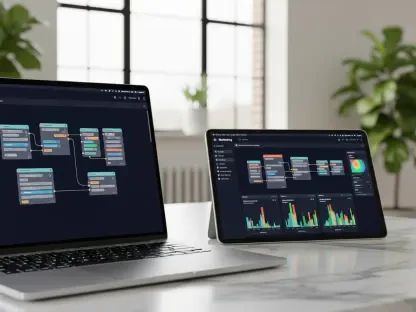
The third pillar is the capability to design, automate, test, and optimize complex, multi-channel customer journeys independently. Sophisticated orchestration platforms have democratized the work that once belonged exclusively to marketing operations or engineering teams. These tools provide intuitive, visual interfaces that allow marketers to build sophisticated workflows without writing code, bypassing development backlogs entirely.
This self-serve capability fosters a culture of continuous and rapid experimentation that is impossible under the old model. Rather than being limited to one or two simple A/B tests managed by another team, a positionless marketer can design and launch a dozen campaign variations simultaneously to measure meaningful business lift. They can test different channel combinations, messaging sequences, and promotional offers at scale, quickly identifying what truly moves the needle and iterating far more effectively.
Your Call to Action Embracing the Future
The emergence of the “Positionless Marketer” signifies more than just a new role; it represents a fundamental shift in mindset. The objective is no longer to manage a rigid, linear process but to enable the full potential of both technology and talent. Aspiring positionless marketers will find that their primary challenge is not learning new tools, which are more accessible than ever, but unlearning the old limitations and dependencies that have defined marketing for decades. This approach is a call to action for the innovators and teams ready to challenge the status quo.
Ultimately, the most successful marketing teams were not those with the biggest budgets, but those who were bold enough to operate without the imaginary constraints of the past. They recognized that the walls separating creative, data, and execution had already crumbled. They became the first to step through the debris toward a more integrated, agile, and impactful future, proving that the greatest competitive advantage was the willingness to believe that a better way was not just possible, but already here.