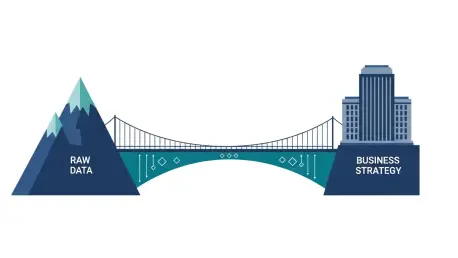

Modern digital analytics environments often struggle to provide perfectly accurate snapshots of user behavior due to the compounding effects of cookie restrictions, cross-device pathing complexities, and the inherent delays in server-side processing. Decision-makers frequently enter meetings expecting a single, definitive number that explains the performance of a multi-million dollar campaign, yet the underlying data often tells a far more nuanced and fragmented story. When a dashboard shows a precise conversion rate of 3.42%, it carries an air of authority that belies the reality of signal loss and modeled attribution gaps. This discrepancy creates a significant risk for the analyst; if the reported numbers are presented as absolute truths and later shift during a data refresh or a change in privacy protocols, professional credibility can vanish instantly. The challenge is not necessarily the technical limitation of the tools, but rather the way these limitations are communicated to stakeholders who rely on data to justify budget allocations and strategic pivots. Success in this field requires moving beyond the role of a data gatekeeper and becoming a translator who can navigate the space between messy raw inputs and clear, high-level business requirements.
Building a framework for reporting uncertainty is essential for maintaining long-term trust within an organization, especially as privacy-centric measurement becomes the default standard. In 2026, the reliance on automated modeling and synthetic data has increased, meaning that what appears in a reporting interface is often a sophisticated approximation rather than a direct observation. If an analyst fails to mention that a portion of the reported revenue is based on data-driven attribution models or modeled conversions, they are essentially setting a trap for themselves when the model recalibrates. Transparency does not weaken the impact of a report; instead, it demonstrates a deep understanding of the technical landscape and protects the analyst from being held responsible for the inherent volatility of the digital ecosystem. By acknowledging where the data is robust and where it is speculative, the reporting process shifts from a search for “perfect” numbers to a more practical discussion about trend lines and directional accuracy. This approach ensures that the insights provided remain valuable even when the specific metrics are subject to external fluctuations or technical updates.
1. Utilize Intervals Rather Than Single Figures
Presenting a single, specific figure in a report suggests a level of precision that is often impossible to achieve in modern tracking environments where privacy settings and cross-platform shifts are constant factors. Instead of stating that a campaign will generate exactly fifteen percent growth, providing a range such as twelve to eighteen percent acknowledges the variables that could influence the final outcome. This method of communication shifts the focus from a pass-fail metric to a spectrum of likely performance, which helps stakeholders understand the level of risk involved in a particular strategy. When a single point estimate is used, any deviation from that number—even a minor one—can be interpreted as a failure of the analysis or a breakdown in the campaign’s execution. By using intervals, the analyst provides a more realistic view of the data’s limitations while still offering a clear target for decision-making. This practice also prevents the common mistake of anchoring a business strategy to a figure that was never meant to be interpreted as an absolute certainty.
Furthermore, intervals encourage a more sophisticated level of dialogue between the data team and executive leadership, as they highlight the potential for both upside and downside scenarios. If a projected conversion rate is presented as a range, it allows stakeholders to prepare contingency plans for the lower end of the spectrum while also planning for the resource demands that would come with hitting the higher end. This approach is particularly effective when dealing with volatile channels or new market entries where historical data might be sparse or unreliable. In the context of 2026 marketing operations, where consumer behavior is influenced by rapidly shifting digital trends, the use of ranges provides a necessary buffer against the unpredictability of the market. It positions the analyst as a strategic advisor who is focused on the broader trajectory of the business rather than someone who is simply reading numbers off a screen. Ultimately, this leads to a more resilient planning process where the organization is prepared for a variety of outcomes based on a transparent assessment of the available information.
2. Distinguish Between Observed And Estimated Metrics
Modern analytics platforms, such as Google Analytics 4 or various server-side tracking solutions, often mix direct observations with modeled data to fill in gaps left by non-consenting users or cross-device limitations. It is vital for a report to explicitly distinguish between these two types of data to ensure that stakeholders understand the foundation of the insights being presented. Observed metrics represent direct interactions that were successfully tracked and recorded without the need for probabilistic adjustments, making them the most reliable components of a report. In contrast, estimated metrics use historical patterns and machine learning to predict behavior in areas where direct tracking was blocked or unavailable. Failing to label these differences can lead to a situation where a business makes a major investment based on a modeled trend that may not be as stable as a directly observed one. Clear labeling helps maintain the integrity of the reporting process by showing that the analyst is aware of the difference between hard facts and informed calculations.
The inclusion of footnotes or visual indicators next to modeled figures serves as a constant reminder that certain numbers are subject to the logic of the attribution model being used. For instance, if a report uses data-driven attribution to distribute credit across touchpoints, that credit is an estimation based on probability rather than a physical log of a user’s path. By clarifying this distinction, the analyst protects their credibility if the model updates its weightings or if a change in tracking technology alters the way estimations are calculated. This transparency also allows decision-makers to weigh the importance of different data points more effectively; they might choose to prioritize strategies backed by observed data for high-stakes decisions while using estimated data for more experimental initiatives. Maintaining this boundary between the known and the projected is a hallmark of professional reporting that prioritizes long-term accuracy over short-term simplicity. As data privacy regulations continue to evolve from 2026 into 2028, the ability to explain how modeled data functions will become an increasingly valuable skill for any data professional.
3. Include Straightforward Confidence Descriptions
Communicating the reliability of a data set does not require a deep dive into complex statistical terminology or the presentation of p-values that may alienate a non-technical audience. Instead, using plain-language descriptions can effectively convey the level of confidence the analyst has in a particular set of findings. Terms such as “high confidence based on consistent trends” or “preliminary findings with high volatility” provide immediate context that helps a manager decide how much weight to give a specific report. This qualitative approach makes the data more accessible and prevents the technical details from obscuring the underlying message. When the audience understands the strength of the signal, they are less likely to make reactive decisions based on minor fluctuations that might just be noise. The goal is to provide a sense of the data’s “sturdiness” so that the organization can move forward with a clear understanding of where the ground is firm and where it is still shifting.
Providing these descriptions also helps to manage expectations during periods of transition, such as the launch of a new tracking protocol or a significant shift in a marketing budget. If a report indicates that a recent surge in traffic is “highly likely to be an anomaly due to seasonal shifts,” it prevents the team from over-investing in a trend that is unlikely to persist. This type of proactive context-setting builds a narrative around the data that is much more useful than the raw numbers alone. It also demonstrates that the analyst is looking beyond the surface-level metrics to understand the root causes and reliability of the information. By standardizing these confidence labels across all internal reporting, an organization can develop a shared language for discussing data quality, which leads to more disciplined and informed strategic sessions. This clarity is essential for navigating the complex digital landscape where data quality can vary significantly from one source to another, ensuring that the most reliable insights always take center stage.
4. Prioritize Actionable Insights Over Technical Terminology
Data reports are often cluttered with jargon such as “sampling errors,” “identity resolution gaps,” or “api latency,” which can distract from the actual business implications of the findings. To maintain credibility and engagement, an analyst should focus on translating these technical hurdles into actionable insights that directly relate to the organization’s goals. For example, rather than explaining the intricacies of how a tracking script was blocked by a specific browser update, it is more effective to state that the current visibility into a specific segment is limited, necessitating a more cautious approach to spending in that area. This shift in focus ensures that the conversation remains centered on strategy and results rather than the mechanics of the tools. When stakeholders see that the analyst is focused on the bottom line, they are more likely to view the data team as an essential partner in the decision-making process.
Building on this, the reporting process should always aim to answer the question of what the organization should do next in light of the data’s limitations. If a particular metric is currently too noisy to provide a clear signal, the recommendation might be to wait for a larger sample size before making a definitive change to the marketing mix. This approach turns a potential negative—uncertainty in the data—into a positive strategic guardrail that prevents costly mistakes. By framing data limitations as a natural part of the business environment, the analyst can guide the leadership team toward more robust and flexible planning. This method of communication reinforces the idea that data is a tool for reducing risk, not a magic solution that provides perfect answers every time. As we move through 2026 and look toward future operational cycles, the ability to distill complex data problems into clear business choices will remain a critical differentiator for top-tier analysts.
5. Foster A Culture Where “I Don’t Know” Is Acceptable
In many high-pressure corporate environments, there is a strong temptation to provide a definitive answer even when the data is insufficient to support one. However, fostering a culture where it is acceptable to admit that the data is currently inconclusive is one of the most effective ways to preserve long-term credibility. When an analyst has the courage to say “I don’t know yet, but I am investigating the cause,” they demonstrate a commitment to accuracy over convenience. This honesty prevents the organization from chasing false leads or basing its entire strategy on a guess that was forced out of a desire to seem helpful. Over time, this transparency builds a reputation for reliability, as stakeholders learn that when the analyst does provide a definitive answer, it is backed by solid evidence. This cultural shift requires support from leadership, but it ultimately leads to a much more resilient and data-literate organization.
Establishing this standard also allows for more collaborative problem-solving when data gaps do occur. Instead of the analyst working in isolation to “fix” a number, the team can discuss whether the missing information is critical enough to justify a change in tracking implementation or if a different metric could serve as a better proxy. This collaborative approach turns technical challenges into opportunities for strategic alignment, ensuring that everyone is aware of the trade-offs involved in data collection and reporting. When the pressure to be an “oracle” is removed, analysts can spend more time on deep analysis and less time on defensive reporting. This results in a higher quality of work and a more sustainable pace for the data team, which is essential for maintaining high standards as the volume of information continues to grow. By prioritizing truth over speed, the organization ensures that its decisions are always grounded in the best possible understanding of the market, regardless of the complexities involved in measuring it.
Strategic Realignment For Future Reporting
The evolution of data reporting throughout 2026 reached a point where transparency regarding uncertainty became the standard rather than the exception. Analysts successfully shifted away from providing static, isolated figures and instead adopted a methodology that emphasized ranges, clear definitions, and qualitative context. This transition allowed organizations to become more agile, as decision-makers were no longer surprised by the natural fluctuations inherent in digital tracking and consumer behavior. By implementing clear labels for modeled data and prioritizing plain-language confidence descriptions, teams effectively bridged the gap between technical complexity and executive clarity. The shift toward actionable insights ensured that data remained a functional tool for risk mitigation and strategic planning, rather than a source of confusion or false confidence.
Moving forward, the focus remained on refining these communication habits to ensure that the partnership between data teams and leadership continued to strengthen. The practice of acknowledging information gaps was normalized, which significantly reduced the frequency of reactive decisions based on incomplete or noisy signals. This cultural change protected the professional standing of analysts and allowed them to provide more meaningful contributions to long-term business objectives. By treating uncertainty as an inherent feature of the landscape rather than a flaw in the process, organizations built a more realistic and durable foundation for growth. The lessons learned from this period provided a clear roadmap for navigating the complexities of privacy-first measurement, ensuring that credibility remained the most valuable asset in any data-driven conversation.