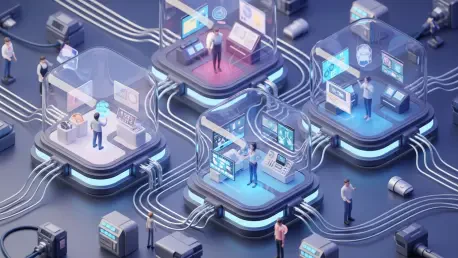

Anastasia Braitsik is a powerhouse in the digital landscape, known for her ability to dismantle traditional marketing silos and rebuild them into high-performance, data-driven machines. As a global leader in SEO and content strategy, she has spent years navigating the intersection of human creativity and technical analytics. Today, she is at the forefront of a major industry pivot: the integration of AI video into creative workflows. Anastasia observes that the traditional “assembly line” of content creation—where writers, designers, and editors work in isolation—is being replaced by a fluid, interconnected ecosystem. In this discussion, she explores how tools like Higgsfield are not just accelerating production but are fundamentally reshaping the roles within creative teams. From the rise of prompt designers to the emergence of workflow coordinators, Anastasia provides a deep dive into the new architecture of content production and what it means for the future of digital leadership.
Traditional creative workflows usually move linearly from writing to editing. As these stages become more interconnected through AI video tools like Higgsfield, how are you seeing the fundamental DNA of content teams shift away from these old silos?
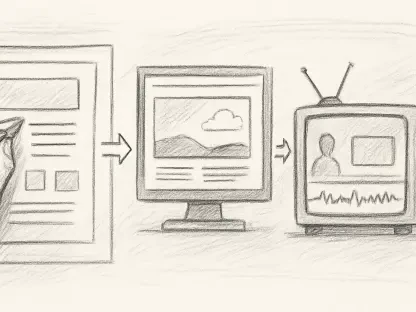
For decades, we operated like a factory assembly line where a writer handed off a script to a designer, who then passed it to an editor. It was a rigid, sequential process that often stifled the creative spark because by the time the video was finished, the original vision had been filtered through three or four different hands. Now, we are seeing those walls crumble into a much more fluid environment where creation happens in a single, integrated space. Instead of moving from one stage to another, content creation is becoming a living conversation where boundaries between roles are less rigid. Teams are no longer waiting for a “finished” draft to start visual work; instead, the visuals and the narrative evolve simultaneously. This requires a mental leap from seeing ourselves as gatekeepers of a specific stage to seeing ourselves as holistic contributors who are present from the very first prompt to the final output.
We are witnessing a move from hyper-specialized roles to “hybrid creators” who handle multiple facets of production. In your experience, what are the specific professional and even emotional challenges for veterans who are used to focusing on just one craft, like copywriting or graphic design?
Transitioning from a specialist to a hybrid creator can feel like being asked to play five instruments at once when you’ve spent twenty years mastering the violin. There is a palpable sense of vulnerability when a marketer is suddenly asked to shape visual content or when a designer has to engage directly with strategic messaging and data. However, the beauty of modern AI video generators is that they bridge the technical gap, allowing creators to focus on the “soul” of the content rather than just the manual execution. We are seeing roles emerge that combine visuals and storytelling in a way that feels incredibly empowering once the initial fear of the unknown fades away. It’s no longer about being the absolute best at one specific piece of software; it’s about having the creative agility to operate across the entire production spectrum. This shift reduces the need for strict role separation and allows for a much more organic and exciting creative process.
With the rise of prompt and concept designers, the “input” is becoming as valuable as the “output.” How does this change the way we measure a team member’s contribution when the actual generation of the video takes seconds?
When the execution phase is compressed by AI, the heavy lifting shifts entirely to the conceptual phase, making the architect of the idea the most vital person in the room. We are now valuing the precision of a prompt and the clarity of a creative direction over the sheer number of hours someone spent clicking a mouse to render a single frame. It’s a sensory shift; you have to be able to “see” the final product in your mind and then translate that vision into a language that the AI understands perfectly. This makes the role of a Prompt Designer incredibly high-stakes because a slight nuance in the input can lead to a drastically different visual intent. Higgsfield supports this by allowing teams to experiment with different inputs and refine those outputs at a speed that was previously impossible. Teams are quickly realizing that while the AI handles the “how,” the human must be an absolute master of the “why” and the “what.”
Iteration is no longer just a final polish; it has become a dedicated function. Could you describe how this constant cycle of testing and refining visuals transforms the daily rhythm of a content studio?
In the past, “version two” was often viewed as a chore or a sign that the first attempt failed, but now iteration is the heartbeat of the creative process. A dedicated iteration role focuses specifically on refining visuals based on real-time feedback, which turns the content into a responsive, evolving asset rather than a static file. You can feel the energy shift in a studio when they realize they can test dozens of variations of content to see what resonates without restarting the entire production clock. An AI video generator allows this process to happen so efficiently that iteration is now an ongoing responsibility rather than an occasional task. This ensures that the final output isn’t just “finished,” but is actually optimized for the specific audience and platform it’s intended for. It changes the daily rhythm from one of “completion” to one of “continuous improvement.”
As workflows become more flexible and less rigid, there’s a risk of fragmentation. How do “Workflow Coordinators” serve as the glue that keeps these multiple iterations and platforms aligned with a brand’s core strategy?
With so many moving parts and rapid-fire iterations, the role of a Workflow Coordinator has become the unsung hero of the modern content team. They are the ones who ensure that while five different people are experimenting with different inputs, the brand’s identity remains cohesive and recognizable across every single platform. They manage the content flow across stages, acting as a navigator who keeps the team from getting lost in the infinite possibilities that AI provides. It’s a role that demands both a high-level strategic view and an eagle eye for detail, ensuring that flexibility doesn’t turn into total chaos. By utilizing platforms that support real-time collaboration, these coordinators can oversee the entire process and keep everyone pulling in the same direction. This role ensures that the increased speed of production doesn’t come at the cost of brand consistency or strategic alignment.
Creativity is increasingly intersecting with systems thinking. How do you encourage a team of artists to think about “content pipelines” and “efficiency” without making them feel like they are working in a digital factory?
The trick is to show creators that building a structured content pipeline actually frees up their brainpower for the higher-level artistic decisions that really matter. When you have a system that handles the repetitive tasks and ensures consistency across outputs, the artist is no longer bogged down by the “busy work” of manual production. We focus on optimizing workflows for efficiency not to speed up the humans, but to give them more time to experiment and play within the creative sandbox. Higgsfield enables creators to work within a structured environment, making it easier to build and manage these complex systems without losing the artistic soul. Once they see that a well-designed system actually protects their creative vision and allows them to scale their work, the resistance to “systems thinking” usually evaporates. It’s about creating a balance where the system supports the art, rather than replacing it.
Creative roles are becoming much more data-aware. How does the ability to interpret performance data in real-time change the way a designer or a storyteller approaches their next project?
With faster production cycles, we can finally close the loop between creation and performance, making creative roles much more responsive to the audience. This has led to the emergence of creators who interpret performance data and strategists who refine content based on those immediate insights. If a specific visual style or messaging isn’t landing, the team can adapt quickly to the audience’s response rather than waiting for the next campaign cycle to make changes. This creates a much more intimate connection between the creator and the consumer, as the content becomes a data-informed dialogue. It’s a powerful shift where performance data isn’t just a report you read at the end of the month, but a tool you use to shape the visuals you are generating right now. This responsive approach makes the work more effective and keeps the creative team aligned with the real-world impact of their ideas.
Leadership in creative teams used to be about being the “Final Editor.” Now that leaders must guide multiple iterations and manage dynamic workflows, what is the most important soft skill they need to develop?
Modern leadership in this space is less about having the “final word” on a single output and much more about being a visionary facilitator who can see the potential in a dozen different AI-generated paths. You have to be able to guide creative direction across multiple iterations while supporting a team that is constantly moving between different responsibilities and roles. This requires a profound level of adaptability and the ability to make informed decisions based on a bird’s-eye view of the entire creation process. Leaders now need to be comfortable with a bit of “organized messiness” and have the emotional intelligence to lead a team through a landscape that is changing every single week. It’s about providing visibility and clarity in an era where the old maps of production no longer apply, and helping the team stay focused on the strategy amidst all the new technological noise.
What is your forecast for the future of content team structures over the next five years?
I believe we will move toward a reality where “fixed job descriptions” are completely replaced by “fluid roles” that adapt based on the specific needs of a project. We will see teams that function like a swarm—highly coordinated, moving in unison, but able to change direction instantly as data-aware creators interpret audience performance in real-time. The most successful teams will be those that embrace this hybrid model, where everyone from the marketer to the strategist has their hands in the creative execution. We are entering an era where the distinction between “thinkers” and “doers” disappears, replaced by a new class of professional who can conceptualize and execute simultaneously. Ultimately, the future won’t be defined by the specific AI tools we use, but by how effectively we can evolve our team structures to match the unprecedented speed of our collective imaginations.