
With a background leading global strategies in SEO, content marketing, and data analytics, Anastasia Braitsik has established herself as a cornerstone of the digital marketing industry. Her expertise spans the technical intricacies of data management and the creative execution of high-scale ad campaigns, making her a sought-after voice for navigating the complexities of modern performance marketing. In this discussion, we explore the recent global expansion of centralized agency tools for merchant management, examining how these updates move product feeds from simple repositories to strategic performance drivers.
Centralized tools for managing merchant accounts are now available to agencies worldwide. How does this global access change your daily workflow, and what specific efficiencies do you expect when managing product data across multiple international markets simultaneously?
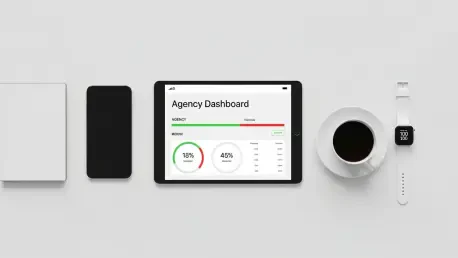
The global rollout fundamentally shifts our workflow from a fragmented, account-by-account approach to a truly centralized command center. Previously, managing product data across diverse international markets felt like juggling separate silos, but we can now monitor onboarding status and critical alerts for our entire portfolio in one place. This creates massive efficiencies by allowing us to identify patterns across regions, such as a specific feed error hitting multiple markets at once, which we can now address simultaneously. It saves hours of manual checking, letting our team focus on high-level optimization rather than logging in and out of dozens of individual client interfaces.
Using a unified dashboard to monitor critical alerts across various clients requires a disciplined triage process. How do you use portfolio-wide diagnostics to prioritize fixes based on potential impact, and what specific metrics determine which account gets your attention first?
Portfolio-wide diagnostics act as a heartbeat monitor for all our clients, allowing us to filter by market or campaign type to see where the “bleeding” is most significant. We prioritize fixes by looking at critical alerts that affect the highest volume of products, ensuring that a major feed rejection in a primary market is handled before a minor warning in a secondary one. Our triage process is driven by the potential impact on live campaigns; if a diagnostic shows a total account suspension or a massive drop in eligible products, that account immediately moves to the top of the queue. By seeing these red flags side-by-side, we can allocate our technical resources to the most urgent fires within minutes of them appearing.
Inventory health and store quality metrics are often the foundation of a successful shopping strategy. How do you integrate out-of-stock data and promotion management into your broader ad strategy to ensure clients aren’t wasting their budgets on unavailable products?
Integrating real-time inventory health into our strategy is non-negotiable because bidding on out-of-stock products is a fast way to drain a client’s budget with zero return. With the ability to monitor these metrics and manage promotions directly within the platform, we can pause or pivot ad spend the moment a product’s availability changes. We also look closely at store quality metrics to ensure the user experience matches the ad promise, which preserves the client’s Quality Score and overall campaign health. Managing these promotions and stock levels in a unified view means our ads are always reflective of what is actually on the shelf, maximizing every dollar of ad spend.
Identifying high-potential products that currently suffer from low visibility is a major strategic hurdle. Can you walk through a step-by-step process for tagging these specific products and pivoting your campaign priority to capitalize on that untapped growth?
The new performance insights allow us to pinpoint “hidden gems”—products that have the right data quality and demand but aren’t getting the impressions they deserve. First, we use the dashboard to filter for these high-potential items, then we apply specific custom labels or tags to group them together for targeted action. Once tagged, we shift our campaign hierarchy to give these products their own dedicated budget or a more aggressive bidding strategy to force them into the auction. This proactive pivot transforms our strategy from reactive maintenance to an offensive growth engine, capturing market share that would have otherwise been missed.
As native platforms become robust performance tools rather than just feed repositories, many teams are re-evaluating their tech stacks. What factors would lead you to reduce your reliance on third-party feed management software in favor of these newer, integrated agency features?
The decision to move away from third-party software usually comes down to the speed of data synchronization and the reduction of technical “bloat.” When a native platform offers robust diagnostics and the ability to fix issues directly, the extra layer of a third-party tool can sometimes become a bottleneck that delays real-time updates. If the integrated agency features continue to evolve toward more advanced optimization and sophisticated rule-setting, the need for external middleware diminishes significantly. We look for a balance where we can achieve 90% of our goals within the native environment, as it simplifies our stack and ensures our team is working as close to the source data as possible.
What is your forecast for Merchant Center for Agencies?
I expect Merchant Center for Agencies to evolve into a full-scale strategic hub that bridges the gap between raw product data and sophisticated AI-driven advertising. We will likely see more advanced optimization features, such as predictive analytics that suggest inventory shifts before a product even goes out of stock. As the platform matures, it will move beyond simple diagnostics to offer automated “self-healing” feeds that correct common errors without manual intervention. Ultimately, this tool will turn every agency into a data-first powerhouse, where the product feed is no longer just a technical requirement but the primary driver of creative and financial performance.