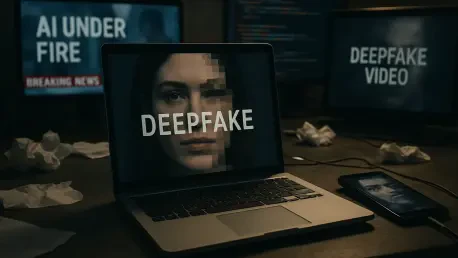

The effectiveness of any forensic signature remains tethered to the breadth of industry partnerships and the adoption of unified watermarking standards. As generative artificial intelligence reaches a level of sophistication where synthetic outputs are indistinguishable from captured reality, the urgency for reliable verification mechanisms has moved from a niche technical requirement to a foundational pillar of digital trust. In 2026, the transition of Google’s SynthID Detector from a restricted pilot program to a globally accessible utility represents a decisive shift in how society interacts with digital media. By democratizing access to forensic tools, the technology aims to empower individual users, journalists, and institutions to verify content provenance with a single click. This rollout is not merely a product launch but an attempt to standardize the invisible markers that define our perception of truth in an increasingly artificial landscape, ensuring that the origins of digital assets are transparently recorded across the diverse platforms we use daily.
Technical Architectures: Securing the Digital Record
Invisible Signatures: Embedding Trust into Pixel and Sound
Traditional methods of labeling AI-generated content often relied on metadata, which acts as a simple tag attached to a file’s header. However, this approach proved insufficient in the face of modern digital consumption habits, as metadata is frequently stripped away when files are uploaded to social media or subjected to basic compression. SynthID addresses this vulnerability by utilizing a sophisticated embedding process that weaves the digital signature directly into the fundamental structure of the media. For visual assets, this involves subtle alterations to pixel data that remain imperceptible to the human eye but are easily recognized by specialized scanning algorithms. Similarly, in the realm of audio, the system introduces modifications to the sound waveform that do not degrade the listening experience for even the most discerning ears. By integrating the watermark into the core content, Google provides a durable layer of protection that persists through common edits like cropping or file format conversions.
Cross-Platform Standards: Overcoming the Problem of Fragmentation
A historically significant challenge in the fight against deepfakes was the isolated nature of verification systems, where a tool built for one model could not recognize content from another. To solve this, the global launch of the SynthID Detector incorporates a collaborative framework that integrates signatures from heavyweights like OpenAI and Nvidia. This shift toward interoperability marks the end of the “walled garden” approach to content safety, as these organizations recognize that a fragmented ecosystem only benefits those spreading misinformation. By creating a unified portal, users no longer need to navigate a dozen different tools to verify an image or video; instead, a single scan can detect a wide range of industry-standard watermarks. This cooperation is expected to expand shortly with the integration of Apple Intelligence signatures, further broadening the net of detectable AI content. This strategy ensures that as more players enter the generative space, the infrastructure for accountability grows proportionally.
Global Impact and Strategic Barriers: Navigating the Future
Regulatory Alignment: Meeting the Demands of New Legislation
The strategic timing of this global rollout is closely aligned with the implementation of strict international regulations, most notably the European Union’s AI Act. These legislative mandates require that all synthetic content be clearly identifiable to prevent consumer deception and the potential for political interference. By positioning SynthID as an industry-wide standard, Google is providing a technical pathway for companies to achieve regulatory compliance without reinventing the wheel. This movement toward transparency by design shifts the burden of identification from the end-user to the creators of AI models, who are now realized as the primary parties responsible for embedding these markers at the moment of generation. Furthermore, this approach complements existing frameworks like the Coalition for Content Provenance and Authenticity, which tracks the history of a file’s creation. Together, these technologies form a multi-layered defense system that aims to restore confidence in digital communications across the globe.
Practical Limitations: Addressing the Gaps in Forensic Detection
Despite the technical sophistication of the current ecosystem, significant hurdles remain that prevent it from being a universal solution to the deepfake crisis. One of the most pressing issues is the lack of participation from several major industry players, such as Meta and Microsoft, who have yet to fully adopt the SynthID watermarking standard for all their outputs. This means that while a detected watermark is a clear indicator of AI origin, the absence of one is not a definitive guarantee of authenticity, creating a dangerous false negative scenario for unsuspecting users. Additionally, the tool currently struggles to distinguish between fully synthetic creations and real photographs that have undergone minor AI-assisted enhancements, leading to potential confusion regarding the truthfulness of a piece of media. Language barriers also persist, as the portal is primarily optimized for English-speaking markets, leaving other regions vulnerable to localized misinformation campaigns that exploit these technological gaps.
Strategic Next Steps: Ensuring Future Accountability
The global introduction of the SynthID Detector established a vital precedent for digital accountability by centralizing the forensic tools needed to navigate a synthetic world. As the industry moved toward a shared verification infrastructure, it became clear that the path to solving the deepfake crisis required more than just technological innovation; it demanded a culture of radical transparency. Moving forward, the most effective strategy involved the mass adoption of these standards by every major AI developer to eliminate the blind spots that bad actors currently exploit. Users were encouraged to adopt a skeptical mindset, treating the absence of a watermark as a prompt for further investigation rather than a confirmation of reality. Ultimately, the success of these initiatives rested on the continued evolution of both technical defenses and public media literacy, ensuring that the digital landscape remained a space where truth could be reliably distinguished from fabrication through collective vigilance.