
The modern consumer no longer interacts with the digital world through a single lens, instead drifting between a smartphone, a laptop, and a high-definition smart TV in a synchronized dance of information consumption. This fragmented behavior has created a high-stakes environment where a brand’s ability to follow a user across these interfaces is the difference between a successful conversion and a missed opportunity. As of 2026, the market is navigating an era of unprecedented integration, where the valuation of multi-screen advertising is projected to surge from its current multi-billion-dollar standing to a staggering $75 billion by 2035. This trajectory is fueled by the dissolution of traditional media silos, replaced by a fluid ecosystem where storytelling must be as mobile and adaptable as the audience it seeks to capture.
This shift represents more than just an increase in digital ad spend; it is a fundamental reconfiguration of how human attention is monetized. By examining the current landscape, it becomes clear that the sector is moving toward a compound annual growth rate of 7.9%. This expansion is not merely a result of more devices being sold but stems from the sophisticated way these devices now talk to one another. Marketers are tasked with creating a seamless, non-intrusive narrative that maintains its relevance whether it is being viewed on a six-inch touchscreen or a seventy-inch wall-mounted display. The goal of this analysis is to chart the path toward that $75 billion milestone, exploring the technological catalysts and the behavioral shifts that are redefining the advertising funnel for the next decade.
The Evolution of Consumer Engagement in a Digital-First World
The journey toward a multi-screen reality accelerated with the proliferation of mobile technology and the steady decline of “appointment viewing” on linear television. In the earlier stages of digital marketing, advertisers frequently treated each platform as an isolated island—deploying a banner ad for a website, a thirty-second spot for TV, and a separate strategy for mobile apps. However, the rise of “second screening,” where users browse on a phone while simultaneously watching a show on a larger screen, necessitated a more holistic approach. These shifts laid the groundwork for a market that has grown to over $35 billion as we move through 2026, emphasizing the need for real-time synchronization.
Understanding this background is essential because it highlights the transition from passive consumption to active interaction. Past developments in high-speed internet and cloud computing have enabled the low-latency environment required for multi-screen campaigns to function effectively. These foundational concepts explain why modern advertising is no longer about simple repetition, but about contextual relevance. As the industry moves toward 2035, it builds upon this legacy to create an environment where the transition between devices is invisible to the user but highly lucrative for the brand.
From Single-Channel Broadcasts to Integrated Ecosystems
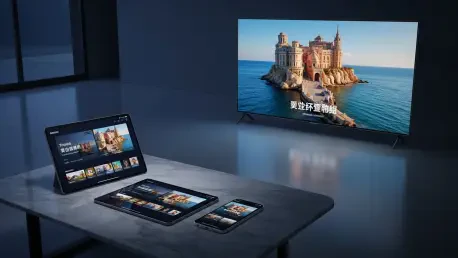
The shift toward integrated ecosystems reflects a departure from the traditional broadcast model that once dominated the twentieth century. Instead of shouting a single message to a mass audience, brands now curate experiences that adapt to the specific strengths of different hardware. For instance, a smart TV provides the emotional “hook” through high-production video, while a smartphone facilitates the immediate “action” through a shoppable link or a social media prompt. This synergy ensures that the marketing message remains persistent without becoming repetitive or annoying.
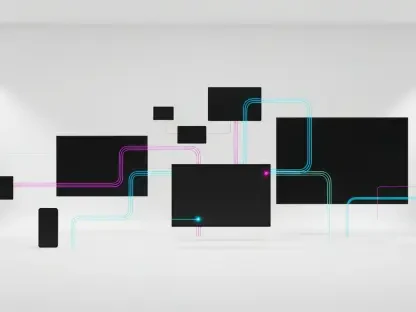
Furthermore, the integration of these ecosystems has been bolstered by the widespread adoption of unified identity graphs. These technical frameworks allow advertisers to recognize that the person watching a travel documentary on a tablet is the same individual searching for flight deals on a laptop an hour later. This connectivity is the primary reason why the market is expanding so rapidly; it reduces waste by ensuring that ads are delivered to the right person at the optimal moment, regardless of which screen they happen to be holding.
The Dynamics of Multi-Device Synchronization
High-Impact Video and the Connected TV Revolution
One of the most critical aspects of the multi-screen market is the meteoric rise of Connected TV (CTV) and high-quality digital video. As households continue to abandon traditional cable in favor of internet-connected sets, the “big screen” has been transformed into a sophisticated digital ad platform. Data suggests that video advertising is the primary growth driver in this sector, offering the immersive experience of traditional cinema with the precise targeting capabilities of the web. This shift presents unique challenges, such as ensuring that a narrative designed for a cinematic display remains coherent when compressed for a mobile feed.
Data-Driven Precision and Programmatic Automation
To manage the complexity of multiple screens, the industry has turned to Artificial Intelligence and Machine Learning to power programmatic advertising. These technologies allow brands to execute real-time bids and place ads where they are most likely to convert, based on immediate user behavior and historical data. Comparative analysis suggests that campaigns utilizing cross-device tracking see significantly higher returns on investment than those restricted to a single platform. This creates an opportunity for sequential storytelling—introducing a product via a social media teaser and following up with a detailed demonstration on a laptop to guide the consumer through the purchase journey.
Regional Variations and the Mobile-First Frontier
The global landscape of multi-screen advertising is far from uniform, with significant regional differences shaping market growth. While North America remains a central hub for innovation, the Asia-Pacific region is projected to be the fastest-growing market through 2035. This trend is largely due to the “mobile-first” nature of economies like India and Indonesia, where smartphones are the primary, and sometimes only, gateway to the digital world. Conversely, European markets face a different set of complexities, primarily driven by stringent data privacy regulations that require advertisers to find creative, non-intrusive ways to track users across different devices while maintaining legal compliance.
Technological Shifts and the Path to 2035
The future of the multi-screen advertising market will be defined by its ability to integrate emerging technologies that go beyond traditional flat displays. Augmented Reality and Virtual Reality are set to play a pivotal role, allowing consumers to interact with three-dimensional product models triggered by an ad they saw on their smart TV. This “omnichannel” approach further blurs the lines between digital discovery and physical purchasing. Predictions suggest that by 2035, advertising will move from being reactive to proactive, utilizing predictive modeling to anticipate consumer needs before the user even switches devices.
Moreover, the technical infrastructure is evolving to support this vision. The rollout of advanced 5G and the early development of 6G networks ensure that the latency issues which once hampered synchronization are becoming a thing of the past. As third-party cookies are phased out, the industry is pivoting toward first-party data and “clean rooms” to share information securely. These technological and regulatory changes will likely consolidate the market around major players who can provide privacy-compliant ways to recognize a single user across multiple touchpoints, ensuring that the path to $75 billion is paved with both innovation and consumer trust.
Strategic Frameworks for a Multi-Screen Future
For businesses looking to capitalize on this growing opportunity, several actionable strategies are essential. First, advertisers must prioritize format fluidity, ensuring that creative assets are optimized for every possible screen size and orientation. This requires a move away from “one-size-fits-all” content in favor of modular creative pieces that can be reassembled by AI to fit the specific context of the viewer. Second, a focus on contextual relevance is vital; an ad delivered on a smartphone during a morning commute should have a different tone and call-to-action than an ad delivered on a smart TV during an evening relaxation period.
Best practices also include investing in robust attribution modeling to identify which device actually triggered the final sale. For small and medium-sized enterprises, the recommended approach is to leverage specialized ad-tech platforms that offer programmatic access to multi-screen inventory without requiring a massive in-house technical team. By adopting these strategies, professionals can navigate the complexities of device fragmentation and turn diversity into a competitive advantage, ensuring they remain relevant in an increasingly crowded digital space.
Summary of the $75 Billion Outlook
The market for multi-screen advertising followed a trajectory of rapid maturation as it moved toward the $75 billion mark. It was characterized by the successful integration of high-impact video, programmatic automation, and regional adaptability. This growth was underpinned by the proliferation of smart devices and the rise of Connected TV, which together created an environment where brand engagement was no longer tethered to a single location or interface. Throughout the analysis, the focus remained on how the industry transitioned away from siloed campaigns toward integrated ecosystems that respect the consumer’s journey across various digital touchpoints.
Strategic leaders addressed the challenges of privacy and technical fragmentation by adopting AI-driven targeting and format-fluid creative strategies. They recognized that the future of marketing was not about increasing the volume of ads, but about refining the quality of the digital experience to be more intuitive and less intrusive. Ultimately, the significance of this shift lay in the fundamental change in human-computer interaction, where a cohesive message across multiple screens became the hallmark of successful brand communication. Companies that prioritized first-party data and cross-device synchronization found themselves best positioned to thrive in this high-valuation landscape.