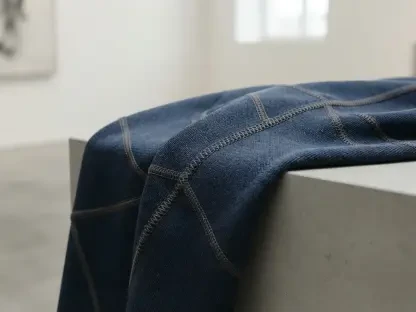

LoveShackFancy used Google’s Creative Lighthouse program to explore how AI could bring its fabric-rich brand world onto screens. For ad teams, the useful lesson is how to direct that work without losing product detail. Creative ambition needs a production process that keeps the brand recognizable.
Power Digital Marketing took on that task for a label whose appeal rests on florals, lace and romantic styling. Its challenge was to suggest the feel of those materials through moving images, while preserving a distinct visual identity.
The project gives teams a practical model for AI-led ad production, though stronger sales remain unproven in the reporting. Growth teams have two separate questions to answer: does the workflow produce usable creative, and does that creative improve paid-media results?
Make Brand Accuracy the Production Brief
PDM senior account director Garrett Stollar described realism and consistent output as central concerns during the project. Keeping characters, settings and lighting aligned also required a deliberate workflow. Better-looking individual shots would have limited value if they failed to hold together as one campaign.
For advertisers, that makes brand accuracy an execution requirement from the start. A visually striking scene can still be unsuitable if it changes a garment or obscures its texture. Review should focus on the details that help a shopper understand what the brand offers.
Stollar said the team used detailed prompts and photo references to pursue close matches with real images. Those checks extended to Rebecca Hessel Cohen’s appearance and clothing within the scenes.
The practical takeaway is to define acceptable output before generating large volumes of assets. For a fashion advertiser, that review might cover:
- Whether fabric details remain clear when the image moves.
- Whether clothing and featured products match approved references.
- Whether color and lighting remain consistent across connected shots.
- Whether fantasy elements support the brand rather than distract from it.
These are suggested approval checks, not reported campaign findings. They keep the focus on usable advertising instead of how many assets the team can produce.
Define Each Tool’s Role
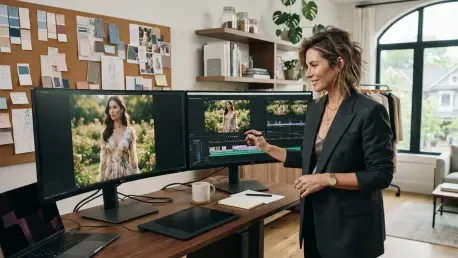
Stollar explained that the team worked out the story and visual direction before generating scenes with AI. A treatment established the concept, supported by mood boards and an outline. Detailed storyboards then guided the work across four acts.
That order gives other ad teams something concrete to borrow. Work out what the audience needs to see and understand before choosing tools for the production tasks.
Stollar described a workflow with distinct roles:
| Production task | Tool or approach used |
|---|---|
| Develop detailed prompts for individual scenes | Gemini |
| Create a lead still image for each shot | NanoBanana Pro |
| Generate motion using opening and closing reference frames | Veo 3.1 |
| Assemble and finish the ad | Human-led editing, audio work and on-screen text |
The reference images gave motion generation a more specific visual target. They also created a review point before the team moved into video.
For paid-media teams, that staged process could help contain rework. Reviewers can catch product errors by approving the still image first, then turn their attention to movement and timing.
Allow Budget for Corrections as Well as Generation
Stollar reported that changing output quality meant some scenes needed fresh generations during production. Results were still inconsistent, so the team used more precise reference inputs and took a structured approach to prompts.
Stollar’s account makes clear that AI production still takes work. Even a lean team may need considerable review time before the output is acceptable.
Plan for those review cycles from the outset, with one person approving product details and another checking continuity across shots. Keep accepted references available so revisions have a clear target.
Stollar said early doubts eased as the client saw storyboards and generated samples. For teams introducing this approach, small approval steps may be more useful than presenting a finished film at once. They give the client room to correct direction while changes remain manageable.
Translate the Film Into a Paid-Media Test
The creative follows a collector whose travels and discoveries shape an expanding fantasy world. Stollar connected that story to the founder’s experience and the brand’s visual character.
The story may give viewers a strong reason to engage, but its ability to turn them into customers is still an open question.
Set a goal for each asset before adapting a similar concept for paid placement. Atmosphere can lead in a brand-building film, while a conversion-focused version may need to show the product more clearly and give viewers a more direct next step.
Preserve the campaign’s visual rules across those versions, then test each against its business goal. A novel production method alone doesn’t establish that the creative works.
Judge the Cost Claim Separately From Revenue Impact
Stollar said a small team completed the project from their desks at much lower cost than conventional production. The source provides no budget figures, media results or sales data to verify the scale of that benefit.
Treat the project as evidence of a possible production approach, with cost savings still attributed to its creators. It demonstrates a workflow worth examining, rather than a proven route to cheaper customer acquisition.
For a growth team, the next move is a bounded test with approved assets and a clear conversion goal. Track review effort alongside production spend, then assess paid-media performance. That will show whether the approach creates both usable advertising and a business case for further investment.