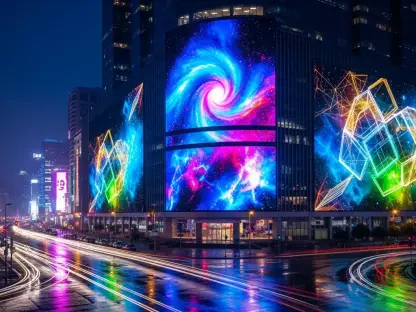

The traditional image of a static, paper-pasted billboard is rapidly fading into the architectural history of American cities, replaced by a sophisticated network of intelligent glass and high-definition pixels that react to the world in real time. As the United States moves through 2026, the digital out-of-home advertising sector has reached a definitive tipping point where automation is no longer a luxury but the primary engine of commerce. At the center of this metamorphosis is VIOOH, a supply-side platform that has systematically aggregated fragmented urban inventory into a cohesive, programmable ecosystem. By bridging the gap between physical infrastructure and digital demand-side platforms, this entity is redefining how brands perceive the value of a city street.
The shift toward programmatic automation represents a fundamental change in the relationship between media owners and advertisers. Historically, the American outdoor market was characterized by long-term contracts and manual negotiations that favored local dominance over national agility. However, the rise of VIOOH, backed by the global expertise of JCDecaux, has introduced a standardized language of impressions and real-time bidding to the streets of New York, Los Angeles, and Chicago. This transition allows high-impact urban inventory to behave more like the internet, offering the precision of digital targeting with the inescapable presence of physical displays.
As metropolitan areas strive to become smarter and more connected, the regulatory environment is also evolving to accommodate these interactive technologies. Major American municipalities are moving away from permitting simple signage in favor of multi-functional digital kiosks that provide public services alongside advertising. This synergy between utility and commercialization is precisely where VIOOH has found its stride, managing the complex inventory of street-level panels that serve both the citizen and the marketer. The result is a market that is less about “ad clutter” and more about integrated urban communication.
Accelerating Growth Through Strategic Partnerships and Data
Emerging Trends in Programmatic DOOH and Consumer Engagement
A remarkable programmatic surge is currently sweeping through the industry, with approximately 99 percent of media buyers indicating that they intend to maintain or increase their investment in the digital out-of-home space this year. This enthusiasm is driven by the move toward curated marketplaces, which allow advertisers to bypass the noise of the open web in favor of premium, verified environments. By focusing on these high-quality segments, brands can ensure their messaging appears in contexts that are community-oriented and visually striking, rather than lost in the infinite scroll of a mobile device.
The consumer experience itself has undergone a radical change as interactive kiosks and smart city technologies become ubiquitous in downtown corridors. Passersby no longer simply look at an advertisement; they engage with touchscreens for wayfinding, charging, or local information, creating a bridge from passive viewing to active participation. This shift is particularly evident in the rise of multi-environment campaigns where a brand can synchronize its narrative. For example, a traveler might see a bold spectacular while driving into a city and then encounter the same brand on a street-level panel while walking to a destination, creating a seamless and reinforcing brand journey.
Market Projections and the Financial Velocity of Digital OOH
Current data underscores the financial momentum of the sector, with the US out-of-home market holding a valuation of $3.9 billion. Most tellingly, digital assets are responsible for 55 percent of the overall growth in the category, proving that the future of the medium is inextricably linked to silicon and software. VIOOH has capitalized on this trend by reporting a revenue growth of 19.2 percent, a figure that highlights its pivotal role in directing programmatic spend toward domestic screens. This velocity suggests that the traditional boundaries between outdoor advertising and online media are dissolving.
Looking toward 2028, the trajectory for programmatic investment in the US remains steep, with an anticipated uplift of 49 percent. This growth is fueled by the efficiency of the programmatic model, which allows for the rapid deployment of creative assets across thousands of screens simultaneously. As the technology matures, the financial barrier to entry for smaller advertisers is falling, while larger global brands are leveraging the scale to dominate entire urban regions. The ability to measure these impressions with increasing accuracy has finally given out-of-home the quantitative credibility it previously lacked.
Overcoming Complexity in a Fragmented Digital Ecosystem
The American urban landscape presents a unique set of challenges due to its extreme fragmentation, where the rules of engagement in a transit hub in Houston differ vastly from those of a grocery store in Boston. Integrating these disparate hardware types into a unified programmatic interface requires a sophisticated technical layer that can translate various aspect ratios, resolutions, and dwell times into a single buyable unit. VIOOH has addressed this by creating a standardized backend that simplifies the lives of media buyers who previously had to navigate a patchwork of local vendors and technical specifications.
To combat the perennial problem of ad clutter, the industry is pivoting toward premium, low-density development models that prioritize the aesthetic quality of the urban environment. Rather than saturating every corner with low-grade displays, the focus has shifted to high-value locations that offer meaningful dwell time. Pedestrian audiences, for instance, require a different creative approach than vehicular audiences; the former can digest detailed information on a sidewalk kiosk, while the latter needs a bold, five-second visual on a highway spectacular. Managing this creative relevance at scale is one of the primary hurdles being solved through automated creative optimization.
Navigating the Regulatory and Compliance Framework
Legal landscapes in metropolitan centers are becoming increasingly nuanced as cities grapple with the deployment of smart kiosks. These installations are often subject to strict urban planning standards intended to minimize light pollution and preserve the architectural character of historic neighborhoods. Compliance is no longer just about following zoning laws; it involves a deep understanding of how digital signage affects the public realm. Platforms like VIOOH must work within these constraints to ensure that their inventory remains both commercially viable and socially responsible.
Data privacy has also emerged as a critical concern in the era of interactive advertising and audience measurement. As displays become more capable of sensing the crowd around them, ensuring the anonymity and security of pedestrian data is paramount to maintaining public trust. Furthermore, the industry is increasingly scrutinized for its environmental impact. However, recent evaluations suggest that programmatic digital out-of-home is significantly more carbon-efficient than traditional web display advertising, producing only a fraction of the CO2e per impression due to the shared nature of the viewing experience.
The Future of Programmatic DOOH: Innovation and Global Scale
Precision targeting is evolving beyond simple geography to include real-time environmental and temporal data. An advertiser can now trigger specific creative content based on local weather conditions, fluctuating stock prices, or even the outcome of a live sporting event occurring nearby. This level of responsiveness is being further enhanced by the rollout of 5G networks and AI-driven creative tools that can adjust a message in milliseconds. These technologies are turning the city into a living canvas that reacts to the pulse of its inhabitants.
The consolidation of US inventory is also paving the way for a more streamlined global media buying process. The move toward a “one-stop-shop” model means that a brand in London or Tokyo can buy high-impact screens in Chicago as easily as they would buy a social media ad. This global accessibility is driving expansion into new place-based environments, including pharmacies, gyms, and private transit networks. As these diverse locations become part of the programmatic fold, the reach of the medium will extend into almost every facet of daily life, far beyond the traditional roadside billboard.
Conclusion: VIOOH’s Blueprint for a Unified Programmatic Future
The strategic alliance between VIOOH and entities like Orange Barrel Media significantly lowered the barriers to entry for premium urban markets, allowing for a more democratized access to iconic advertising spaces. This evolution turned what was once a rigid, manual process into a fluid and high-tech digital ecosystem capable of responding to the immediate needs of both brands and the public. As the infrastructure matured, it became clear that the value of the network lay not just in its size, but in its ability to provide a curated, high-quality environment that respected the urban fabric.
Moving forward, stakeholders must prioritize the integration of advanced sensors and privacy-first measurement tools to provide even deeper insights into consumer behavior without compromising personal data. Investors should look toward the expansion of these programmatic networks into secondary and tertiary markets where digital growth remains largely untapped. The transition toward a fully automated marketplace was characterized by a move from quantity to quality, ensuring that the next phase of development focuses on enhancing the creative potential of augmented reality and real-time data integration. By maintaining this focus on innovation and urban harmony, the industry ensured its long-term relevance in an increasingly digital world.