
Consumer behavior is shifting toward Amazon for final purchases even when the initial brand discovery occurs through high-cost advertisements on social media feeds. This specific trend is creating a rift in the digital marketing landscape as the 2026 holiday season approaches, forcing brands to rethink their attribution models and budget allocations across various platforms. While the broader programmatic display market is experiencing a significant cooling period with lower barriers to entry, the localized intensity of social media auctions continues to demand premium prices for attention. This paradox—characterized by falling top-of-funnel costs and skyrocketing bottom-of-funnel friction—defines the current fiscal quarter. Retailers are finding themselves in a position where they can reach more people for less money on the open web, yet they must pay a substantial premium to secure the final conversion on high-intent platforms. As the industry moves closer to the November retail peak, the ability to bridge these two realities will separate the season’s winners from those who simply overspend on inefficient traffic. This complex environment necessitates a deep dive into the specific mechanics of ad pricing, from the massive drops in prospecting costs to the relentless pressure found within social media ecosystems and the tactical shifts required to survive the upcoming holiday surge.
Macro Trends: The Dramatic Shift in Display Advertising Costs
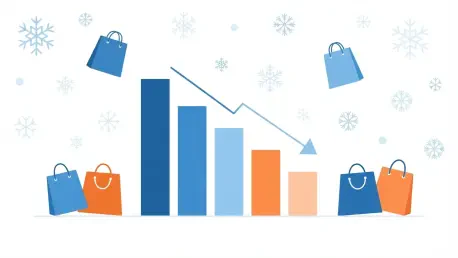
Current analysis of major industry data reveals that the cost of reaching new audiences through display prospecting has reached its lowest point in recent years. During the summer window and into early September, cost-per-thousand (CPM) metrics for these top-of-funnel campaigns plummeted by approximately 45% compared to the previous year. This massive reduction suggests a significant expansion in available digital ad inventory across the open web, coupled with a more cautious bidding approach from some of the market’s largest players. However, recent data points to a deceleration in this decline; while prices are significantly lower than they were twelve months ago, the sequential drop from the second quarter was less severe than the initial spring fall. This indicates that the market is finally finding its floor just as the traditional holiday ramp-up begins. For brands looking to build awareness before the peak competition of November, this window represents a historic opportunity to secure high-volume reach at a fraction of the cost seen last year, allowing for a broader top-of-funnel strategy that can feed more expensive conversion channels later in the season.
Parallel to the drop in prospecting, the retargeting landscape has undergone a surprising transformation, moving from a period of consistent cost increases to a sharp 29.1% year-over-year decline. Throughout the end of last year and the beginning of 2026, the price to re-engage past site visitors was on a steady upward trajectory, driven by the perceived high value of these warm leads. This recent pivot toward affordability is largely a result of changing audience availability and shifts in how programmatic platforms prioritize inventory. Because retargeting depends on a finite pool of users who have already interacted with a brand, pricing often fluctuates based on the overall volume of site traffic across the ecosystem. The current erosion of the retargeting premium means that the cost to follow up with a potential customer who abandoned a shopping cart is significantly lower than it has been in several fiscal quarters. However, marketers must remain aware that while the impressions are cheaper, the effectiveness of these campaigns remains contingent on rapid execution, as most recovery happens within the first 48 hours of initial engagement, necessitating a highly automated approach to these specific ad spends.
In sharp contrast to the volatility observed in the consumer-facing display market, the business-to-business sector remains a bastion of price stability and selective growth. Account-Based Marketing (ABM) costs, which focus on reaching specific high-value professional targets, actually saw a modest 4.4% increase year-over-year. This discrepancy highlights the fundamental difference between open-market consumer targeting and the precision required for enterprise-level engagement. Because the pool of named accounts is fixed and highly sought after by competitors, the demand for these impressions does not fluctuate with broader economic sentiment in the same way consumer goods do. Even though these costs saw a slight dip of 15% when compared to the second quarter of the current year, they remain the only segment of display advertising that has not seen a massive annual collapse. This suggests that while general awareness is currently a buyer’s market, the specialized attention of corporate decision-makers remains a premium commodity that requires a dedicated and well-funded strategic approach, even as other digital channels become more accessible for the 2026 peak shopping and contracting season.
Social Media Dynamics: The Reality of the Meta Premium
While the open web offers a landscape of declining costs, the social media environment is experiencing the opposite phenomenon. Industry data from specialized agencies indicates that CPMs for social feeds have surged by as much as 35% year-over-year for brands in high-competition sectors like beauty and skincare. This premium is largely the result of increased auction pressure as an ever-growing number of direct-to-consumer brands fight for the same limited inventory within highly curated social feeds. Interestingly, this price hike is not a reflection of declining ad quality; in fact, click-through rates have shown significant improvement, rising to nearly 1.5% over the same period. This suggests that consumers are more engaged than ever with social content, but the cost of entry to reach those consumers has scaled faster than the engagement itself. For retailers planning their final pushes, this means that every impression must be more strategic, as the margin for error in these high-cost auctions has effectively vanished compared to the more forgiving display market, forcing a shift toward higher-quality video assets and more personalized targeting.
The relentless rise in social media CPMs has directly translated into a crisis for customer acquisition costs, which have seen a staggering 77.2% increase for many social-first brands. In some retail verticals, the cost to acquire a single new customer has jumped from under $18 to over $31 in just one year, placing an immense burden on the profitability of individual transactions. As a consequence, the Return on Ad Spend (ROAS) has experienced a significant downturn, falling by nearly 30% for brands that rely heavily on these social platforms as their primary conversion driver. This fiscal reality is forcing a fundamental re-evaluation of holiday marketing budgets, as the traditional model of scaling spend to drive volume is becoming unsustainable at these price points. To combat these rising costs, sophisticated advertisers are shifting their focus toward lifetime value and secondary conversion metrics, rather than purely relying on the immediate profit from a first-time purchase. The ability to manage these ballooning costs while still maintaining a presence in the social feed is becoming the defining challenge of the 2026 holiday season for consumer brands that depend on viral discovery.
Further complicating the social media landscape is a clear shift in how consumers fulfill their purchase intent, with a growing number of shoppers seeing ads on social platforms but choosing to buy on Amazon. This behavior creates a double-dipping scenario where brands are forced to pay for the initial discovery on social media and then pay again for advertising on retail marketplaces to protect their brand keywords from competitors. Data shows that while brand-site orders have seen a decline of over 24%, total sales including marketplace fulfillment have risen by 20%, highlighting the role of major retailers as the dominant closing environment. This transition is not without its own financial penalties; the Total Advertising Cost of Sale (TACOS) on retail marketplaces has jumped significantly as more brands scramble to defend their position in search results. The result is a complex web of overlapping expenses where the cost of a single sale is split across multiple platforms, requiring a holistic view of advertising spend that accounts for the reality that a social media impression often serves as a billboard for an eventual marketplace transaction, rather than a direct path to the brand’s own store.
Economic Influences: Balancing Consumer Sentiments and Spending
The 2026 economic environment serves as a complex backdrop for these advertising shifts, defined by a persistent tug-of-war between inflationary pressures and consumer resilience. While core inflation has eased to roughly 2.4%, the continued volatility of energy prices and other essential costs has kept the American shopper in a state of high alert. Consumer sentiment indices have reflected this unease, dropping significantly over the past twelve months as households remain cautious about their long-term financial stability. This psychological state has produced a more selective shopper—one who spends considerable time researching and comparing prices before committing to a purchase. For digital advertisers, this means the browsing phase of the customer journey has elongated, requiring more touchpoints to secure a sale. Brands that fail to acknowledge this skepticism in their messaging, opting for aggressive sales tactics over value-driven communication, are finding it increasingly difficult to convert even high-intent traffic. The current season demands a narrative of utility and price transparency to bridge the gap between a consumer’s desire to buy and their fear of economic instability.
Despite the documented dips in consumer confidence, actual spending patterns remain surprisingly robust, with household expenditure rising by approximately 4.5% in the late summer months. This disconnect between how consumers feel and how they act suggests that while people are worried about the future, they are not yet willing to abandon their established lifestyle or holiday traditions. However, the destination of those dollars has shifted toward value-oriented and big-box retailers that can offer aggressive discounts and reliable fulfillment. This trend has placed direct-to-consumer brands at a disadvantage unless they can match the perceived security and pricing of larger marketplaces. Credit card data confirms that the value segment is seeing the most consistent growth, as shoppers prioritize essential purchases and high-utility items over impulse luxuries. For marketers, this indicates that the 2026 holiday peak will not be defined by a lack of demand, but rather by a hyper-competitive race to offer the best perceived value. Capturing this resilient but cautious spending requires a strategic focus on bundle offers, loyalty rewards, and clear demonstrations of product durability to ensure the consumer feels their money is being spent wisely.
The divergence between falling ad costs in display and rising costs in social, paired with a cautious economic outlook, has major implications for creative strategy. Because the bar for conversion is higher, the role of an advertisement has shifted from merely creating awareness to providing concrete proof of value. Messaging that focuses on the long-term benefit of a product or its comparative price advantage is performing significantly better than aspirational or lifestyle-focused content. Furthermore, the efficiency of cheap display impressions can only be realized if the creative is strong enough to interrupt the selective browsing cycle of a skeptical consumer. This environment rewards brands that utilize their lower-cost top-of-funnel ads to educate the consumer, saving the high-cost social media impressions for specific, urgent offers that drive immediate action. By aligning creative assets with the specific economic concerns of the moment—such as inflation protection or holiday savings—marketers can maximize the impact of their multi-channel spend and ensure that their brand remains top-of-mind when the consumer finally decides to participate in the retail cycle through a purchase.
Strategic Imperatives: Timing and Multi-Channel Integration
Timing has emerged as the single most critical variable for success in the 2026 holiday season, with the 10-week ramp-up rule becoming an industry standard. September 18 was identified as the pivot point where brands needed to have their core holiday infrastructure in place to avoid the massive price spikes that characterize the final weeks of November. Waiting until the actual Black Friday window to launch or scale campaigns is a high-risk strategy, as CPMs on major social platforms can jump by as much as 76% during the peak week compared to early October levels. Beyond the financial cost, there is a technical penalty for lateness; AI-driven bidding algorithms and tracking pixels require weeks of consistent data to optimize effectively. A brand that starts its push in late October or November is essentially bidding blind against competitors whose algorithms have already spent two months learning which audiences are most likely to convert. By establishing a presence early—while display costs are still relatively low—brands can build the necessary data profile to spend more efficiently when the auction environment becomes truly cutthroat during the final surge.
Utilizing the pre-peak window for aggressive testing is another strategy that distinguishes high-performing brands in the current market. The unusual affordability of display prospecting in 2026 allows marketers to experiment with creative concepts, audience segments, and landing page variations at a much lower financial risk than in previous years. This early-season testing period serves as a sandbox for identifying high-performing assets that can be promoted to the more expensive social media channels as the holiday peak nears. Furthermore, the activity generated during this phase warms up the brand’s tracking pixels, ensuring that retargeting lists are robust and that machine-learning models are calibrated for high-intent shoppers. Without this preliminary groundwork, a brand is forced to do its learning during the most expensive weeks of the year, often leading to wasted spend and poor performance during critical sales days. Success in late November is increasingly a product of the groundwork laid during the quieter months of September and October, turning the holiday season into a long-form strategic campaign rather than a short-term tactical sprint that relies on luck.
The fragmented nature of the 2026 customer journey necessitates a transition toward holistic measurement models that look beyond simple last-click attribution. Because consumers are moving fluidly between social discovery, search research, and marketplace fulfillment, relying on a single platform’s reporting can lead to a fundamental misunderstanding of marketing effectiveness. Brands are now looking at blended ROAS and total media impact, tracking metrics like branded search volume and direct site traffic to gauge the true influence of their top-of-funnel display ads. Additionally, the role of owned media channels like email and SMS has evolved into a defensive necessity for maintaining margins. While recent data suggests these channels are carrying slightly less of the conversion load than in the past, they remain the most cost-effective way to bypass expensive social media auctions and reach a loyal audience directly. Integrating these owned channels into a multi-stage funnel—where paid ads are used for discovery and email is used for the final conversion—is the most effective way to offset the rising cost of digital advertising and ensure that the business captures the full value of its total marketing spend.
Adapting to the Future: Actionable Insights for the Holiday Peak
As the final quarter of the year progresses, the primary takeaway for digital marketers is the need for tactical agility in a market of divergent realities. The 2026 holiday season has proven that volume-based strategies are no longer sufficient; instead, precision in both timing and platform selection is what drives profitability. The collapse of display CPMs has provided a necessary buffer for brands to maintain high visibility, but this advantage is lost if it is not coupled with a plan to capture demand in the high-friction environments of social media and retail marketplaces. Marketers must accept that the customer journey is no longer a linear path but a complex network of interactions that often culminates on a platform other than the brand’s own website. This requires a shift in mindset from channel management to ecosystem management, where the goal is to be present and persuasive at every potential touchpoint, regardless of where the final transaction occurs. The brands that have successfully navigated the early months of the year are those that have already adjusted their budgets to account for the rising cost of social media while capitalizing on the low-cost reach offered by the broader web.
Looking back at the strategic pivots that defined the end of the year, the most effective path forward involved several distinct shifts in operational focus. Advertisers moved to diversify their spend away from a single-channel dependency, using the affordability of display to feed a multi-layered retargeting strategy that prioritized high-value cart abandoners. They also recognized the necessity of the marketplace ecosystem, allocating specific defensive budgets to protect their brand presence without sacrificing the discovery power of social media. Most importantly, successful brands remained sensitive to the cautious nature of the consumer, leading with offers that emphasized transparency, reliability, and clear economic benefit. By aligning their marketing schedules with the 10-week ramp-up rule and ensuring their tracking infrastructure was mature before the November surge, these organizations turned a volatile ad market into a structured opportunity for growth. The season ultimately rewarded those who focused on technical preparation and a holistic view of the consumer experience, setting a new standard for how digital advertising had to function in a fragmented and cost-sensitive retail environment.