

The traditional landscape of channel management has long been defined by a fundamental irony: enterprises spend millions on partner portals that their distributors and resellers almost universally despise. This structural inefficiency has created a digital graveyard of unused marketing assets,

The traditional architecture of the nonprofit internet has reached a definitive tipping point where the standard practices of the last two decades no longer guarantee a single click from a potential donor. For the better part of twenty years, the formula for digital success was relatively static:

The traditional separation between the act of social interaction and the transaction of commerce has completely vanished, leaving behind a unified digital landscape where every scroll represents a potential purchase. In this new reality, consumers no longer go shopping in the conventional sense;
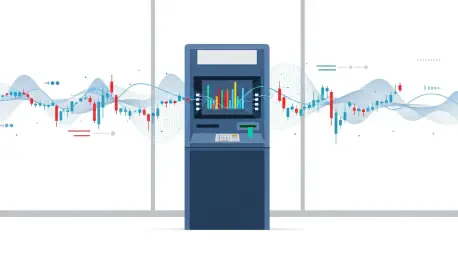
The traditional automated teller machine has long been viewed as a single-purpose utility, yet its evolution into a high-performance media hub is currently redefining the economics of the retail floor. This transformation represents a sophisticated convergence of financial services and digital

The digital landscape has reached a point of saturation where the ability to generate a thousand words of coherent text no longer carries the competitive weight it did only a few years ago. As generative artificial intelligence becomes a standard utility rather than a specialized luxury, the
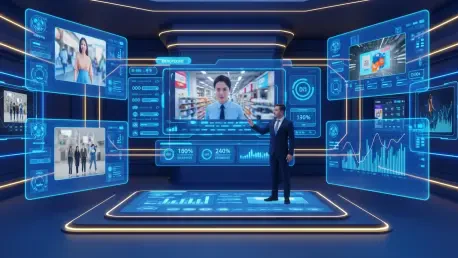
Digital shopfronts are undergoing a radical transformation as the traditional boundary between a static product listing and an immersive cinematic experience continues to vanish into thin air. For years, the Google Merchant Center served as a structured warehouse for text and images, but the recent