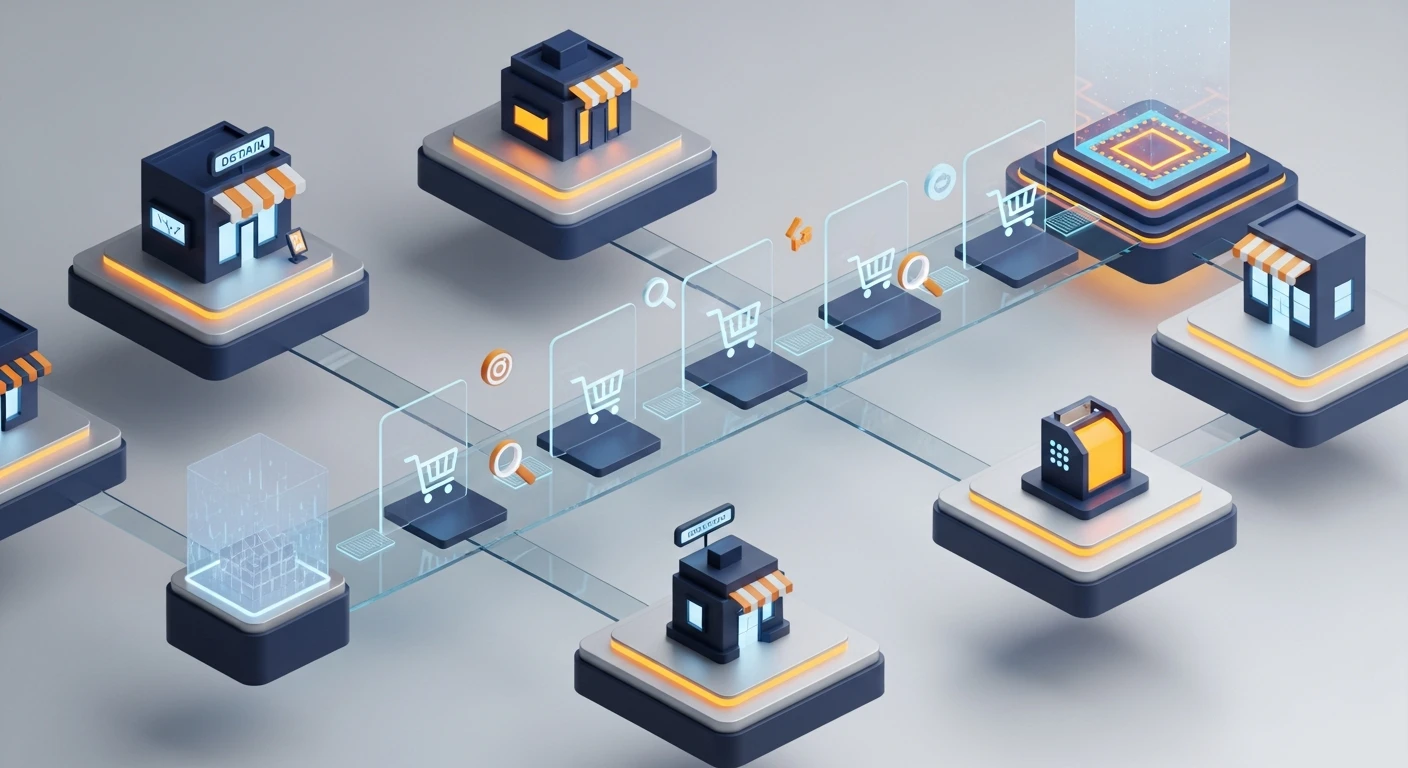

The landscape of digital advertising underwent a seismic shift on June 17, 2026, as the industry witnessed the formal integration of Koddi’s commerce media platform into Google Search Ads 360. This was not merely an incremental software update; it represented a calculated effort to bridge the widening gap between intent-driven search and the high-conversion world of commerce media. For several years, marketing professionals have grappled with an increasingly chaotic ecosystem where retail media networks functioned as isolated silos, demanding manual oversight and disparate reporting tools that hindered scalability. By embedding Koddi’s extensive network directly into the Google Marketing Platform, the industry began moving toward a unified operational layer designed to simplify the complex buying process for large agencies and global brands. This partnership allows for the activation of campaigns across hundreds of retailers without the constant friction of switching between platforms, effectively treating commerce media as a fundamental component of a search strategy. As organizations prioritize efficiency in a crowded digital marketplace, this integration provides a standardized framework that allows them to move from experimental spending to mature, large-scale media operations.
The Technical Bridge: Unifying Search and Commerce Ecosystems
The integration relies on a specialized campaign architecture within Search Ads 360, effectively transforming the platform into a multi-vertical commerce engine capable of managing diverse inventory types. While the platform has historically been the primary tool for managing Google and Microsoft search ads, the addition of the commerce ecosystem through Koddi allows advertisers to reach customers on major retail sites like Kroger, Kohl’s, and Gopuff from a single dashboard. This technical alignment ensures that marketing teams can apply the same sophisticated bidding strategies and setup routines they use for traditional search to their commerce media efforts. By centralizing these operations, the partnership eliminates the need for platform hopping, a practice that previously forced media managers to navigate dozens of individual retailer interfaces just to adjust a single daily budget or update creative assets. This streamlined workflow allows talent to focus more on high-level strategy and less on the repetitive manual tasks that once defined retail media management.
Beyond the immediate improvements in daily management, this integration addresses the persistent challenge of disconnected data by pulling comprehensive performance metrics directly into the centralized interface. Marketing teams now have access to a closed-loop attribution system that links specific ad exposures to verified purchases across various retail partners. This capability provides a level of transparency that was previously impossible to achieve when data was scattered across various closed networks. Instead of guessing how a search ad influenced an onsite purchase at a specific retailer, brands can now view side-by-side comparisons of performance across different channels and verticals. This data-rich environment enables more informed decision-making, allowing advertisers to reallocate spending in real-time based on which retailers are delivering the highest actual return on investment. The ability to view these insights in one place creates a much clearer picture of the consumer journey, from the initial discovery phase in search to the final transaction on a commerce platform.
Strategic Verticalization: Beyond Traditional Retail Channels
The strategic value of this partnership is further enhanced by the breadth of the network, which extends far beyond the traditional grocery and big-box retail sectors. The technology provides direct access to high-intent shoppers across multiple industries, including travel through platforms like Booking.com, automotive research via Cars.com, and quick-delivery services like Grubhub. This multi-vertical approach ensures that brands can find consumers at specific, high-value moments of their buying journey, regardless of what they are purchasing. By diversifying the types of commerce inventory available within the search platform, the integration allows for a more holistic approach to media buying. Advertisers are no longer restricted to a narrow definition of retail; they can now influence purchasing decisions in sectors that were previously managed through entirely different teams or software tools. This expansion reflects a broader industry trend where every digital interaction is becoming a potential commerce opportunity.
Furthermore, the platform functions effectively as a sophisticated Supply-Side Platform, or SSP, that connects retailer inventory with massive external demand from global buyers. By establishing strategic relationships with entities such as The Trade Desk and Wolt Ads, the ecosystem has created a programmatic framework that makes retail data accessible to a global audience. This infrastructure allows retailers to monetize their first-party data more effectively while giving brands the ability to buy retail media with the same precision and scale they expect from other programmatic channels. The integration with Google’s marketing suite acts as a catalyst for this programmatic evolution, bringing retail inventory into the mainstream of digital advertising. This setup not only benefits the large brands that already have massive budgets but also helps smaller retailers participate in the broader advertising economy by making their ad space easier to discover and purchase by major agencies.
Managing Complexity: Resolving the Industry Fragmentation Crisis
The timing of this integration is particularly critical as brands struggle with an overwhelming level of operational complexity within their marketing departments. Recent industry data suggests that most major brands are now managing between four and six different retail media networks simultaneously to maintain a competitive presence. While expanding reach into these different networks is necessary for growth, the administrative burden of managing these disconnected silos has become a significant barrier to effective execution. Marketing teams often find themselves overwhelmed by the sheer number of passwords, reporting formats, and bidding rules they must master for each individual network. By providing a unified infrastructure, the collaboration offers a way for these teams to regain control over their operations, reducing the time spent on logistics and increasing the time spent on optimizing performance. This consolidation is a necessary evolution for an industry that has outgrown its current fragmented state.
There remains a significant maturity gap in the market, with nearly half of all companies still operating in the early stages of their commerce media journey. Many of these organizations lack the standardized measurement tools and technological frameworks required to scale their operations successfully or to prove the value of their investments to stakeholders. The integration into a familiar environment like Search Ads 360 provides these companies with the training wheels and robust infrastructure they need to move beyond small-scale testing. It allows them to adopt sophisticated tactics, such as audience-based targeting and cross-channel optimization, without needing to build custom technology from scratch. By lowering the barrier to entry and providing a clear path to maturity, the partnership helps stabilize the market and encourages more consistent investment across the entire retail media landscape. This transition from experimental spending to structured, data-driven operations is essential for the long-term health of the commerce ecosystem.
Intelligent Optimization: Navigating an AI-Driven Marketplace
As the industry moves deeper into the era of agentic commerce, the role of artificial intelligence in managing and executing ad campaigns has become paramount. Leading marketing executives are increasingly focusing on how their brands appear within AI-generated responses and automated shopping recommendations. A unified platform like the one created through this integration is vital for this future because it provides the clean, high-quality data streams that AI models require to function effectively. When data is fragmented across various platforms, AI agents struggle to gain a comprehensive understanding of performance or consumer behavior, leading to sub-optimal recommendations. By centralizing commerce data alongside search data, the integration creates a massive, unified dataset that can be used to train and power the next generation of autonomous bidding tools. This ensures that brands are not just keeping up with current trends but are also prepared for a future where AI handles the majority of tactical execution.
The distinction between the act of searching for a product and the act of purchasing it has continued to fade as digital platforms become more integrated. This evolution requires a shift in how media is bought and optimized, moving away from channel-specific budgets toward a more fluid, outcome-based approach. The integration ensures that commerce media data is treated with the same importance as search data, allowing for simultaneous optimization across both channels through automated systems. This means that if a search ad is driving a high volume of traffic but a commerce ad is closing the sale more efficiently, the system can automatically shift funds to maximize the total return. This level of synchronization is only possible when the data exists in a common environment. As media buying becomes faster and more reliant on machine learning, having a single source of truth for both search and commerce is no longer a luxury but a fundamental requirement for remaining competitive in a high-speed market.
Financial Impact: Boosting Global Efficiency and Scalability
For global agencies and brand marketing departments, the most immediate result of this unified approach is a dramatic increase in operational and economic efficiency. The ability to manage global media spend from a single, centralized interface reduces the overhead associated with maintaining multiple specialized teams for different retail networks. It allows for the implementation of global standards for campaign naming, reporting, and performance benchmarking, which in turn leads to more consistent results across different geographic regions. When a brand can see its entire media landscape in one view, it can make much more strategic decisions about where to deploy its capital for maximum impact. This transformation turns commerce media into a core asset that can be scaled with the same level of precision and sophistication as traditional paid search or social media. The resulting cost savings and improved performance contribute directly to the bottom line, making the marketing department a more effective driver of business growth.
Furthermore, this partnership serves as a significant demand magnet for retailers who are looking to grow their own advertising businesses. By making their inventory easily accessible through the Google Marketing Platform, retailers on the network can attract budgets from advertisers who might have previously avoided them due to the technical hurdles of a manual setup. This creates a mutually beneficial scenario where retailers see higher fill rates and better ad pricing, while advertisers get access to premium, high-converting inventory that was previously difficult to reach. This connected ecosystem is a vital component in the industry’s push toward a commerce media market that is projected to reach a value of one trillion dollars. By lowering the friction between buyers and sellers, the integration helps unlock the full economic potential of retail data. It encourages a more open and accessible marketplace where the best-performing inventory wins, regardless of which retailer owns it.
Sustainable Growth: Strategic Imperatives for a Unified Era
The industry transition toward unified commerce media required a fundamental rethink of how brands approached their data governance and organizational structures. Successful organizations prioritized the cleanliness and accessibility of their first-party data, ensuring that their product feeds and customer insights were ready for high-speed integration. They also moved away from siloed marketing teams, instead creating integrated commerce centers of excellence that oversaw search, retail media, and social commerce under a single leadership umbrella. This internal alignment was crucial for taking full advantage of the technical capabilities provided by the new unified platforms. By treating commerce media as a strategic growth lever rather than a tactical expense, these brands were able to secure a dominant position in an increasingly competitive digital landscape. They invested in the training and development of their staff to ensure they could navigate the sophisticated analytics and automated bidding tools that became the new standard.
Moving forward, the focus shifted toward the long-term sustainability of these digital ecosystems, with a heavy emphasis on privacy-compliant data sharing and transparent measurement. Brands that thrived in this environment were those that established clear protocols for how data was used and shared across different platforms, ensuring that they maintained consumer trust while still delivering personalized ad experiences. They also pushed for more standardized metrics across the industry, moving beyond basic click-through rates to focus on more meaningful outcomes like customer lifetime value and incremental return on ad spend. This shift toward high-quality measurement allowed for more honest conversations between brands and retailers about the true value of their media inventory. By embracing these new standards and leveraging the power of unified platforms, the industry moved toward a more mature and efficient future where the boundaries between discovery and transaction virtually disappeared. The integration successfully set the stage for a period of unprecedented growth and innovation in the digital advertising sector.