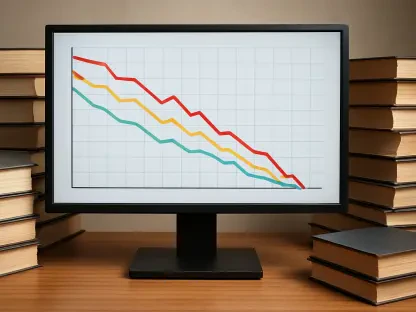

Anastasia Braitsik, a global leader in SEO, content marketing, and data analytics, joins us to decode a startling shift in the digital landscape. As video consumption habits transform, we are seeing a peculiar trend where creators are reaching more eyes than ever, yet their bank accounts aren’t reflecting that growth. Today, we explore the paradox of “growth” where reach expands while revenue shrinks, the impact of shorter attention spans on mid-roll inventory, and the nuances of platform-specific data. We will analyze how a 76% surge in views can coexist with a 50% drop in earnings, examining the mechanics of ad delivery and why a view today simply isn’t worth what it was a year ago.
How should content creators reconcile the fact that while their average views per post surged by 76%, their estimated ad revenue plummeted from $2.65 to just $1.20?
It is a bittersweet pill for creators to swallow when they see their reach explode to an average of 5,985 views per video, only to find their earnings have been cut by more than half. This data highlights a painful “growth trap” where the buzz of a viral hit no longer carries the same financial weight it did previously, leading to a sense of running faster just to stay in the same place. We are looking at a landscape where the sheer volume of eyes isn’t translating into ad impressions, which fell sharply from 976.32 to roughly 475.07. To navigate this, creators must move beyond vanity metrics and understand that a view is no longer a guaranteed paycheck; it is merely an opportunity that is becoming increasingly difficult to monetize.
With the average view duration dropping by 37% to just 2.51 minutes, what does this tell us about the current appetite for long-form content and its impact on mid-roll ads?
The drop from nearly four minutes down to two and a half minutes signals a frantic shift in how audiences consume media, likely driven by a “snackable” mentality bleeding into long-form habits. While total minutes watched per post actually rose by 11% because of the massive view counts, the individual session is becoming shallower and more distracted. From a technical standpoint, this shorter window is devastating for revenue because it starves the system of mid-roll opportunities, which are the lifeblood of high-earning videos. It feels like a high-speed chase where the audience is constantly looking for the exit, often leaving before the algorithm can even fire a single mid-roll ad.
What do you make of the sharp decline in monetized playbacks, which fell from 576.41 to 237.92, and what does this reveal about the relationship between duration and ad delivery?
The decline in monetized playbacks—views that actually trigger an ad—is a sobering reminder that a view is not a universal unit of value. When viewers stop watching at the 2.51-minute mark, the system loses the physical room required for the commercial breaks that pay the bills. This tells us that even if your video is a viral hit, it remains economically hollow if the “dwell time” isn’t there to support the underlying ad system. It is a sensory shock for many to realize that while total interactions per post stayed relatively stable, dropping only slightly from 81.14 to 77.93, the actual rate of interaction per view plummeted from 2.38% to 1.30%, suggesting a more passive and less profitable audience.
Given that the report lacks geographic data and doesn’t track the same accounts over both years, how should strategic marketers approach these findings?
We have to treat these numbers as a weather vane rather than a definitive roadmap because the absence of geographic context is a massive blind spot for CPM calculations. Since advertisers target specific regions, a shift in where those 5,985 views are coming from could change the revenue story entirely, even without any platform-wide changes to YouTube’s systems. We also don’t know if the mix of 71,177 accounts changed, which means we might be comparing high-paying tech niches from one year to lower-paying lifestyle content in the next. Marketers should use this data to trigger internal audits of their own dwell times and ad formats rather than assuming the entire platform is failing.
What is your forecast for YouTube monetization?
I anticipate a season of intense pressure where creators will have to become much more aggressive with their pacing to recapture that lost 37% of view duration. We are likely heading toward a “hybrid” era where creators fight to maintain the 2.51-minute attention span while desperately trying to trigger ads before the viewer skips away. The $0.15 drop in YouTube Premium revenue per post also suggests that even “loyal” viewers are consuming in ways that provide less value to the creator. Ultimately, my forecast is that the most successful channels will stop chasing raw view counts and start obsessing over “retention milestones” that guarantee at least one or two ad impressions before the viewer clicks onto the next video.