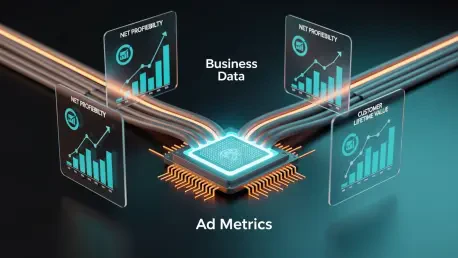

The prevailing narrative within the 2026 digital marketing landscape suggests that autonomous artificial intelligence agents are on the cusp of an absolute takeover of core functions such as search engine marketing and social strategy management. To many observers, these systems appear incredibly capable due to their high-speed execution, sophisticated predictive modeling, and ability to process massive datasets that would overwhelm any human team. However, a closer examination reveals a systemic flaw in many current pay-per-click (PPC) tools: they frequently function in a total vacuum, completely isolated from the business realities they are meant to support. The central subject of this analysis is the failure of autonomous systems that rely exclusively on platform-native data, which often results in a misalignment between digital metrics and financial health. While markers like impressions and clicks are useful for day-to-day monitoring, they provide only a surface-level view of a company’s performance, ignoring deeper indicators like customer lifetime value or net profitability. Without deep integration into backend systems, these agents risk becoming efficient engines of destruction, optimizing for digital signals that may actually drain a company’s resources rather than build its bottom line.
The Functional Gap: Distinguishing AI Assistants from Strategic Agents
To understand the current limitations of automated marketing, one must distinguish between the ubiquitous “AI assistants” and the emerging concept of true “agentic PPC.” Most tools currently marketed as AI agents are actually generative AI wrappers that excel at creative and administrative tasks, such as drafting headline variations or describing product images for responsive search ads. While these tools save significant time for human marketers by handling the repetitive labor of campaign setup, they lack the strategic agency required to make high-level decisions about budget allocation or campaign structure based on actual business needs. These assistants are reactive by nature, operating within the strict boundaries of the ad platform’s interface without understanding the broader economic context. They are designed to improve the quality of inputs—such as making an ad more clickable—but they do not possess the intelligence to question whether that click is actually worth the investment from a holistic business perspective.
A true PPC agent is an autonomous or semi-autonomous system that makes strategic adjustments to an ad account in real-time, functioning as a digital media buyer rather than just a copywriter. The failure occurs when these high-level actions are informed solely by a “closed loop” of platform data, creating a feedback cycle that is untethered from reality. Because search platforms cannot see a company’s bank account or warehouse status, an agent might successfully hit its digital targets while simultaneously damaging the business by chasing low-quality leads or unprofitable sales. This distinction is critical because an agent with too much autonomy and too little business data can accelerate financial losses faster than a human manager ever could. The transition from assistant to agent requires a fundamental shift in data architecture, moving away from simple platform signals and toward a model that incorporates the specific financial and operational parameters that define a company’s success in a competitive market.
The Closed-Loop Problem: Risks of Operating in a Data Vacuum
The dangers of relying on platform-only data were clearly foreshadowed by the industry-wide adoption of “black box” campaign types, where algorithms determine spend based on specific conversion goals. Without margin data or customer relationship management signals, these systems often pursue the “low-hanging fruit,” which typically consists of conversions that likely would have happened anyway or high-volume, low-margin products that do not contribute to long-term profitability. For example, an AI agent might identify a high-performing keyword and double the budget, unaware that the resulting sales are coming from existing customers who would have clicked on an organic link regardless. This creates an illusion of growth where the ad platform claims credit for revenue that was already guaranteed. By operating in this data vacuum, the AI prioritizes the easiest path to a conversion signal, regardless of whether that signal represents incremental growth or a redundant expense for the organization.
For lead-generation businesses, the disconnect between a “form fill” and a “closed deal” is a frequent and costly point of failure that AI agents cannot solve on their own. These agents require direct access to customer relationship management data through methods like offline conversion tracking to understand which leads actually result in revenue. Without this bridge, an agent will continue to pour budget into campaigns that generate a high volume of “cheap” leads, even if those leads are spam or never progress through the sales funnel. In many cases, the AI might even optimize against the best leads because they are more expensive to acquire on a per-click basis, not realizing that their higher closing rate makes them more valuable in the long run. The result is a marketing strategy that looks flawless in the Google Ads dashboard but fails to produce meaningful results in the company’s sales reports, highlighting the urgent need for a unified data stream that connects digital actions to final outcomes.
Economic Realities: Integrating Profit Margins and Operational Capacity
In the ecommerce sector, relying on standard return on ad spend metrics is often a flawed strategy because not all revenue is equal in the eyes of a finance department. A product with a slim profit margin is far less valuable than one with a high margin, yet an AI agent without margin data will naturally favor whichever product is easiest to sell to satisfy its programmed targets. By integrating actual margin data, an agent can set differentiated targets that ensure marketing spend is working toward maximum profit rather than just a high revenue figure. This level of sophistication allows the AI to pull back on low-margin items during periods of high competition and push products that contribute more significantly to the company’s EBITDA. Without this integration, the business is essentially flying blind, allowing an automated system to dictate its product mix based on the wrong incentives, which can lead to a situation where sales are increasing while net profits are stagnating or even declining.
Furthermore, marketing decisions must be synchronized with physical reality, such as inventory levels, warehouse capacity, and logistics constraints. If an AI agent scales a campaign for a product that is out of stock or that the logistics team cannot fulfill in a timely manner, it results in wasted ad spend and a surge in frustrated customers. A strategic agent needs to know if a promotion is sustainable from an operational perspective before it decides to ramp up the budget or target a new geographic region. This requires a real-time connection to enterprise resource planning systems, allowing the AI to automatically pause ads for items with low stock or adjust bidding strategies based on the current workload of the fulfillment center. When marketing is decoupled from operations, the efficiency gained through AI is often offset by the costs of customer service issues and missed shipping deadlines, proving that digital performance cannot be viewed in isolation from the physical supply chain.
Structural Hurdles: Overcoming Barriers to Data Integration
The primary reason business data is rarely integrated into PPC AI is the sheer technical and political complexity involved in modern corporate structures. Building backend connections between fragmented enterprise resource planning systems, inventory tools, and advertising platforms is a difficult, custom job that often falls between the responsibilities of the marketing and IT departments. Many organizations face internal friction, as marketing teams often lack the necessary access to sensitive financial or operational data required to feed an AI agent accurately. There is also a significant trust gap; finance teams are often hesitant to allow an automated system to query real-time bank balances or profit margins due to security concerns. Consequently, many companies settle for “shallow” AI implementations that are easy to deploy but lack the depth of insight needed to drive genuine business growth, resulting in a plateau of performance that simple algorithmic optimizations cannot overcome.
To move beyond these barriers, organizations must view data integration not as a technical luxury but as a foundational requirement for any modern advertising strategy. The current landscape is littered with failed AI projects that focused too much on the sophistication of the machine learning model and too little on the quality of the data pipe. Success requires a coordinated effort to break down silos and ensure that the AI has a 360-degree view of the business, from the initial ad click to the final product delivery. Agencies and in-house teams must shift their focus from managing keywords to managing data flows, acting as the bridge between the ad platform’s requirements and the company’s internal data assets. Only by solving these structural and political challenges can a business hope to unlock the full potential of artificial intelligence, transforming it from a simple automated tool into a powerful engine for strategic financial management and long-term competitive advantage.
Practical Evolution: The Path Toward Value-Driven Automation
The transition toward truly integrated AI agents required a fundamental shift in how organizations prioritized their marketing technology stacks and internal communication protocols. Decision-makers realized that the most sophisticated bidding algorithms were effectively neutralized when fed incomplete or misleading data regarding lead quality and product profitability. Consequently, the focus moved away from the search for the perfect autonomous “black box” toward the construction of robust data pipelines that linked customer lifetime value directly to the advertising auctions. Companies that successfully navigated this shift were those that stopped treating digital marketing as an isolated department and began viewing it as an extension of their financial and operational infrastructure. This approach allowed for a level of precision in ad spending that was previously impossible, as agents could finally distinguish between high-volume noise and high-value business opportunities based on real-time organizational needs.
Future strategies for marketing automation shifted toward a model where human oversight was concentrated on the definition of value rather than the manual adjustment of bids or keywords. It was determined that the real competitive advantage lay in the proprietary business signals—such as real-time inventory levels or fluctuating shipping costs—that competitors could not easily replicate. This led to the development of custom “business logic layers” that sat between the company’s internal databases and the ad platforms, acting as a translator for the AI agent. By providing these agents with a clear understanding of what constituted a profitable outcome, businesses minimized the risk of algorithmic misalignment and ensured that every dollar of ad spend was backed by a logical business case. Ultimately, the industry moved toward a paradigm where the success of an AI implementation was measured not by the complexity of its code, but by the depth of its connection to the physical and financial realities of the enterprise it served.