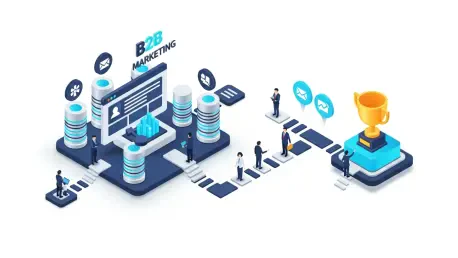

70% of the buying journey happens before initial contact. By the time decision-makers reach out to sales representatives, they have done their research, compared options, and formed opinions about the B2B solutions on offer. This reality means businesses need to engage buyers very early in the buying journey, which starts by moving away from broad marketing language and adopting more personal strategies. This article explores how a more precise, integrated approach to digital marketing builds the trust and visibility that modern B2B buyers actually respond to.
Research That Exposes the Real Buying Reality
Most organizations believe they understand their buyers, but buying behavior has changed. The gap between what marketing teams think buyers want and what buyers actually respond to is where digital marketing budgets go to waste. Closing that gap starts with research, and research only works when organizations are prepared to act on findings that contradict the existing internal assumptions.
Effective research moves beyond demographic categories toward behavioral patterns. An Ideal Customer Profile built solely on company size and industry misses the nuances that actually predict buying behavior. The compliance pressures a prospect is managing, the operational shifts disrupting their planning cycles, and the financial constraints narrowing their options are the factors that determine whether outreach resonates or gets ignored. When messaging speaks directly to those realities rather than general improvements, it can help shorten sales cycles.
Research also helps firms make a case for specialization. Companies that focus on specific niches tend to outperform those that try to serve everyone, even though narrowing their focus can seem like a commercial risk. Industry insights indicate that specialized firms report profit margins of up to 40%, while generalist firms struggle to reach even 20%.
But specialization only pays off if the right buyers can find the firm and trust what they see. That is where digital infrastructure becomes critical.
Quality Digital Infrastructure as a Trust Signal
A company’s digital presence is the first credibility test. Buyers treat it as a preview of the working relationship. A slow and cluttered website does not just frustrate visitors. It raises questions about the firm behind it. By the time a buyer enters the sales conversation, that first impression guides their decision.
Building an effective digital presence comes down to three things:
Speed. Every time a web page loads slowly, user satisfaction decreases by 16% per second. That means firms should prioritize easy-to-use pages that load quickly across devices to convert potential buyers to actual customers.
Clarity. An intuitive digital space is important. Visitors should be able to find relevant content within 2 clicks, and each marketing offering should reflect how buyers think, not how the organization is structured internally.
Depth. Digital marketing is effective when shared resources reward the visitor’s time. Detailed case studies, original research, and actionable content are fundamental to building credibility with prospects early on.
A well-built site also needs to be discoverable. Search engines and AI platforms determine which firms show up when buyers are actively researching. That visibility does not happen overnight, but it compounds in ways that paid channels cannot replicate.
Thought Leadership That Earns Attention
At the same time, expertise is the product across professional services. The challenge is proving it before a contract is signed. Most thought leadership falls short because it plays it safe, restates what everyone already knows, avoids anything controversial, and blends into a market full of content that sounds exactly the same.
The thought leadership that actually builds reputation does the opposite. It takes a position. It makes predictions that could be proven wrong. It raises questions the industry has been avoiding. That level of directness feels uncomfortable, which is exactly why it stands out.
The digital marketing format is less important than what is being said. Original research makes white papers worth reading. Genuine expertise makes webinars worth attending. Insights the audience could not find elsewhere make industry reports worth downloading. What connects all of these is content that delivers real value regardless of whether the prospect ever becomes a client.
Distribution matters just as much as the content itself. LinkedIn is one of the most effective channels for building professional reputation in B2B marketing, but only when the engagement is genuine. When individual experts share their own perspectives, respond to industry developments, and publish analysis under their own names, they reach audiences that branded content rarely does. People trust people more readily than they trust organizations.
That trust takes time to build, which is why consistency matters. B2B purchase decisions involve multiple stakeholders, each conducting independent research. Firms that show up with relevant, credible content throughout that process are far more likely to be in the conversation when a decision is made.
Account-Based Marketing Over Volume Metrics
Firms with the strongest pipeline results are pairing thought leadership with a much more targeted approach to the accounts they pursue. Chasing volume has become an expensive habit with diminishing returns. The cost per qualified lead keeps climbing while the quality of those leads keeps dropping. Organizations that focus on fewer, better-defined accounts are seeing better results, not because they are working harder, but because they are concentrating effort where it is most likely to pay off.
Account-based marketing is built on that logic. Rather than casting a wide net and sorting through what comes back, it directs digital marketing investment toward the accounts most likely to generate meaningful revenue. That requires genuine research into each target, understanding their strategic priorities, who holds budget authority, what pressures they are navigating, and where they are in their decision cycle.
Getting this right depends on digital marketing and sales working from the same information. That means: Marketers create content that speaks directly to what a specific prospect is dealing with, while sales representatives reach out with full awareness of every interaction that account has already had with the firm.
From the buyer’s perspective, this translates as a relationship rather than a campaign, which is beneficial to the business in the long term. According to Martal Group, 87% of B2B marketers say account-based marketing generates higher ROI than more traditional approaches, outlining the engagement-driven ROI that comes from personalization.
Technology makes this level of personalization practical. When a target account repeatedly engages with content on a specific challenge, digital marketing platforms can automatically trigger relevant follow-up. The right case study. An invitation to a webinar on that exact topic. A timely message from a specialist in that area.
Buyers notice the difference between outreach that reflects their reality and outreach that clearly does not. That gap in perception is what separates digital marketing that turns interactions into conversions from one that gets ignored.
Analytics That Drive Marketing Decisions
Still, personalization only improves when there is data to back it up. Digital marketing without measurement is expensive guesswork, and most organizations are doing more of it than they realize.
Tracking the full journey from first touchpoint to closed deal is now achievable with reasonable precision, and the firms using that data well are making fundamentally different decisions than those relying on instinct.
The most immediate benefit is better budget allocation. When it is clear which digital marketing channels are generating returns and which are not, the decision about where to invest becomes straightforward. Tactics that are not working are then restructured or cut. The habit of maintaining familiar approaches because they are comfortable gives way to decisions grounded in actual performance data.
Testing is what turns that data into consistent improvement. Subject lines, landing page designs, calls to action, and content formats all respond to structured experimentation. The gains from any single test may be modest, but they compound. Small improvements across email engagement, landing page conversion, and lead qualification add up to meaningful pipeline growth over time.
Interactive tools are worth particular attention. ROI calculators and self-assessment tools do two things that static content cannot. They give prospects a reason to engage more deeply, and they generate behavioral data that reveals where a buyer is in their decision process. A prospect who uses a returns calculator is telling the firm exactly what they care about: their budget constraints, their current costs, and the business outcomes they hope for. That context makes the sales conversation that follows more productive.
What makes all of this work is treating measurement as a permanent part of how digital marketing operates, not a phase or a project. Organizations that approach analytics as a one-time exercise eventually drift back to intuition. Those who build it into their operations stay competitive as market conditions change around them.
Conclusion: The Cost of Standing Still
Effective digital marketing is not built from isolated tactics. Instead, research shapes how digital infrastructure gets built. That infrastructure gives thought leadership a platform to reach the right audiences. Meanwhile, thought leadership attracts the accounts that make personalized outreach worthwhile, providing analytics that improve the sales cycle over time. When these elements work together, the results compound in ways individual tactics struggle to achieve.
For firms still relying on broad messaging and volume-based lead generation, the trajectory is clear. Potential buyers will continue to complete most of their research without converting into clients. Revenue pressure will build, and the pipeline will shrink as leadership commits to an outdated marketing approach.
The move from volume to precision is not a future consideration in B2B digital marketing. In most cases, it has already happened, and at the very least, it is currently happening. The only question is whether businesses recognize it before competitors lead.