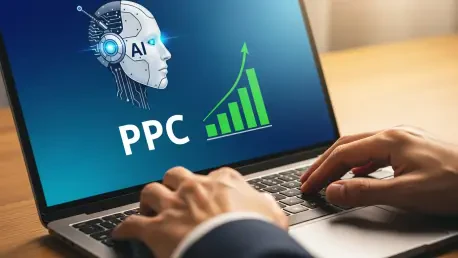

The conversation surrounding pay-per-click advertising has fundamentally shifted from a dialogue about clicks and conversions to a more profound discussion about strategic automation, where the central figure is no longer the human operator but the autonomous AI agent. This transformative wave, driven by the rise of sophisticated Agentic AI, is reshaping the very foundation of digital marketing by moving the focus from manual execution to high-level strategic oversight. The significance of this evolution cannot be overstated; it represents the next logical step beyond simple automation, promising unprecedented efficiency and fundamentally altering the role of marketing professionals. The following analysis explores the emergence of this powerful technology, the parallel rise of “vibe coding” as an enabling force, and how their synthesis is forging a new paradigm for competitive advantage in the PPC arena.
The Rise of the Autonomous PPC Agent
From Automation to Autonomy a Definitive Shift
The journey of PPC management tools has been one of steady evolution, progressing from early rule-based automation and script-driven optimizations to the current frontier of true autonomy. For years, marketers have leveraged automated bidding strategies and rules to manage campaigns at scale. However, these systems have always required significant human setup and continuous monitoring. Agentic AI marks a definitive break from this model, introducing systems capable of independent decision-making, real-time implementation, and adaptive learning based on user interactions and performance data.
This industry-wide trend was significantly validated by major platform developments, such as Google’s introduction of its “Agentic Ads Advisor” in late 2025. This move signaled a clear trajectory toward a future where AI does more than just suggest; it acts. The core capabilities of these agentic systems are what set them apart. They can autonomously analyze complex datasets, identify optimization opportunities that a human might miss, and execute changes across campaigns without direct commands for each action. This capacity for independent operation is what defines the shift from mere automation to genuine autonomy, allowing the system to function as a strategic partner rather than just a tool.
Agentic AI in Action and Real World Applications
In practice, a fully realized agentic AI can orchestrate an entire PPC workflow with a level of speed and precision previously unattainable. This extends far beyond simple bid adjustments. A sophisticated agent can dynamically manage bidding strategies based on a confluence of real-time signals, including competitor actions, market trends, and inventory levels. It can optimize ad placements across networks, continuously refine audience targeting by identifying and testing new segments, and run countless creative tests to determine which combination of headlines, descriptions, and images resonates most deeply with a specific audience.
The benefits for advanced marketers are profound, unlocking new levels of operational excellence. These systems enable real-time optimization that can react to sudden market shifts in minutes, not hours, capturing fleeting opportunities before they disappear. Moreover, by automating the exhaustive process of A/B testing, Agentic AI facilitates a new era of data-driven creativity, allowing teams to test an enormous volume of ad combinations and uncover nuanced insights into consumer psychology. This automation also drastically reduces the potential for human error in managing complex, multi-layered campaigns, freeing professionals to focus on the strategic imperatives that AI cannot replicate, such as defining the brand’s core positioning, crafting compelling value propositions, and providing high-level creative direction.
Expert Perspectives on the Human Element in an Agentic World
Despite the rapid technological advancements, the journey toward fully autonomous PPC management is still in progress. Industry expert Jyll Saskin Gales has noted that many current AI implementations, even sophisticated ones, still function more as advanced advisors than as truly independent agents. They excel at surfacing recommendations and simplifying workflows, but the final decision-making and implementation often remain in human hands. This highlights a crucial gap between the current reality and the future potential, emphasizing that the technology is still on a developmental curve.
This perspective is complemented by the work of figures like Frederick Vallaeys, whose focus on building custom PPC tools can be seen as a foundational step toward more advanced agentic systems. Creating tailored solutions for specific challenges, such as seasonality analysis, lays the groundwork for automation. The next evolutionary step is to imbue these custom tools with an agentic layer, allowing them to not only process data but also to act on the insights they generate. This progression underscores the symbiotic relationship between human innovation and AI capability, where marketers first build the logic and then empower AI to execute it autonomously.
Ultimately, these expert viewpoints converge on a single, critical conclusion: the indispensable need for skilled human oversight. As AI agents become more powerful, the role of the PPC professional evolves into that of a strategist and a systems architect. Their responsibility shifts from granular task management to guiding the AI’s high-level objectives, evaluating its performance against broader business goals, and ensuring that its autonomous actions remain in perfect alignment with the brand’s strategic vision. The human element provides the context, ethical guardrails, and creative intuition that even the most advanced AI currently lacks.
The Future Trajectory and Building Bespoke AI with Vibe Coding
Running parallel to the rise of Agentic AI is another transformative trend: “vibe coding.” This movement is rapidly democratizing software development, empowering marketers and other professionals without formal coding skills to build their own custom tools. Using intuitive, natural language-based platforms such as Cursor, Lovable, and AI Studio, a user can simply describe the desired functionality—the “vibe”—and the AI translates that intent into functional code. This iterative process of prompting and refining allows for the creation of highly personalized applications tailored to unique workflows.
The true paradigm shift occurs when the accessibility of vibe coding is synthesized with the autonomous power of Agentic AI. This potent combination enables marketers to transcend the limitations of off-the-shelf software and construct their own bespoke, interconnected AI agents. Instead of relying on a one-size-fits-all solution provided by a major platform, a marketing team can now build an AI system designed from the ground up to address its specific business challenges, data sources, and strategic priorities.
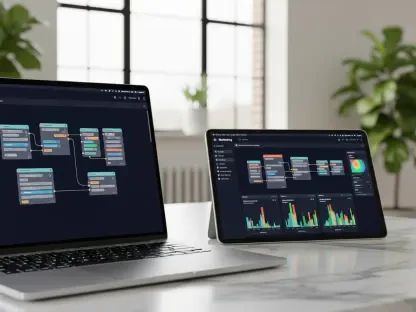
This synthesis unlocks a future where marketers can assemble a suite of specialized agents that work in concert to form a comprehensive, custom-built PPC management system. Imagine a “keyword agent” that continuously scans search query reports and competitor activity to identify new ranking opportunities and negative keyword candidates. This agent could then communicate with an “ad copy agent” that generates and tests new creative variations based on real-time performance data. Simultaneously, a “creative agent” could be tasked with producing new image and video assets that align with the themes of the highest-performing campaigns. By connecting these specialized agents, a marketer effectively becomes the architect of a powerful, personalized AI workforce.
Conclusion and Navigating the New Frontier of PPC
The evolution of PPC management has clearly been defined by the convergence of Agentic AI and vibe coding. This dual-force trend created a new landscape where autonomous, highly personalized campaign management became the standard for achieving operational excellence. The technologies did not replace skilled professionals but instead augmented their capabilities, fundamentally elevating their role within the organization.
The most successful PPC leaders became strategists, systems architects, and creative visionaries who orchestrated sophisticated AI systems rather than manually executing campaigns. This shift enabled them to focus on the foundational elements of marketing—brand strategy, value proposition, and customer experience—that ultimately drive sustainable growth. Embracing this AI-powered paradigm proved to be not just an option but a strategic necessity, establishing a clear and significant competitive advantage for those who adapted to this new frontier.