
Kuaishou’s latest model supports multi-character coreference for three or more individuals, ensuring that group interactions remain visually consistent throughout a sequence. This development signals a departure from the fragmented nature of early generative tools, ushering in a sophisticated environment where narrative continuity is the primary objective rather than a secondary concern. By moving beyond isolated prompts, the platform creates a bridge between simple automation and true creative agency, allowing filmmakers to maintain deep control over every pixel and frame. The AI Director paradigm represents a fundamental shift in how digital content is conceptualized, moving away from the unpredictability of early models to a more structured, intentional methodology. As creators demand higher fidelity and better reliability, the industry has pivoted toward integrated systems that handle complex spatial and temporal data simultaneously. This release effectively addresses the limitations that previously prevented artificial intelligence from becoming a core component of professional cinematic pipelines by offering a unified environment.
The Shift: Toward Unified Multimodal Visual Architecture
The transition from basic text-to-video generation to a cinematic production model addresses long-standing industry pain points like character drift and lack of camera control. Kling 3.0 treats video creation as a directed sequence, allowing users to maintain character identity and environment details across multiple shots without the flickering common in older iterations. This shift allows the platform to bridge the gap between experimental AI toys and the rigorous demands of professional production software. Underpinning this entire system is a Unified Multimodal Visual Language architecture, which allows the model to process video, image, and audio data at the same time. This structural change solves many of the common issues found in earlier tools, such as physical inconsistencies or logically impossible movements. Instead of merely guessing what comes next in a sequence, the system maintains a logical flow, ensuring that the final output looks like a cohesive scene rather than a series of random, disconnected frames.
Technically, the platform sets a new benchmark by supporting native 4K resolution at 60 frames per second, catering to the needs of modern high-definition broadcasting and cinema. Unlike many other tools that upscale low-resolution footage and introduce artifacts, Kling 3.0 generates these high-definition details natively, preserving the intricate texture of skin, fabric, and fluid movements. This high-fidelity approach ensures that every scene remains sharp even on large-format screens, providing the professional polish required for commercial advertising. Additionally, the inclusion of 16-bit HDR color provides a broader range for post-production grading, making the generated footage suitable for high-end commercial use where color accuracy is paramount. By integrating these high-end specifications into the core generation process, the platform removes the need for multiple third-party enhancement tools, streamlining the creative workflow into a single, efficient pipeline that prioritizes visual excellence and temporal stability.
The Multi-Shot Suite: Ensuring Character and Narrative Consistency
A standout feature of this update is the Multi-Shot AI Director, which enables the generation of up to six connected camera shots in a single pass. To solve the problem of characters looking different between shots, the system utilizes Elements Character Locking technology. By uploading reference images, creators can anchor a character’s facial features and clothing, ensuring they remain perfectly consistent throughout an entire narrative sequence. This capability is essential for storytelling, as it allows for shifts in camera perspective—from a wide shot to a close-up—without losing the audience’s immersion. The software effectively remembers the specific geometry of a subject, preventing the subtle morphing that often plagued previous generations of video synthesis. This level of control allows filmmakers to storyboard complex scenes with the confidence that their actors will look identical across every frame, significantly reducing the time spent on manual post-production corrections or re-generating failed clips.
Beyond individual characters, the system also manages multi-character interactions for three or more people in the same scene, providing a robust solution for ensemble storytelling. This functions as a digital film crew, allowing for complex storyboarding where different actors can interact naturally while the camera moves between them in a logical progression. These tools ensure that the narrative thread remains intact, regardless of the angle or distance of the shot, which was previously a major hurdle for AI-assisted video creation. The system understands the spatial relationships between different subjects, ensuring that they do not overlap or glitch during movement. By handling the complexities of group dynamics, the platform opens up new possibilities for creators who want to build sophisticated scenes involving crowds or intricate character dialogues. This makes the tool highly valuable for narrative films and high-concept marketing campaigns that require more than just a single subject to convey a message effectively to a wide audience.
Spatial Directing: Precision Camera and Motion Control Tools
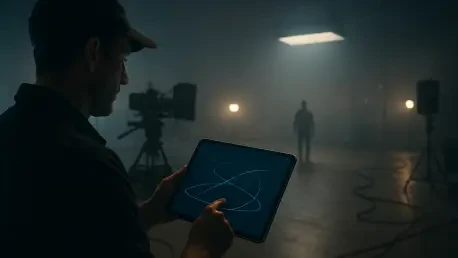
Kling 3.0 introduces a suite of motion control tools that move toward intent-based generation, giving users the power to dictate exactly how subjects move. The Curve Dolly Camera Path feature is particularly impressive, allowing users to draw a 2D trajectory that the system translates into 3D space with high accuracy. This makes it possible to create professional-style camera moves like orbital reveals and architectural fly-throughs with ease, mimicking the expensive hardware used on traditional film sets. By providing this level of spatial control, the platform allows creators to think like cinematographers, planning shots that emphasize specific emotional beats or reveal important visual details. The system calculates the parallax and depth changes required for these movements, ensuring that the background and foreground shift realistically. This transition from static or random movement to intentional camera work represents a massive leap in the creative potential of artificial intelligence in the modern visual arts.
For more granular adjustments, the platform offers a 6-axis control system to manage pan, tilt, roll, and zoom with high precision, allowing for a cinematic feel. Users can even add an adjustable camera shake to simulate the look of handheld footage for a more realistic or urgent feel, which is perfect for action sequences or documentary-style projects. Furthermore, the Motion Brush tool allows for localized animation, where a user can paint motion onto specific parts of a still image while keeping the rest of the frame static. This is ideal for adding subtle life to a scene, such as a waterfall in the background or a character’s hair blowing in the wind, without disrupting the overall composition. These tools collectively empower creators to fine-tune the kinetic energy of their videos, ensuring that every movement serves a specific purpose in the narrative. The ability to isolate and control motion in this way provides a level of detail that was previously reserved for professional visual effects studios.
Synchronized Audio: Advancements in Multilingual Lip-Syncing
One of the most significant upgrades is the integration of a native audio engine that generates dialogue and ambient sound in tandem with the visuals. This ensures that every movement on screen is naturally synchronized with the audio, eliminating the need for complex external editing and manual syncing. This one-pass generation simplifies the workflow for creators who need high-quality sound that matches their visual intent perfectly. The system doesn’t just add a soundtrack; it generates sound that corresponds to the physical actions in the video, such as the clink of a glass or the rustle of leaves. This holistic approach to sensory input makes the generated content feel more grounded and believable, as the brain often perceives visual flaws more easily when the audio is out of sync. By providing a unified audio-visual output, the platform allows for a much faster turnaround on content, which is a critical advantage in the fast-paced world of digital media production and social sharing.
The platform’s lip-sync capability is especially robust, supporting five major languages, including English, Chinese, Japanese, Korean, and Spanish. By using frame-accurate mapping, the system ensures that a character’s mouth movements align perfectly with the generated speech, regardless of the complexity of the phonemes. This is a game-changer for global brands that need to localize marketing campaigns for different regions without the high costs of dubbing or re-filming with new actors. The technology analyzes the linguistic patterns of each language to ensure that the facial muscles move in a way that is culturally and linguistically authentic. This capability allows for a seamless global reach, enabling a single production to be adapted for multiple markets with minimal effort. As the world becomes more interconnected, the ability to communicate across language barriers with high-fidelity visuals and audio becomes a vital tool for any organization looking to make a significant impact on an international scale.
Operational Efficiency: Evaluating Specialized Model Variants
To cater to different professional needs, Kuaishou has released two versions of the platform: the foundational Kling 3.0 and the Kling 3.0 Omni. The foundational version is optimized for maximum cinematic realism and visual stability, making it the primary choice for film directors who require perfection. It prioritizes the highest possible fidelity for projects where the visual quality is the most important factor, such as high-budget commercials or short films. This model takes more time to process but yields results that are virtually indistinguishable from traditional cinematography. By focusing on deep physics and lighting accuracy, the foundational model ensures that the most demanding visual requirements are met with precision. This version is designed for those who have the luxury of time to wait for the best possible results, providing a level of artistic quality that sets a new standard for the industry in terms of realism and consistency.
In contrast, the Kling 3.0 Omni model is designed for speed and efficiency, offering a 35% reduction in processing time compared to the standard foundational version. This variant includes real-time editing features and physics-based object interactions, which are ideal for rapid prototyping and social media creators who need to iterate quickly. The emergence of these tools demonstrated that the gap between high-level conceptualization and visual execution had finally narrowed, allowing teams to test ideas in minutes rather than days. Professionals were encouraged to integrate these models into their existing pipelines by starting with the Omni version for storyboarding and moving to the foundational model for final rendering. This tiered approach allowed for a more flexible creative process, where technical limitations no longer dictated the speed of imagination. The future of production rested on utilizing these specialized tools to maximize both creative output and operational efficiency across all digital platforms.