
Multimodal systems now allow a creator to use reference images to establish a subject while text prompts define the specific mood. This convergence of diverse data inputs—text, sound, and vision—has birthed a new era of accessibility where the barrier between imagination and execution has almost entirely eroded. In the past, high-end visual storytelling was locked behind a paywall of expensive equipment and specialized labor, but today, these boundaries are dissolving. This shift is not merely about convenience; it represents a fundamental restructuring of the creative economy where the value of a project is determined by its conceptual depth rather than the size of its production budget. As the industry navigates the landscape of 2026, the distinction between a professional studio and an individual with a high-bandwidth connection has blurred, leading to an explosion of diverse voices in the digital space. By automating the mechanical aspects of composition and rendering, these tools allow creators to focus on the narrative arc and emotional resonance, effectively shortening the distance from ideation to delivery.
Breaking Traditional Barriers to Entry
Historically, the high cost of entry for professional media meant that many compelling stories never reached an audience. Small businesses and non-profit organizations were often sidelined, unable to compete with the polished aesthetics of larger corporations. Multimodal AI has effectively leveled this playing field by removing the prohibitive overhead associated with traditional cinematography and graphic design. Instead of hiring a full crew for a preliminary concept test, a filmmaker can now generate a high-fidelity sequence using a series of specific prompts and reference frames. This capability enables a more experimental approach to visual media, where creators can explore various stylistic directions without the fear of financial ruin. The democratization of these tools means that a local artisan or a community activist can now produce content that carries the same visual authority as a national advertising campaign, fundamentally changing how information is communicated to the public.
Beyond the initial cost savings, the true revolution lies in the speed of iteration. The traditional production cycle was linear and rigid, making changes late in the process nearly impossible without significant reinvestment. Today, the integration of multimodal inputs allows for a dynamic “fail fast” methodology. Creators can prototype entire scenes, adjust lighting through simple text commands, or swap out characters using image-to-image prompts within minutes. This iterative freedom ensures that the final product is not just a result of what was affordable, but a reflection of the best possible creative choice. While high-end human talent remains essential for the final polish, the ability to visualize and refine complex ideas in real-time has transformed the pre-production phase into a laboratory for innovation. This shifts the focus from managing logistics to exploring possibilities, fostering a culture where creative risk-taking is no longer a luxury but a standard part of the developmental process.
Moving Toward Integrated Workflows
The early days of generative tools were characterized by a fragmented experience, where separate models handled text, images, and video in isolation. This often led to a “Frankenstein” effect where the disparate parts failed to form a cohesive whole. Modern multimodal systems have overcome this by creating unified neural architectures that understand the relationships between different types of data. A user can now input a photograph to define the architectural style of a scene, a piece of music to dictate the rhythmic pacing of the cuts, and a text prompt to describe the weather conditions. This holistic understanding allows the AI to act as a more intuitive collaborator, maintaining visual consistency across multiple shots and ensuring that every element of the frame serves the broader narrative. The reduction of technical friction has turned the creative process into a more conversational experience, where the machine interprets nuanced instructions with increasing accuracy and sophistication.
This evolution toward integrated workflows provides creators with a level of control that was previously unthinkable in automated systems. Instead of relying on the “black box” of a random generator, professionals can now use precise controls to guide the AI output. For example, a director can use a simple sketch to define the camera path through a virtual environment, ensuring the AI-generated video matches the specific composition needed for a scene. This marriage of human intent and machine execution minimizes the trial-and-error often associated with generative tools. By preserving specific, unique details that make a scene feel authentic, these integrated systems allow for the creation of content that feels bespoke rather than generic. This transition marks the end of the era of simple generators and the beginning of a period where AI functions as a high-precision instrument for visual expression, capable of executing complex instructions across various media formats with professional reliability.
Empowering Small Businesses and Educators
In the commercial sector, the impact of multimodal AI is most visible among small and medium-sized enterprises that previously struggled to maintain a consistent brand identity. These businesses are now utilizing AI to draft seasonal marketing materials, generate product explainers, and even preview retail displays before they are physically built. While maintaining accuracy is paramount for the final customer-facing assets, these tools act as an indispensable bridge during the creative briefing process. An entrepreneur can quickly visualize a concept for a new storefront or a social media campaign and present it to stakeholders with professional-grade clarity. This ability to communicate visual ideas effectively reduces misunderstandings and streamlines the approval process. Moreover, it empowers small business owners to be more adventurous with their branding, as the cost of producing diverse assets is no longer a barrier. The result is a more vibrant and visually diverse marketplace where even the smallest players can stand out through high-quality visual communication.
Education is undergoing a parallel transformation, as teachers leverage multimodal tools to move beyond static textbooks and generic slide presentations. The ability to create custom, high-fidelity animations on the fly allows educators to visualize abstract concepts in physics, chemistry, or history in ways that resonate deeply with students. A biology teacher might generate a 3D simulation of a cellular process that responds to real-time questions, turning a passive lecture into an interactive visual journey. This capability makes learning more inclusive, catering to different learning styles and helping to bridge gaps in comprehension. In this new educational landscape, the teacher role has evolved into that of a curator and director, ensuring that the generated content is not only visually engaging but also factually accurate and pedagogically sound. By personalizing the visual experience for each classroom, educators are fostering a more immersive and effective learning environment that prepares students for a world where visual literacy is as important as traditional reading and writing.
The Vital Role of Human Judgment
As the speed and volume of content production accelerate, the necessity for human oversight has never been more critical. While the AI can handle the intensive labor of rendering and animating, it lacks the inherent understanding of truth and nuance required for high-stakes communication. Human editors must now serve as the final gatekeepers, meticulously reviewing AI-generated content for factual inaccuracies or hallucinations that could undermine the credibility of a project. This process involves more than just checking for visual glitches; it requires a deep understanding of the subject matter to ensure that the AI has not inadvertently misrepresented historical facts or scientific principles. The rise of these tools has shifted the primary skill set of creators from technical execution to critical analysis and editorial discernment. In this context, the human element provides the moral and intellectual framework that gives a piece of media its true value, ensuring that the technology serves the message rather than the other way around.
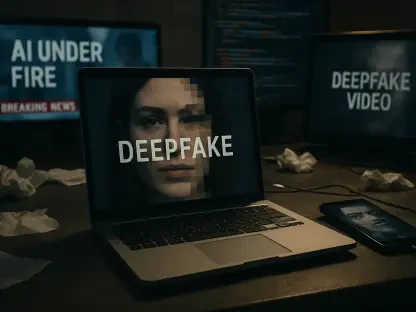
Beyond factual accuracy, maintaining visual and narrative continuity remains a uniquely human challenge. AI models can occasionally produce disjointed outputs that, while impressive individually, fail to sustain a coherent story over time. A skilled creator must synthesize these outputs, making adjustments to pacing, lighting, and tone to keep the audience immersed in the narrative. Furthermore, there is an ethical dimension to using such powerful tools, particularly when it comes to the representation of reality. As generative media becomes indistinguishable from traditional photography, the responsibility for transparency lies with the person behind the machine. Creators must establish clear standards for when and how AI is used, ensuring that the audience is not misled into believing a synthesized scene is a direct recording of reality. This commitment to authenticity is what preserves trust in a world where visual content can be manufactured with the click of a button, making editorial integrity a cornerstone of the modern creative process.
Ethical Standards and Global Accessibility
The ease with which multimodal AI can replicate existing styles and likenesses brings significant legal and ethical challenges to the forefront. Navigating copyright laws and obtaining proper consent for the use of voices or images is no longer just a bureaucratic task but a foundational part of ethical content creation. Just because a system can mimic the aesthetic of a specific artist or the voice of a well-known public figure does not grant the legal right to do so. Industry leaders are increasingly adopting transparent workflows where AI-generated elements are clearly tagged and the sources of training data are vetted for compliance. This transparency is vital for maintaining a healthy creative ecosystem where intellectual property is respected and artists are fairly compensated for their contributions. As the technology matures, the development of standardized protocols for content provenance—tracking the origin and modification history of digital media—has become essential for protecting both creators and consumers from misinformation.
As the landscape of visual media settled into this new reality, the successful creators were those who viewed multimodal AI not as a replacement for talent, but as an expansion of their creative reach. The transition from manual production to AI-assisted storytelling required a fundamental shift in mindset, moving away from technical gatekeeping toward a more open and collaborative approach. Looking forward, the focus remained on developing robust frameworks for verifying digital authenticity while simultaneously pushing the boundaries of what stories could be told. For organizations and individuals alike, the next step involved investing in media literacy and ethical training to ensure that the power of these tools was wielded with care and precision. By prioritizing human intent and editorial rigor, the creative community ensured that the democratization of visual content led to a more diverse and truthful media environment. This era of transformation provided a clear lesson: while the machine provided the brush, the human remained the artist, guiding the technology toward a future where everyone had the power to visualize their world.