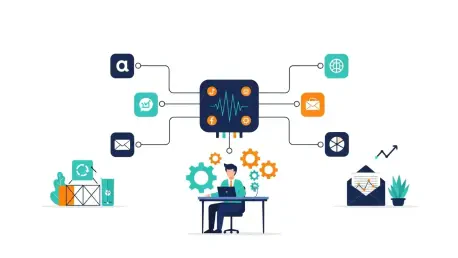

Marketing professionals today find themselves trapped in a digital paradox where the very tools designed to simplify their lives have instead shackled them to endless cycles of data entry and administrative overhead. Despite the promise of streamlined workflows, the average digital marketer currently spends nearly ninety percent of their day performing the labor-intensive tasks of spreadsheet management, data aggregation, and manual campaign adjustments. This heavy reliance on manual maintenance has effectively forced innovative strategists to operate like low-level technicians, pulling them away from the high-level creative work that actually drives brand growth. The current landscape is defined by a state of operational exhaustion where the technology stack requires more attention than the actual customer journey. This friction has created an urgent need for a more sophisticated approach to automation that does not just follow orders but understands intent. Agentic systems are emerging as the solution to this crisis, offering a transition from the “copilot” models that require constant human oversight to “autopilot” systems capable of independent action. This shift represents a fundamental evolution in how brands interact with technology, moving toward a future where the system itself takes responsibility for the execution of complex marketing strategies.
Redefining the Automation Landscape
Defining Autonomy: The Departure from Programmatic Scripts
The fundamental distinction between traditional marketing automation and modern agentic systems lies in how these technologies interpret and execute human instructions. Standard automation tools operate on a rigid, human-written script based on “if-then” logic, which inevitably breaks when an unforeseen variable or a market shift occurs. If a campaign hits a snag that was not explicitly programmed into the workflow, the entire process grinds to a halt until a human intervenes to fix the logic. Agentic systems, however, are designed to be goal-oriented rather than task-oriented, allowing them to function with a level of reasoning that mirrors human problem-solving. When a marketer provides a high-level objective, such as reducing the cost per acquisition by fifteen percent while maintaining lead quality, the agent does not wait for a step-by-step manual. Instead, it analyzes the existing environment, evaluates the available tools, and writes its own operational script to achieve the stated outcome. This capability allows the system to remain resilient in the face of fluctuating market conditions, as it can dynamically adjust its tactics without requiring a human to rewrite the underlying code or reconfigure the workflow every time a variable changes.
This autonomous reasoning capability is what allows agentic AI to bridge the gap between planning and execution in a way that previous generations of software could not. In the past, marketers had to spend weeks mapping out every possible customer touchpoint and creating complex branching logic to handle different user behaviors. Agentic systems eliminate this need by using large language models and reasoning engines to determine the best path forward in real-time. For example, if a specific audience segment on a social platform suddenly stops engaging with a certain ad format, the agent identifies the trend immediately and pivots the strategy without waiting for a weekly performance review. It can experiment with different bidding strategies, reallocate funds between channels, and even test new messaging variations based on its internal understanding of the brand’s goals. This level of independence transforms the role of the marketing platform from a passive tool into an active participant in the strategy. By closing the loop between data analysis and action, agentic AI ensures that marketing efforts are always aligned with the most current data, reducing the lag time that often leads to missed opportunities and wasted ad spend in traditional setups.
Overcoming the Complexity Trap: Scaling Operations across Disparate Platforms
Modern marketing has expanded across a dizzying array of platforms, including TikTok, Google, Meta, and various emerging decentralized networks, creating a level of complexity that has surpassed human cognitive limits. Managing a brand’s presence across these diverse ecosystems requires constant attention to different algorithms, creative formats, and audience behaviors, making it nearly impossible for a human team to maintain hyper-personalization at scale. When a brand attempts to run hundreds of different campaign variations across multiple regions and languages, the risk of budget leakage becomes significant. Humans simply cannot react fast enough to the micro-shifts in auction prices or shifting consumer sentiment that occur every second. This complexity trap often leads to a “set it and forget it” mentality, where campaigns are left running on suboptimal settings because the team lacks the bandwidth to fine-tune every single parameter manually. Agentic AI addresses this challenge by providing a layer of continuous, high-speed management that operates across the entire marketing stack simultaneously. These agents function as a tireless workforce that can monitor thousands of variables at once, ensuring that every dollar spent is optimized for the highest possible return on investment.
The ability of autonomous agents to navigate this multi-platform reality is essential for brands that want to remain competitive in a fragmented media environment. Unlike a human manager who might focus on one or two primary channels while neglecting smaller but potentially lucrative ones, an agent can give equal attention to every facet of the marketing ecosystem. It can identify cross-platform discrepancies, such as a lower customer acquisition cost on a niche platform, and instantly shift resources to capitalize on that advantage. Furthermore, these systems are capable of resolving user identities across different devices and channels, providing a unified view of the customer journey that was previously obscured by data silos. By acting as a centralized nervous system for the brand’s digital presence, the agent ensures that the messaging remains consistent and the budget is allocated with surgical precision. This proactive approach to management prevents the slow decay of campaign performance that typically occurs when human teams are stretched too thin. Instead of reacting to yesterday’s reports, the agent is constantly optimizing for the next minute of activity, turning the complexity of the modern digital landscape into a strategic advantage rather than an operational burden.
Functional Pillars of Agentic Marketing
Maximizing Performance: Transitioning to Outcome-Driven Logic
One of the most significant shifts introduced by agentic AI is the move toward outcome-based optimization, where success is measured by actual business results rather than intermediate metrics like clicks or impressions. In the traditional model, automation tools were often optimized for top-of-the-funnel activity because those metrics were the easiest to track and influence. However, high click-through rates do not always translate into revenue, and human marketers often find themselves manually filtering out low-quality leads that the system mistakenly identified as successes. Agentic systems change this dynamic by focusing on bottom-of-the-funnel outcomes, such as confirmed bookings, completed purchases, or high-intent sales inquiries. By integrating directly with customer relationship management systems and backend sales data, these agents can see exactly which marketing activities lead to real profit. They then use this information to adjust bidding strategies and audience targeting in real-time, ensuring that the marketing spend is always directed toward the most valuable prospects. This focus on tangible outcomes aligns the marketing department’s activities more closely with the broader financial goals of the organization.
The practical implementation of this outcome-driven logic involves the agent taking over the granular, repetitive tasks of bid management and keyword optimization that previously consumed hours of a marketer’s week. For instance, an agent managing a search engine marketing campaign can analyze millions of keyword combinations and historical conversion data to determine the optimal bid for every single auction. If the system detects that certain search terms are driving traffic but not conversions, it can automatically add them to a negative keyword list without waiting for human approval. This level of autonomy allows the human team to move away from the “implementation layer” and focus on higher-level strategic decisions, such as entering new markets or redefining the brand’s value proposition. By handling the complex mathematics of performance marketing, the agent acts as a force multiplier for the team’s efforts. The result is a marketing engine that is not only more efficient but also more accountable, as every action taken by the AI is directly linked to the desired business outcome. This creates a more transparent relationship between marketing spend and revenue, providing the data necessary to justify larger strategic investments.
Creative Efficiency: Automating Asset Generation and Refresh Cycles
Ad fatigue is a persistent challenge in the digital age, where audiences quickly grow accustomed to visual stimuli and begin to ignore repetitive content. To combat this, creative teams are often pressured to produce a continuous stream of new assets, a demand that frequently leads to burnout and a decline in quality. Agentic AI provides a solution by acting as an automated creative lab that can detect when an ad’s performance starts to dip and take immediate action to refresh it. These agents do not just generate random variations; they analyze which specific elements of a creative asset—such as the headline, the background color, or the call to action—are resonating with different audience segments. When the performance of a particular ad falls below a certain threshold, the agent can instantly generate new variations, test them against the original, and deploy the winners. This creates a self-healing creative ecosystem where the content is always fresh and optimized for the current audience sentiment. This capability is particularly valuable on platforms where the lifespan of a creative asset is measured in days rather than months, allowing brands to maintain a high-impact presence without exhausting their human designers.
Beyond simply generating variations, these creative agents are becoming sophisticated enough to understand the nuances of brand voice and visual identity. By training on a company’s historical assets and style guides, the agent ensures that every new image or piece of copy it produces remains consistent with the brand’s established personality. This level of control allows the AI to handle the volume-heavy tasks of creating social media posts, banner ads, and email subject lines, while the human creative director focuses on the core brand story and overarching campaign themes. This division of labor enables a level of personalization that was previously impossible. For example, an agent can create thousands of unique ad variations tailored to the specific interests and browsing history of individual users, ensuring that each person sees the most relevant message at the most opportune time. By automating the “last mile” of creative execution, agentic AI allows brands to achieve a scale of communication that feels personal rather than mass-produced. This high-frequency, high-relevance approach not only improves engagement rates but also reduces the overall cost of content production, making it easier for brands to maintain a consistent presence across an ever-expanding list of digital touchpoints.
Technical Architecture: Understanding Perception, Reasoning, and Execution
To appreciate how these autonomous agents function, it is necessary to examine their internal architecture, which typically consists of three distinct layers: perception, reasoning, and action. In the perception layer, the agent acts like a sophisticated data intake system, ingesting vast amounts of information from internal customer databases, real-time market trends, and competitor activity. This is not just a passive collection of data; the agent uses advanced natural language processing and computer vision to understand the context of the information it receives. It can “see” that a competitor has launched a new promotion or “hear” a shift in customer sentiment on social media. This comprehensive awareness allows the agent to build a detailed model of the marketing environment, identifying patterns and anomalies that a human analyst might miss. This layer serves as the foundation for everything the agent does, ensuring that its subsequent decisions are based on the most accurate and up-to-date information available in the digital ecosystem.
Once the data has been perceived and processed, it moves into the reasoning layer, which serves as the agent’s “brain.” Here, the system uses large-scale reasoning models to evaluate the perceived data against the specific business goals set by the human marketer. The agent considers various trade-offs, such as whether to prioritize immediate sales or long-term brand awareness, and determines the most efficient sequence of tasks to achieve the objective. This is where the true “agentic” nature of the technology shines, as the system can weigh different strategies and predict their likely outcomes before taking any action. Finally, the chosen strategy is passed to the action layer, where the agent uses direct software connections and application programming interfaces to execute changes across various platforms. It can upload new creative files to an ad manager, adjust budget allocations in a search platform, or trigger a personalized email sequence in a CRM. Because these layers work in a continuous loop, the agent is constantly learning from the results of its actions, refining its reasoning and perception over time to become increasingly effective at hitting its targets.
The Future of the Human Marketer
Shifting Roles: Moving from Implementation to Creative Governance
The rise of autonomous systems does not signal the end of the human marketer but rather a significant elevation of their role within the organization. As agentic AI takes over the technical heavy lifting and the repetitive tasks of campaign management, human professionals are being transitioned into roles focused on strategic governance and creative vision. Instead of spending their days tweaking bids or formatting spreadsheets, marketers are now acting as “captains” of these intelligent systems, setting the overall direction and defining the boundaries within which the AI must operate. This shift requires a new set of skills, moving away from technical proficiency in specific software tools and toward a deeper understanding of brand strategy, consumer psychology, and ethical oversight. Humans remain the essential final link in the chain, responsible for ensuring that the AI’s autonomous decisions align with the brand’s long-term values and do not inadvertently cause reputational harm. The human touch is still required to navigate complex cultural nuances and to inject the kind of emotional resonance that a purely data-driven system might struggle to replicate.
In this new paradigm, the marketer’s primary responsibility is to provide the “intentionality” that drives the agentic system. While the AI is incredibly efficient at finding the best path to a goal, it cannot decide what that goal should be or understand the broader societal context in which a brand operates. Marketers must establish clear ethical guardrails, ensuring that the AI does not engage in manipulative tactics or violate user privacy in its pursuit of performance metrics. They also serve as the ultimate arbiters of brand identity, making sure that the content generated by the AI maintains the correct tone and visual style. This transition from “doer” to “governor” allows marketing professionals to focus on the high-value work of building meaningful relationships with customers and developing innovative business models. By offloading the operational complexity to autonomous agents, humans can reclaim their role as storytellers and visionaries, driving the kind of transformative growth that requires intuition and creative leaps rather than just incremental optimization. The relationship between human and AI becomes a partnership where the machine handles the scale and precision while the human provides the purpose and direction.
Infrastructure Readiness: Establishing the Data Foundations for Autonomy
For an agentic system to function effectively, it requires a robust and clean underlying infrastructure that allows for seamless communication between different parts of the marketing stack. Many organizations currently struggle with fragmented data and legacy systems that were never designed to work together, creating “blind spots” that can cripple an autonomous agent’s ability to reason effectively. Preparing for the integration of agentic AI involves a rigorous focus on data hygiene and the implementation of modern software interfaces that allow the agent to both perceive information and execute actions across the entire ecosystem. This means moving away from manual data exports and toward real-time API connections that provide a continuous stream of high-fidelity data. Without this foundation, even the most advanced AI agent will be limited by the quality of the information it receives, leading to suboptimal decisions and missed opportunities. Brands must prioritize the creation of a “unified data layer” that serves as the single source of truth for the agent, encompassing everything from customer profiles to inventory levels and financial targets.
Beyond technical connectivity, infrastructure readiness also involves a cultural shift within the marketing department toward a more disciplined and goal-oriented way of working. Because agentic systems operate based on high-level objectives, marketers must become more precise in how they define success and how they communicate those goals to the machine. This requires a move away from vague aspirations toward concrete, measurable outcomes that the agent can optimize for. Organizations also need to establish clear protocols for human-in-the-loop oversight, defining when and how a human should intervene in the AI’s autonomous processes. By building this combination of technical and operational readiness, companies can turn their marketing departments into autonomous growth engines that are directly invested in revenue generation. Those who successfully navigate this transition were able to move faster than their competitors, reacting to market shifts in real-time and delivering a level of personalization that was once thought to be impossible at scale. The transition to agentic AI was not just a technical upgrade; it was a fundamental reimagining of how marketing functions in a hyper-connected, data-driven world.
Strategic adoption of agentic systems required a proactive overhaul of existing workflows and data architectures to ensure that autonomous processes remained aligned with core business values. Organizations that succeeded in this transition moved away from treating AI as a mere efficiency tool and instead integrated it as a central pillar of their growth strategy. They established clear governance frameworks that empowered human teams to act as stewards of brand integrity while allowing the AI to manage the complexities of cross-channel execution. These leaders recognized that the value of agentic technology lay in its ability to handle the “how” of marketing, freeing human talent to focus on the “why.” By prioritizing data hygiene and investing in robust API integrations, brands created an environment where autonomous agents could operate with maximum precision and minimal friction. Moving forward, the focus should remain on refining the partnership between human intuition and machine scale. Stakeholders should prioritize the development of ethical guardrails and transparent reporting structures to maintain trust as these systems become more independent. The ultimate goal for any modern marketing department was to transform into a high-velocity, outcome-driven engine that could thrive in a landscape of constant change.