
Consumer packaged goods companies often find themselves trapped in a cycle of inefficient spending where billions of dollars are allocated to trade promotions that provide little to no measurable return. Traditional methods of planning these events rely heavily on historical data that fails to account for the volatile nature of modern consumer behavior and shifting supply chain dynamics. As retail environments become increasingly digital and fragmented, the old “rinse and repeat” strategy for seasonal discounts no longer suffices to capture market share or maintain margins. This inefficiency has created a massive opportunity for artificial intelligence to step in and overhaul the entire trade promotion management lifecycle. By leveraging sophisticated machine learning algorithms, brands can now analyze vast datasets spanning point-of-sale information, competitor pricing, and even weather patterns to predict which promotions will actually drive incremental volume. This technological shift is moving the industry toward a proactive, data-driven approach that prioritizes profitability over raw volume.
Shifting From Historical Averages to Predictive Modeling
The transition from static spreadsheet-based planning to AI-driven forecasting represents a fundamental change in how revenue growth managers evaluate potential trade investments. Instead of looking purely at what happened during the same weekend a year ago, predictive engines simulate thousands of potential scenarios to identify the optimal price points and promotional frequencies. These models utilize deep learning to understand the elasticity of demand for specific product categories, allowing for a more granular approach that accounts for regional differences and store-level nuances. For instance, a carbonated beverage brand might discover through AI analysis that a “buy two, get one” offer performs significantly better in urban coastal markets than deep discounts in suburban regions. This level of precision ensures that trade funds are not wasted on promotions that consumers would have purchased at full price anyway. Moreover, these systems help identify cannibalization effects where a promotion on one SKU inadvertently hurts the sales of another high-margin product within the same brand portfolio.
Beyond identifying the right price, artificial intelligence enhances the collaboration between CPG manufacturers and their retail partners by providing a single source of truth for expected outcomes. When a brand can present a data-backed forecast showing how a specific end-cap display will increase category growth rather than just shifting brand share, retailers are more likely to grant premium floor space. This collaborative planning process is bolstered by AI’s ability to integrate external variables like inflationary trends and logistics costs into the ROI calculation. Consequently, trade promotion optimization tools allow teams to move beyond basic volume targets and focus on net-revenue management. The result is a more strategic allocation of the trade budget, where funds are diverted from low-performing legacy programs toward high-growth opportunities that offer genuine incremental lift. By automating the heavy lifting of data synthesis, managers can spend more time on creative strategy and relationship building, while the algorithms handle the complex mathematics of price elasticity and competitive response modeling.
Real-Time Optimization and Strategic Execution
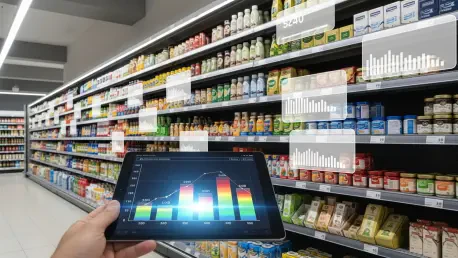
Execution has historically been the weakest link in the trade promotion chain, as brands often lacked the visibility to know if their agreed-upon displays were actually implemented correctly at the store level. Modern AI applications solve this through computer vision and real-time data feeds that monitor shelf health and promotional compliance across thousands of locations simultaneously. If a specific retailer fails to set up a planned display or if a product goes out of stock during a high-traffic period, AI-driven alerts notify field teams immediately to rectify the situation before the promotion ends. This agility is critical in a market where a few days of poor execution can lead to millions in lost potential revenue and wasted trade spend. Furthermore, these systems can suggest mid-campaign adjustments, such as shifting inventory to high-performing regions or tweaking digital coupons to stimulate demand where it is lagging. This move toward dynamic promotion management ensures that every dollar spent is actively working toward the brand’s specific financial objectives rather than being lost to administrative oversight or retail non-compliance.
Leading organizations successfully integrated these advanced analytical frameworks to replace fragmented manual processes with cohesive digital ecosystems that prioritized long-term value over short-term spikes. Strategic implementation required a commitment to high-quality data governance and the adoption of cloud-based platforms that allowed for seamless information sharing across departments. Manufacturers moved toward a model of continuous learning where every promotional cycle provided fresh data to refine future algorithms and strategies. This evolution empowered finance and marketing teams to work in tandem, ensuring that trade spend aligned with broader corporate goals and margin requirements. Decision-makers invested in training their workforce to interpret AI insights effectively, bridging the gap between technical output and commercial application. By focusing on these integrated solutions, brands established a more resilient approach to market volatility and secured a competitive advantage in an increasingly complex retail landscape. Future efforts were directed toward hyper-personalization and deeper integration with retail media networks to further amplify the impact of every promotional dollar.