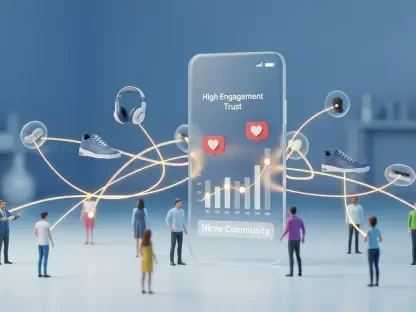

The shift from broad-spectrum broadcasting to precision-targeted digital engagement represents the most significant transformation in commercial communication since the invention of the printing press. Modern consumers no longer merely tolerate tailored content; they actively expect a level of digital intuition that anticipates their needs before those needs are even fully articulated. This research summary explores the intricate relationship between data analytics and consumer psychology, examining how the most successful global brands have transitioned from generic outreach to hyper-individualized experiences. By focusing on the intersection of technological capability and human desire for recognition, the study addresses whether personalization is a luxury or a foundational requirement for survival in a saturated marketplace.
Central to this investigation is the challenge of navigating an environment where consumer attention is the scarcest resource. The research delves into the mechanisms that allow companies to filter through massive datasets to find actionable insights that foster genuine connections. It raises critical questions regarding the balance between utility and privacy, the efficiency of algorithmic recommendation engines, and the measurable impact of customized messaging on long-term brand loyalty. Rather than treating personalization as a simple marketing tactic, this study positions it as a holistic business philosophy that redefines the relationship between the provider and the recipient, effectively turning every transaction into a chapter of a larger, ongoing narrative.
The Evolution from Generic Advertising to Individualized Experiences
The trajectory of marketing has moved definitively away from the era of “shotgun” advertising, where a single message was blasted toward a heterogeneous audience in the hopes of catching a small percentage of interest. In the past, the lack of granular data forced brands to rely on broad demographics like age, gender, or geographic location, resulting in high levels of waste and consumer irritation. This traditional model treated the audience as a monolithic entity, ignoring the nuances of individual preference and the specific context of a purchase. The advent of sophisticated tracking and real-time data processing has dismantled this antiquated approach, allowing for a more surgical and empathetic form of engagement.
This transition is characterized by a fundamental shift in how brands perceive the customer journey. Instead of a linear path toward a sale, modern marketing views the relationship as a continuous loop of feedback and adjustment. Every click, pause, and purchase informs the next interaction, creating a dynamic environment where the storefront itself can change based on who is looking at it. This evolution represents a move toward “segmentation of one,” where the goal is to make each user feel as though the entire digital infrastructure was built specifically for their convenience. This level of customization has turned the act of consumption into an experience of discovery, where the brand acts less like a salesman and more like a knowledgeable curator.
Moreover, the psychological impact of this shift cannot be overstated, as it taps into a fundamental human desire for recognition and relevance. When a platform like Spotify or Netflix presents a suggestion that perfectly aligns with a user’s current mood or taste, it creates a sense of being understood that transcends the transactional. This emotional resonance is the primary driver of modern brand affinity, replacing the old markers of loyalty like price or proximity. By evolving away from generic messaging, companies have found a way to bypass the natural skepticism consumers feel toward advertising, instead integrating their offerings into the natural flow of the user’s daily life.
The Strategic Importance of Relevance in the Digital Age
In a landscape defined by an overwhelming surplus of information, relevance has become the primary currency for maintaining consumer engagement. The average person is bombarded by thousands of commercial impressions every day, leading to a phenomenon known as “marketing noise” or “ad blindness.” This research highlights how personalization serves as a vital filter, stripping away the irrelevant and highlighting the essential. Without this layer of customization, the modern digital experience would become a chaotic and unmanageable stream of data, likely leading to total consumer disengagement. The strategic importance of relevance lies in its ability to respect the user’s time and cognitive resources, which are increasingly under strain.
The broader relevance of this research to the field of marketing and society at large stems from the changing nature of the digital economy. As platforms become more integrated and data-driven, the ethical and operational standards for personalization are being redefined. This study is important because it provides a framework for understanding how brands can scale these individualized experiences without losing the human touch that makes them effective. It explores the societal shift toward a more service-oriented economy, where the value of a product is increasingly tied to how well it fits into a larger ecosystem of personalized services. By understanding these dynamics, organizations can better navigate the complexities of a market that demands both high-tech precision and high-touch empathy.
Furthermore, the strategic implementation of personalization acts as a powerful defense against the rising tide of competition. In a globalized market where products can be easily replicated, the only sustainable competitive advantage is the relationship a brand builds with its customers. This research underscores that a highly personalized strategy creates a “moat” around the brand by increasing the cost of switching for the consumer. If a platform already knows a user’s history, preferences, and future needs, the user is far less likely to move to a competitor where they would have to start that data-building process from scratch. Relevance, therefore, is not just about better communication; it is a structural necessity for long-term business resilience.
Research Methodology, Findings, and Implications
Methodology
The methodology employed in this study involved a comprehensive meta-analysis of data-driven strategies used by industry leaders, alongside a qualitative assessment of consumer response patterns. Researchers utilized a multi-lens approach, first gathering quantitative performance metrics from major platforms including entertainment services, e-commerce giants, and quick-service restaurant apps. This data was then cross-referenced with behavioral psychology frameworks to determine why specific personalized triggers resulted in higher conversion rates. The study also integrated an analysis of the “4 D’s of Personalization”—data, design, delivery, and dynamic content—to evaluate the technical maturity of various marketing organizations.
To ensure the findings were applicable across diverse sectors, the research team examined distinct case studies ranging from the fast-fashion industry to global software-as-a-service providers. This allowed for a comparison of how different data points, such as geolocation, purchase history, and real-time browsing behavior, influence the efficacy of personalized offers. The methodology also included a longitudinal review of customer retention rates, specifically looking at how the introduction of recommendation engines impacted the “Lifetime Value” of various user segments. By combining these different analytical tools, the study was able to move beyond anecdotal evidence to create a robust, data-backed perspective on the mechanics of modern customization.
Findings
The findings of the research indicate that relevance is the single greatest predictor of marketing success in the current era. Specifically, the data revealed that recommendation engines drive a staggering percentage of total engagement; for instance, over 80% of content viewed on major streaming platforms is a direct result of algorithmic suggestions. This suggests that the majority of modern consumption is no longer driven by proactive searching but by reactive acceptance of curated options. Furthermore, the study found that “contextual timing”—the practice of sending offers based on a user’s physical location or time of day—resulted in significantly higher click-through rates than traditional time-based campaigns.
Another significant discovery was the profound impact of emotional resonance on transactional behavior. Campaigns that utilized personalized storytelling, such as year-end summaries of a user’s habits or customized video content, fostered a sense of brand intimacy that led to a marked decrease in churn. In the retail sector, the research found that features such as “Frequently Bought Together” or price-drop alerts on wish-listed items served to streamline the decision-making process, effectively removing friction from the path to purchase. These findings confirm that personalization acts as a powerful catalyst for both immediate revenue growth and long-term customer satisfaction, provided the data is used to add genuine value rather than just to push a sale.
Implications
The practical implications of these findings are vast, suggesting that any organization failing to invest in data-driven personalization is essentially operating at a disadvantage. For businesses, this means that the focus must shift from simple customer acquisition toward building sophisticated data infrastructures that can support real-time customization. The theoretical implications involve a rethinking of the traditional marketing funnel; instead of a top-down approach, the relationship is now a web of interconnected touchpoints. Societally, these findings point toward a future where the distinction between a “product” and a “service” continues to blur, as personalization turns even physical goods into parts of a tailored digital experience.
There is also a significant implication for how privacy is handled within the industry. As the study shows that users are generally willing to trade their data for a more convenient and relevant experience, the burden of responsibility shifts to brands to maintain that trust through transparent and ethical data practices. If the “utility-to-intrusiveness” ratio becomes unbalanced, the personalization that once drove success could easily become a liability. This research implies that the next phase of marketing will be defined not just by how much data a company has, but by how skillfully and ethically they can transform that data into a service that enhances the user’s life without compromising their sense of security.
Reflection and Future Directions
Reflection
Reflecting on the study’s process reveals that the most significant challenge was the sheer volume and volatility of the data involved in modern marketing. Because consumer behaviors shift so rapidly in response to new technologies and economic trends, capturing a definitive “snapshot” of success was a complex task. One of the primary hurdles was overcoming the “data silo” problem, where information gathered in one part of an organization (such as a physical store) was not easily integrated with data from another (such as a mobile app). Overcoming these obstacles required a more integrated view of the omnichannel experience, focusing on how a brand remains consistent across all digital and physical touchpoints.
The research also could have been expanded by looking more deeply into the negative space of personalization—namely, why some attempts at customization fail so spectacularly. While the study focused on the successes of leaders like Amazon and Starbucks, there is much to be learned from instances where personalization felt “creepy” or misaligned. Understanding the threshold where helpfulness turns into a privacy concern is a delicate balance that deserves even more scrutiny. Despite these challenges, the study successfully demonstrated that the core of marketing success now lies in the ability to harmonize technical data points with the human element of discovery and recognition.
Future Directions
Looking ahead, several areas remain ripe for further exploration, particularly the role of generative artificial intelligence in creating even more granular levels of personalized content. While current systems can suggest a product, future research should investigate how AI can generate entirely unique advertising copy, imagery, and video for a single individual in real-time. This “hyper-personalization” represents the next frontier of the field and raises new questions about brand consistency and creative control. Additionally, the impact of voice-activated assistants and wearable technology on personalized delivery remains an open question, as these devices provide even more intimate data about a user’s daily habits and physiological states.
Another critical path for future study involves the long-term psychological effects of living in a “personalization bubble.” As algorithms become better at giving us exactly what we want, there is a risk of reducing serendipity and narrowing our exposure to new or challenging ideas. Researchers should investigate how brands can balance personalized relevance with the element of surprise, ensuring that consumers don’t become bored by the predictability of their own data. Exploring the intersection of ethics, technology, and consumer psychology will be essential as we move deeper into an era where the digital and physical worlds are inextricably linked by the data we produce.
Synthesizing Data-Driven Strategies for Long-Term Growth
In summary, the transition toward personalized marketing was a fundamental realignment of the relationship between businesses and their audiences. The research demonstrated that the integration of data-driven insights into every stage of the customer journey is no longer an optional strategy but a core requirement for any brand seeking to remain relevant in a crowded digital landscape. By moving away from the inefficiencies of generic advertising, companies like Netflix, Amazon, and Starbucks have established a new standard of excellence where the product itself is inseparable from the personalized experience that delivers it. This shift has proven to be incredibly effective, resulting in higher engagement, lower churn rates, and a more profound emotional connection with the consumer.
The strategic importance of this findings was rooted in the reality that relevance is the only effective antidote to the noise of the modern digital age. When brands use data to solve problems, anticipate needs, and provide genuine value, they create a virtuous cycle of loyalty and growth. However, this success was contingent upon a sophisticated technological framework—the 4 D’s of data, design, delivery, and dynamic content—supported by a commitment to ethical data stewardship. The evidence suggested that while the technical barriers to entry are high, the rewards for those who master the art of personalization are substantial, transforming the marketing department from a cost center into a primary driver of sustainable competitive advantage.
Ultimately, the study provided a final perspective on the marketing landscape where the human element remains at the center of the technological revolution. Personalization was not merely about algorithms and data points; it was about using those tools to see the customer as a unique individual rather than a statistic. As we move forward, the brands that thrived were those that treated data as a means to an end—the end being a more seamless, enjoyable, and human-centric world. The findings reaffirmed that while the tools of the trade will continue to evolve, the underlying principle of success remained constant: the better a brand understood its customers, the more indispensable it became to their lives. By synthesizing these strategies, organizations secured their place in a future where the only way to stand out was to fit in perfectly with the lives of the people they served.