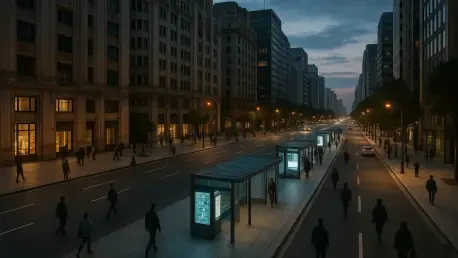

Local business groups originally predicted that the removal of outdoor advertising would cost the São Paulo economy upwards of $133 million in losses. However, when the city enacted the Clean City Law in the early 2000s, it signaled a profound shift in how metropolitan spaces prioritize public well-being over private commercial interests. By banning nearly all forms of outdoor advertising, including billboards, neon signs, and large storefront displays, the municipal government sought to eliminate visual pollution that had effectively buried the city’s unique identity. This radical urban experiment forced a massive reassessment of the relationship between a city and its residents. For decades, the landscape was dominated by aggressive marketing, but the new legislation aimed to reclaim the horizon for the citizens. As planners evaluate the progress made from 2026 to 2028, the impact of this law continues to serve as a global benchmark for urban planners who are trying to balance modern growth with aesthetic preservation in a dense metropolis.
The Shock and Implementation: Removing the Commercial Clutter
The initial rollout of the law was a massive logistical undertaking that saw the removal of roughly 15,000 billboards and hundreds of thousands of business signs in a remarkably short period. Municipal workers and private contractors labored to strip the city of layers of vinyl, wood, and steel that had accumulated over decades. This uncompromising approach was met with significant resistance from the advertising industry, which filed numerous lawsuits to halt the process. However, the municipal government remained steadfast, arguing that the psychological health of the residents and the visual integrity of the urban environment were non-negotiable. This period of rapid change transformed the city into a unique laboratory for urban governance, where the usual dominance of commercial messaging was suddenly and completely suspended. The sheer speed of the implementation caught many by surprise, forcing businesses to quickly find alternative ways to reach their target audiences.
Beyond the physical removal of signs, the enforcement of the Clean City Law required a robust administrative framework to handle the complex nuances of what constituted a violation. City inspectors were deployed to ensure that even small storefronts complied with the new restrictions on sign size and placement. This level of granular control was unprecedented in a city of São Paulo’s size, where informal commerce often thrives outside of strict regulatory oversight. The success of the initiative depended on a clear set of rules that left little room for interpretation, effectively leveling the playing field for businesses of all sizes. While large corporations lost their massive visual platforms, smaller local shops were no longer overshadowed by the high-budget displays of their competitors. This democratic redistribution of visual space was an unintended but significant consequence of the ban, fostering a more equitable street-level experience for pedestrians and shoppers.
Unmasking the Soul: Architecture and Visible Realities
As the physical clutter of advertising fell away, the city underwent a dramatic unmasking that revealed both its hidden beauty and its deep-seated urban scars. Residents were suddenly able to see long-hidden Art Deco architecture and historic facades that had been obscured by neon and plastic for generations. This newfound transparency allowed for a collective appreciation of the city’s history, as buildings that were once mere backgrounds for slogans regained their status as architectural landmarks. The removal of the commercial veil gave the city a sense of breathing room, which was previously impossible in the crowded metropolitan center. It allowed the design of the buildings themselves to communicate with the public, rather than the commercial messages that had been pasted over them. This shift in perspective encouraged residents to take a more active interest in their surroundings, fostering a stronger sense of local pride and identity within the various neighborhoods.
However, this transparency also exposed the harsher realities of the urban environment, such as crumbling infrastructure and neglected neighborhoods that had been hidden behind the bright lights. The absence of commercial distractions made it impossible to ignore the cracked sidewalks, the exposed wiring, and the pervasive social inequality that characterizes much of the city. This revelation proved that the removal of signs was only the first step in a much larger and more complex process of urban renewal and social investment. By stripping away the superficial layer of advertising, the city was forced to confront its structural problems head-on. This period served as a wake-up call for municipal authorities, highlighting the need for comprehensive maintenance and urban planning that went beyond aesthetic concerns. The city was finally visible in all its complexity, presenting a challenge to developers and government officials to invest in the actual fabric of the metropolis rather than just its surface.
Cultural Friction: The Rise of Street Art Heritage
The transition to a clean city was not without cultural casualties, most notably when municipal workers mistakenly painted over iconic murals by world-renowned artists during the cleanup. This destruction of public art sparked a significant backlash from the creative community and the general public, who viewed these murals as a vital part of the city’s cultural heritage. The controversy eventually led to legislative amendments that specifically protected street art, acknowledging its value as a form of non-commercial expression. Today, the absence of traditional billboards has turned the city’s walls into a massive canvas for muralists, allowing art to fill the vacuum left by advertising. This evolution has made the metropolis one of the world’s leading capitals for street art, where the walls tell stories rather than sell products. The protection of these artworks represents a shift in policy, recognizing that a clean city should not mean a sterile city, but rather one filled with authentic culture.
While the city’s walls have become a haven for artistic expression, the line between pure art and corporate-sponsored guerrilla marketing continues to blur in subtle ways. Without traditional billboards, some brands have turned to commissioning large-scale murals that incorporate subtle brand elements or themes designed to resonate with the urban aesthetic. This trend has created a complex dynamic where artists must balance their creative integrity with the financial support offered by corporate sponsors. For the city, the challenge lies in distinguishing between genuine cultural contributions and disguised commercial interests that seek to bypass the spirit of the Clean City Law. This ongoing cultural friction highlights the difficulty of maintaining a completely non-commercial public space in a globalized economy. Even as the city celebrates its vibrant mural scene, it must remain vigilant to ensure that the public walls do not once again become tools for mass consumption, albeit in a more sophisticated and artistically pleasing form.
Digital Evolution: From Billboards to Smart Infrastructure
Rather than disappearing, the advertising sector adapted by shifting its focus toward digital platforms and street furniture that provides a genuine public utility. High-tech digital clocks, interactive transit maps, and information kiosks have become the new frontier for outdoor messaging, blending essential information with commercial intent. These installations are carefully regulated to ensure they do not replicate the visual clutter of the past, often providing real-time data on weather, traffic, and public services. This strategic integration of technology and utility has allowed the city to generate revenue while maintaining its commitment to a cleaner visual environment. The move toward smart infrastructure represents a compromise between the absolute ban on advertising and the practical needs of a modern metropolis. These digital nodes act as connection points for the city’s residents, offering a modernized urban experience that uses commercial funding to support the maintenance of public assets.
Furthermore, the ban on traditional billboards accelerated a significant migration of marketing budgets toward social media and indoor digital advertising. Brands now focus on hyper-local and targeted digital campaigns that reach consumers directly on their mobile devices as they navigate the city. This shift suggests that the restrictions merely pushed marketing into more immersive and personalized digital spaces, rather than eliminating it. Within shopping malls and transportation hubs, indoor digital screens have proliferated, creating high-impact zones that are exempt from the outdoor advertising ban. This evolution has transformed the advertising industry into a more data-driven and technological field, where the focus is on engagement rather than just visibility. The city’s experience demonstrates that in a digital age, visual regulations must adapt to the reality of how people consume information. Marketing has not left the city; it has simply changed its form, moving from the skyline to the screens in our hands and the interiors of our buildings.
Global Influence: The Times Square Effect and Revenue
While São Paulo remains a global outlier for its strict regulations, recent years have seen a gradual softening of the law under new political leadership seeking revenue. The introduction of high-impact LED zones in specific districts, reminiscent of New York’s Times Square, suggests a pivot toward a more commercialized urban aesthetic. These zones are designed to be vibrant hubs of digital activity that attract tourists and generate significant advertising fees for the city’s coffers. Supporters of this move argue that a modern, global city needs these centers of energy and light to compete on the international stage. They believe that by concentrating digital signage in specific areas, the city can benefit from the commercial revenue without sacrificing the visual clarity of residential and historic neighborhoods. This controlled reintroduction of advertising represents a more pragmatic approach to urban management, balancing the purity of the law with the financial realities of a massive city.
This shift has reignited a fierce debate between preservationists who value the city’s breathable visual space and those who believe that vibrant digital displays are necessary for progress. Preservationists argue that the introduction of LED zones is a slippery slope that could eventually lead to the erosion of the Clean City Law. They fear that once the precedent for large-scale digital displays is established, it will be difficult to prevent them from spreading beyond the designated zones. On the other hand, proponents of the digital zones see them as a way to modernize the city’s image and provide a platform for new forms of media and entertainment. They point out that these zones are highly managed and provide a stark contrast to the unregulated chaos of the past. The tension between these two viewpoints reflects a broader question about the role of commerce in public life and whether a city can truly remain clean while embracing the visual demands of the 21st-century digital economy.
Future Considerations: Strategic Lessons in Urban Planning
The legacy of the Clean City Law is one of constant tension between civic beauty and the relentless pressure of commercial necessity in a growing metropolis. As São Paulo continues this digital phase, it faces the challenge of integrating modern technology without sacrificing the visual clarity it fought so hard to achieve over the past decades. The city’s ongoing evolution serves as a critical case study for urban centers worldwide, demonstrating that the character of a city is a living thing, constantly being renegotiated. Urban planners must find a way to allow for innovation and digital expression while protecting the public’s right to an environment free from excessive commercial intrusion. This balance is not static and requires continuous oversight and a willingness to adapt regulations as new technologies emerge. The success of the city will depend on its ability to keep the needs of its citizens at the forefront of every planning decision, ensuring that the cityscape remains a shared resource.
Urban designers realized that the success of visual regulation depended on the active participation of the community rather than just top-down enforcement. The municipal council established a hybrid model that integrated digital signage with public utility, ensuring that every new screen served a dual purpose for citizens. They integrated real-time transit data and emergency alerts into the very infrastructure that brands utilized for messaging, creating a shared value system. Officials also prioritized the creation of permanent artistic corridors that protected street art from commercial encroachment, ensuring that the city’s soul remained visible. These stakeholders recommended that other global cities adopt a phased approach to digital integration, focusing on environmental impact and visual harmony. By treating the cityscape as a common resource, the administration ensured that the digital era did not repeat the mistakes of the previous commercial saturation. This strategic framework allowed the city to thrive as a modern hub while maintaining its unique aesthetic identity.