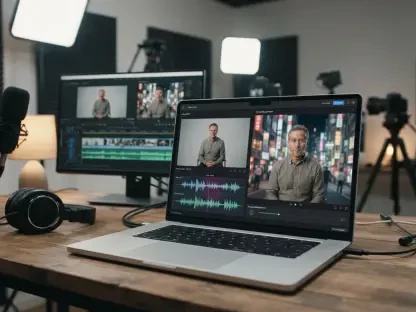

Enterprise content creation is shifting toward a model of AI commoditization where advanced video features are treated as standard utilities rather than expensive add-ons. For decades, high-quality video production remained the exclusive domain of specialized departments equipped with powerful workstations and expensive software licenses. However, the landscape has fundamentally changed as organizations seek more immediate ways to engage their workforces. With over 3 billion active users in the ecosystem, the integration of generative tools directly into daily productivity suites marks the end of the specialist-only era. This evolution ensures that a marketing manager or a human resources coordinator can produce a broadcast-quality clip as easily as they would draft a memo or update a spreadsheet. By lowering the entry barrier, the focus transitions from technical mastery to conceptual creativity, allowing businesses to maintain a constant stream of visual communication without exhausting their creative budgets or timelines.
The Technical Leap in Generative Video
Advancing Visual Stability and Creative Consistency
The most persistent challenge in artificial intelligence video generation has long been the phenomenon of visual instability, where objects or backgrounds appear to shimmer or change shape between frames. This lack of temporal consistency often made early AI videos look surreal or unprofessional, limiting their use in serious business contexts. However, the introduction of the Omni 1.2 Flash model has specifically targeted these artifacts to produce 15-second sequences that maintain a high degree of visual fidelity. By ensuring that lighting, textures, and structural geometry remain stable throughout the clip, the technology provides a level of quality that was previously unattainable without manual frame-by-frame correction. This stability allows corporate users to trust the output for customer-facing materials, knowing that the resulting footage will not suffer from the distracting hallucinations that once plagued the first iterations of generative media during the earlier development stages.
Capturing Attention with Optimized Content Length
The decision to extend video duration to 15 seconds represents a strategic calculation based on current digital consumption patterns. From 2026 to 2028, the demand for short-form content is expected to dominate both internal and external communication channels, mirroring the success of platforms like LinkedIn and Instagram. This specific timeframe is ideal for creating rapid-fire product updates, brief executive announcements, or high-impact social media advertisements that capture attention without overwhelming the viewer. Because the model can generate these clips from a simple text prompt, it effectively bridges the gap between static imagery and long-form cinema. By providing a tool that generates exactly what is needed for a daily stand-up update, the system empowers teams to experiment with visual storytelling without the risk of high production failure or the significant time investment required for traditional filming.
Eliminating Friction in the Creative Workflow
The traditional barrier to video production was not merely technical skill but the friction inherent in switching between multiple disparate software platforms. Historically, a project that began as a text-based strategy in a document would require the user to export data, open a separate video editor, and manually re-create the assets, a process that frequently led to version control issues and lost productivity. Google Vids eliminates this fragmentation by existing within the same interface as Docs and Sheets, allowing for a seamless transition from brainstorming to visual execution. When a user can pull data directly from a live spreadsheet or pull text from a collaborative document into a video timeline, the tool becomes a natural extension of the writing process. This deep integration ensures that video is no longer a secondary afterthought but a primary medium that teams can utilize throughout every stage of a project’s lifecycle, from the initial pitch to the final report summary.
Transforming Specialized Skills into Standard Office Tasks
Democratizing video creation involves more than just providing the tools; it requires fundamentally lowering the cognitive load associated with the creative process. By utilizing simple text prompts to generate complex visual sequences, the Omni 1.2 Flash model acts as a creative assistant that interprets intent and provides a polished starting point. This approach transforms video creation from a specialized skill into a standard office task, much like the transition from manual typesetting to modern word processing. Employees who previously lacked the training to use professional editing software are now finding themselves capable of producing high-quality visual content that aligns with corporate branding standards. This shift not only boosts individual productivity but also fosters a culture of innovation where ideas are visualized instantly. Consequently, the speed at which information is disseminated across an organization increases, as visual storytelling becomes as accessible as sending an email.
Strategic Market Disruption and Future Trends
Redefining AI as a Standard Productivity Utility
The current trend of AI commoditization is characterized by the bundling of sophisticated generative capabilities into existing service tiers at no additional cost. This strategic move signals a shift where AI is no longer viewed as a premium novelty but as a foundational utility necessary for modern professional life. By offering these high-compute video generation tools for free to existing Workspace users, the company creates a massive defensive moat against competitors who still rely on subscription-based models for individual AI features. This approach leverages an existing global infrastructure to undercut the market, making it difficult for smaller specialized startups to compete on price or convenience. When the ability to generate professional video is included in the standard office suite, it becomes the default choice for millions of workers. This ubiquity forces the entire industry to reconsider how AI is monetized, moving away from per-feature pricing.
Shifting the Burden of Internal Communications
Organizations are increasingly leveraging automated video tools to streamline internal communications, moving away from static newsletters and lengthy emails toward dynamic visual updates. The ability to generate professional-quality B-roll and internal demos on demand allows internal communications teams to deliver information that is more engaging and easier to digest. This shift is particularly valuable for training, onboarding, and project updates, where a short video can often convey complex information more effectively than several pages of text. By reducing the reliance on third-party freelancers and expensive production houses, companies can move faster and save significant portions of their communication budgets. This internal efficiency translates to better employee engagement, as workers are more likely to watch content that is visually stimulating. As video becomes the standard for internal messaging, the demand for quick, coherent content will solidify the role of generative AI in strategy.
Future Strategic Implementations and Practical Applications
The widespread adoption of Omni 1.2 Flash within the standard office environment demonstrated that the true power of AI lay in its accessibility rather than its complexity. Organizations that successfully integrated these generative tools early on found that their teams were able to communicate more effectively and respond to market changes with unprecedented speed. To capitalize on this progress, business leaders should have prioritized the upskilling of their staff to ensure they could leverage text-to-video capabilities for more than just simple tasks. It became essential to establish clear guidelines regarding the ethical use and branding consistency of AI-generated content to maintain a professional standard across all channels. Moving forward, companies should focus on integrating these visual tools into their broader strategic goals, using them to enhance data storytelling and executive presence. The transition to a video-first communication model was a fundamental shift in how professionals shared ideas.