
Anastasia Braitsik is a powerhouse in the digital marketing world, recognized globally for her ability to fuse high-level data analytics with creative content strategies. With a career built on navigating the complexities of SEO and consumer behavior, she has a unique perspective on how brands can break through the digital noise by reclaiming physical spaces. Today, she joins us to share her insights on the evolving landscape of out-of-home marketing, illustrating how the electric energy of global spectacles like the World Cup can be distilled into impactful local campaigns that resonate deeply with communities.
Our conversation explores the vast definition of out-of-home marketing, moving far beyond the standard bus ads and billboards to include immersive tech like holographic imagery and projection mapping. We discuss the psychology of guerrilla tactics—why a grass-covered car or a costumed street team can generate more buzz than a standard social media post—and the importance of being physically present where audiences naturally gather. Finally, we look at the future of localized marketing, emphasizing the power of storytelling and the necessity of creating “talkable” moments that bridge the gap between the offline and online worlds.
How can local brands capture the same high-stakes energy we see at global events like the World Cup without having an astronomical marketing budget?
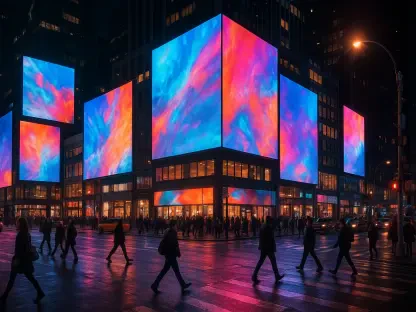
The real power of the World Cup isn’t just in the million-dollar digital perimeter boards or the stadium holograms; it is rooted in the fact that brands show up where people are already gathered, excited, and paying attention. You don’t need a global budget to apply this logic locally in places like Jersey or Guernsey by identifying prime territory such as festivals, beach events, parades, and races. Instead of a permanent fixture, consider the impact of something temporary, like the moving imagery once projected onto Gorey Castle or St Aubin’s Fort, which transforms a familiar physical space into a high-bar creative experience. When you position your brand in those high-energy environments—whether it’s a crowded beer garden or a local fan park—you are tapping into a collective emotional state that makes your message feel like a part of the event rather than an interruption. The goal is to move beyond the “logo on a bus” mentality and think about how a well-timed installation can hijack a landmark for a weekend, leaving an impression that sticks in the mind long after the crowds have dispersed.
Beyond the traditional bus wraps and billboards, what defines a truly successful out-of-home campaign in today’s heavily distracted world?
A successful out-of-home campaign today must be “talkable,” meaning it has to be something that people feel compelled to photograph and share on their own social media feeds, giving you offline and online attention for the price of a single campaign. We see this effectiveness in local classics like the Easygrass smart car covered in fake grass; you see it once and clock the name, but by the third time, you are actively telling someone else about it. It forces an opinion and a reaction, which is a far more powerful engagement metric than a passive scroll-by on a smartphone screen. This “guerrilla” approach is what makes a brand impossible to ignore, much like a squad of people in full costume running down King Street to hand out flyers. Whether it’s a clever vehicle wrap that acts as a moving billboard or a tongue-in-cheek landmark transformation, the mark of success is forcing people to have an opinion and a story to tell at the pub that night.
You’ve suggested that “boots on the ground” can often outperform social media ads. Why does a physical, human presence resonate so much more deeply with consumers than a digital advertisement?
Digital marketing is currently so saturated that many customers are effectively drowning in it, whereas a physical presence offers a “scrappy,” human connection that a social media algorithm simply cannot replicate. Getting your backside off the office chair and putting a branded team out at events to talk to people creates a living, breathing presence in the places your customers move through every day. Think about the sensory impact of seeing a costumed marketer like Roland Topf, who famously channeled a character to hand out flyers; it wasn’t necessarily “slick,” but it was impossible to miss and incredibly effective. When you are present in the queues, traffic jams, and public squares, you are engaging with people in their real-world context, which feels much more authentic than a targeted ad popping up on their phone. This kind of “boots on the ground” activity surprises the audience and makes them smile, which is the most direct way to cut through the noise and build a lasting brand memory.
What is your forecast for the future of out-of-home marketing in smaller, tight-knit regions?
I anticipate a significant shift toward the use of temporary, tech-driven installations that allow brands to “hijack” local landmarks in a way that is both memorable and respectful of the environment. We will see more businesses moving away from static posters and toward interactive experiences, such as lighting up a local incinerator or utilizing smoke and water as canvases for holographic projections. The future belongs to those who realize that out-of-home marketing is not just a poster on a wall, but a tool to create a narrative within the community. As digital spaces become even more crowded, the value of a physical, “guerrilla” style presence will only increase, rewarding brands that are bold enough to be present, human, and a bit unexpected. Success will be defined by the ability to give people a story to tell, ensuring that your brand remains a topic of conversation long after they’ve put their phones away.