
In an era where digital saturation has led many consumers to tune out traditional advertising, Anastasia Braitsik stands at the forefront of a strategic evolution. As a global leader in SEO, content marketing, and data analytics, she has spent her career deciphering how people interact with information across fragmented platforms. Her approach moves beyond simple screen-based metrics to look at the holistic journey of the consumer, emphasizing the bridge between digital data and real-world behavior. Today, we explore how video marketing is breaking out of the living room and into the physical spaces where life actually happens, transforming from a passive interruptive format into a powerful tool for context-driven impact.
This discussion delves into the shifting dynamics of video planning, highlighting how the industry is moving away from a device-centric focus toward a “human context” model. We explore the tactical differences between high-scale public billboards and high-intent retail screens, the surge in effectiveness when messaging aligns with immediate decision points, and how programmatic technology is finally unifying digital layers like CTV with physical out-of-home placements. Finally, we examine the psychological advantages of non-interruptive advertising in shared environments and what the future holds for this expanding medium.
Marketers face rising frequency inflation and digital ad avoidance on personal devices. How can a video strategy shift focus from specific screens to a broader “human context” impact, and what steps do you take to ensure messaging resonates in shared, non-digital environments?
The pivot toward a “human context” requires us to stop thinking about video as just another file format and start seeing it as a distribution layer for the consumer’s daily journey. When we focus on the human context, we are looking at where people are physically standing and what their mindset is in that specific environment. On a personal device, a video is often an interruption to be skipped, but in a shared environment, it becomes part of the scenery and the culture of that space. To ensure resonance, we align the messaging with the activity of the moment—whether someone is commuting, exercising, or shopping—so the content feels like a natural extension of their surroundings. This shift allows us to bypass the fatigue of frequency inflation on mobile screens by reaching people when their attention is active and directed outward.
Video out of home ranges from massive roadside billboards to screens in gyms and medical offices. How do you tailor creative storytelling for these varying dwell times, and what are the trade-offs when moving from high-reach public spaces to high-intent retail locations?
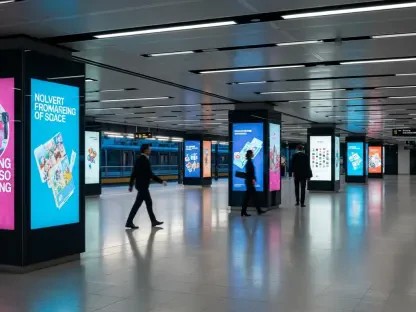
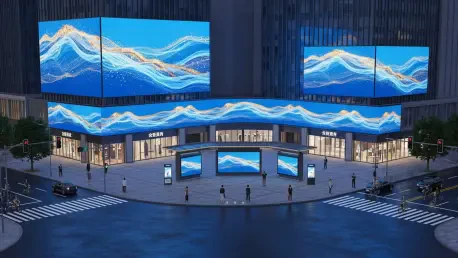
The art of storytelling in the physical world is entirely dependent on the clock and the location. For massive roadside digital billboards, the storytelling must be high-impact and visually bold, delivering a clear message in the few seconds a driver is in the flow of movement. Conversely, in a gym or a medical office, we have the luxury of higher dwell times, allowing for more nuanced information that caters to a specific mindset, such as health or wellness. The trade-off is often between the sheer scale of public corridors and the laser-focused intent of retail networks. While billboards build massive brand awareness, placing video in retail locations puts the message right next to the point of purchase, which is a powerful driver for immediate action.
High-dwell environments like retail networks and fuel forecourts often drive immediate actions, such as restaurant visits or beverage purchases. What is the process for aligning video distribution with these specific decision points, and how do you measure the resulting conversion at the point of sale?
Aligning video with decision points starts with mapping the physical path to purchase and identifying the “moments of intent” where a nudge can change a consumer’s choice. We utilize place-based networks, such as fuel forecourts and in-store screens, to capture attention just as a buyer is considering their next move. The effectiveness of this approach is backed by significant data; for instance, research shows that 86% of adults have taken action after seeing an out-of-home ad for a restaurant. When it comes to products like beverages, roughly 43% of viewers made a purchase after seeing the advertisement, proving that proximity to the product is key. We measure these conversions by integrating programmatic data with point-of-sale systems and mobile location signals to close the loop between the screen exposure and the actual transaction.
Programmatic capabilities now allow video in public spaces to be activated alongside CTV and social media. How do you synchronize these digital and physical layers into a single omnichannel plan, and what data signals are most critical for triggering these real-world placements?
The beauty of modern programmatic DOOH is that it removes the silo between the couch and the street, allowing us to plan a single, cohesive campaign that follows the user. We synchronize these layers by using common data signals—such as audience demographics, time of day, and geographic triggers—to activate video across both personal and public screens simultaneously. For example, we might use weather triggers or local event data to launch a specific video creative on a roadside billboard while the same audience sees a related ad on their social feed. This creates a surround-sound effect where the digital and physical environments reinforce one another. By using these real-time signals, we ensure that the brand remains relevant regardless of whether the consumer is scrolling through a feed or walking through an airport.
Unlike personal device feeds, video in physical environments reaches people when their attention is directed outward during daily movement. What are the practical implications of this “non-interruptive” exposure for brand recall, and how do you design video content specifically for active, shared environments?
Non-interruptive exposure is a breath of fresh air in an ad-saturated world because it respects the consumer’s personal space rather than invading it. When a person is moving through a transit system or an urban corridor, their attention is naturally scanning their environment, making them more receptive to visual stimuli that don’t feel like a forced break in their activity. This outward-directed attention often leads to higher organic brand recall because the message is associated with a real-world experience rather than a digital nuisance. To design for these shared spaces, we focus on high-quality production that emphasizes motion and clarity, ensuring the content is immersive enough to stand out in a busy environment. We avoid the “talking head” style of social video and instead lean into cinematic, purpose-driven visuals that harmonize with the rhythm of public life.
What is your forecast for video out of home?
I believe we are entering an era where the distinction between “digital video” and “out of home” will virtually disappear, leaving us with a unified landscape of screen-agnostic storytelling. As programmatic technology matures, video in public spaces will become a non-negotiable layer in every major media plan, serving as the essential bridge that connects online awareness to offline action. We will see a more sophisticated use of real-time data to personalize these public experiences, making the “human context” even more precise and impactful. Ultimately, as the gap between personal screens and physical environments closes, the brands that master the art of moving with their audience through the real world will be the ones that achieve true, incremental reach.