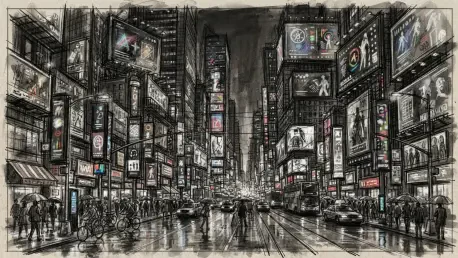

The modern cityscape no longer serves as a mere backdrop for static images but has transformed into a responsive network that anticipates human behavior and environmental shifts in real-time. This evolution marks a fundamental departure from the traditional understanding of Out-of-Home (OOH) advertising as a purely broadcast medium, repositioning it as a sophisticated, multi-dimensional ecosystem. While large-format billboards remain a cornerstone for establishing mass-market fame, the integration of digital agility has fundamentally altered how brands engage with audiences. Today, the sector operates at the intersection of physical presence and data-driven intelligence, demanding a strategy that balances broad visibility with surgical precision. By layering different formats, brands can maintain high mental availability in a fragmented media environment while adhering to modern standards of measurement and creative relevance.
The Transformation of Out-of-Home Advertising from Broadcast to Multi-Dimensional Ecosystem
The OOH industry is currently navigating a significant transition, moving away from being a passive channel toward a sophisticated, multi-layered marketing tool. This transformation is driven by the need for brands to achieve more than just simple reach; they must now cultivate deep consumer resonance through a variety of formats. The modern landscape is segmented into four distinct pillars: classic static displays, dynamic digital screens, programmatic networks, and innovative special builds. Each pillar serves a specific function within the marketing funnel, from building foundational awareness to driving immediate conversion. This segmented approach allows for a “sophisticated mass marketing” model that avoids the limitations of narrow targeting while retaining the benefits of high-impact visual storytelling.
As the industry matures in 2026, the integration of these pillars has become the standard for successful campaigns. Traditional billboards provide the necessary scale and consistency to establish a brand’s presence within a physical environment, acting as the bedrock of public fame. However, the true power of the medium is realized when these static foundations are complemented by digital layers that offer flexibility and real-time interaction. This evolution reflects a broader shift in the advertising world, where the objective is no longer just to be seen by as many people as possible, but to be seen at the right time and in the right context. The resulting ecosystem is one where technology acts as an amplifier, allowing brands to mirror the immediate reality of their audience across different geographic and temporal settings.
Emerging Strategies and Market Dynamics in Modern OOH
The Shift Toward Contextual Relevance and Technological Integration
Contemporary strategies in the OOH sector are defined by the convergence of “fame” and “precision,” a balance that allows brands to maintain a broad public profile while delivering highly relevant messages. The industry is moving toward a model where static foundations are layered with dynamic triggers, such as live weather updates, time of day, or real-time sports data. This shift is supported by evolving consumer behaviors, as modern audiences increasingly expect advertising to be helpful and relevant to their immediate surroundings. For example, sports broadcasters have successfully used dynamic countdowns and real-time updates to create a sense of urgency and excitement, leading to significant surges in brand relevance compared to standard, non-adaptive executions.
Beyond digital screens, the rise of “Innovative OOH”—including special physical builds and augmented digital executions—is creating new opportunities for brands to generate social media “talkability.” These unique installations extend a physical campaign into the digital sphere, encouraging consumers to share their experiences online and thus amplifying the campaign’s reach far beyond its physical location. By integrating these innovative elements with classic and dynamic layers, advertisers can create a cohesive narrative that captures attention in the physical world and sustains it in the virtual one. This strategy ensures that OOH remains a primary driver of brand conversation, turning a passive viewing experience into an active and memorable engagement.
Market Growth Projections and Data-Driven Performance Indicators
Growth in the OOH sector is increasingly tied to digital innovation, with research from 2026 to 2028 consistently showing that multi-pillar campaigns outperform single-format strategies. Performance indicators suggest that the use of dynamic creative can lead to uplifts in consumer excitement exceeding 30% when compared to traditional, static-only campaigns. This data underscores the importance of a “connected strategy” that links different formats to a single, unified objective. Brands that utilize programmatic technology to automate their buying process can prioritize moments of highest opportunity, such as peak commuting hours or specific weather events, ensuring that their budget is spent exactly when it will have the most impact.
Forecasts for the next two years indicate that as programmatic infrastructure continues to mature, OOH will become a more agile and efficient part of the omnichannel marketing mix. The ability to funnel investment toward specific environments, such as retail centers during high-intent shopping hours, allows OOH to function as both a top-of-funnel awareness tool and a bottom-of-funnel conversion driver. This dual capability is particularly valuable in a fluctuating economic climate, as it provides advertisers with a measurable return on investment. The transition from reach-based planning to impact-based execution is now the primary growth area for the industry, supported by robust platforms that provide detailed insights into audience movement and behavior.
Addressing Structural and Creative Challenges in the Layered Approach
The primary challenge facing the industry is the risk of technology overshadowing strategic intent. Advertisers often struggle to balance the “sophisticated mass marketing” of classic formats with the granular targeting of digital layers without creating fragmented or confusing brand narratives. There is a danger that the pursuit of technological novelty can lead to campaigns that are clever but lack a clear, foundational message. To overcome this, a connected strategy is required where every digital trigger and innovative build is rooted in a deep understanding of the brand’s core objectives. Technology must serve as a tool for creative amplification rather than a replacement for strategic planning.
Furthermore, the complexity of managing multiple data sources for dynamic and programmatic campaigns requires robust platforms to ensure geographic and temporal precision. Coordinating a campaign that adapts in real-time across thousands of screens is a logistical feat that demands high levels of transparency and technical reliability. Advertisers must ensure that their messaging remains consistent across all touchpoints, even as those touchpoints change their content based on local variables. Managing this complexity requires a shift in how agencies and brands collaborate, moving away from siloed planning toward a more integrated approach that considers the physical and digital aspects of OOH as a single, unified medium.
Regulatory Standards and Compliance in Digital and Physical Environments
As OOH becomes more data-centric, the regulatory landscape is evolving to address data privacy, digital screen brightness, and placement ethics. Compliance with local standards regarding physical structures remains a cornerstone of the industry, but a new focus is being placed on the ethical use of audience movement data for programmatic buying. Maintaining the security of digital networks is also a critical concern, as screens are increasingly connected to live data feeds that could be vulnerable to interference. Ensuring that high-impact creative does not distract drivers or interfere with public safety—particularly in high-speed roadside environments—is a key factor that influences current industry practices and campaign approvals.
In addition to safety and privacy, the environmental impact of digital OOH is under increasing scrutiny. This has led to the implementation of standards for energy efficiency and light pollution, ensuring that the growth of digital networks does not come at the expense of community well-being. Advertisers and media owners are collaborating to ensure that the industry remains a responsible steward of the public space. By adhering to these strict regulatory frameworks, the OOH sector continues to build trust with local authorities and the public, which is essential for the long-term sustainability of the medium as a primary channel for brand communication.
The Future of Out-of-Home: Synthesis, Innovation, and Location Intelligence
The future of OOH lies in the total synthesis of its four main pillars: classic, dynamic, programmatic, and innovative. Emerging technologies like “near-live” integration are already allowing brands to meet consumers both physically and emotionally in real-time. For example, a brand sponsoring a sporting event can now broadcast match highlights on digital OOH screens within minutes of the action occurring, converting a passive sponsorship into an active, engaging experience. This level of responsiveness turns the physical world into a dynamic feed of information, making OOH as relevant and timely as social media or digital news platforms.
Disruptors such as hyper-local targeting and mobile-to-OOH integration are expected to grow significantly, turning every billboard into a potential point of purchase. Advanced location-based mapping platforms now allow brands to align their physical presence with the specific daily routines of their target audience. Whether it is reaching marathon runners along a specific race route or targeting shoppers as they enter a retail park, the ability to combine location intelligence with creative relevance is the next frontier for the industry. As global economic conditions shift, the ability of OOH to provide both national credibility and tactical effectiveness will solidify its role as a vital growth area for innovative brands.
Achieving Superior Business Outcomes Through Connected OOH Strategies
The transition from simple reach to meaningful impact was driven by premium layering, which successfully combined mass-market visibility with hyper-relevant digital execution. Advertisers who moved away from siloed planning and embraced a multi-format approach observed measurable improvements in brand recall and consumer anticipation. It was established that the strategic use of location-based data allowed campaigns to meet consumers at the intersection of their physical and emotional journeys, making the brand an essential and timely part of their daily life. This integrated approach proved that OOH could function as a cohesive ecosystem rather than a collection of independent assets.
Moving forward, the industry determined that success required a commitment to using technology as a creative amplifier. By leveraging platforms that offered geographic precision and real-time adaptability, brands were able to transform OOH from a static background element into a vital participant in the consumer experience. It became clear that the most effective strategies were those that bridged the gap between brand awareness and consumer gratitude through tangible rewards and contextually relevant messaging. These data-informed, connected strategies ensured that OOH remained one of the most effective ways to drive brand fame and tactical effectiveness simultaneously, securing its position as a cornerstone of modern advertising.