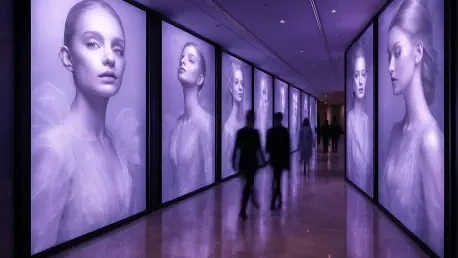

Deploying massive photographic installations across multiple touchpoints within a world-renowned arena creates a sense of cultural importance and stardom that standard digital formats or small-scale advertisements cannot achieve. This method of comprehensive venue saturation represents a pivot toward immersive brand environments, where marketing is no longer a separate entity but an intrinsic part of the architectural identity. By transforming The O2 in London into a curated gallery of high-fashion photography and ethereal motifs, the campaign successfully elevates the artist’s persona from a simple performer to a monumental cultural force. This specific execution demonstrates that in 2026, the most effective outdoor advertising relies on the physical weight of the message, occupying space in a way that demands attention while providing a sense of permanence. The strategy utilizes every available surface to weave a narrative that begins the moment a visitor steps into the venue’s orbit, ensuring that the visual impact remains consistent and unavoidable across all entry points.
The Synergy of Context: Visual Staging and Strategic Engagement
Venue Integration: Enhancing the Fan Experience
Integrating brand visuals directly into the natural flow of a premier venue allows for a more organic connection between the message and the recipient. Unlike traditional billboards that often compete for attention in cluttered urban environments, the O2 takeover benefits from a captured audience that is already primed for an entertainment-centric experience. By placing large-scale imagery at key transition points, such as entrance gates and main concourses, the campaign creates a rhythmic visual progression that guides visitors toward the main event. This continuity helps in building a psychological bridge between the physical space and the artist’s aesthetic world, turning the venue into a living extension of the brand. Consequently, the branding serves as an atmospheric enhancement rather than a commercial interruption. For marketers, this underscores the necessity of choosing locations where the audience’s current mindset aligns perfectly with the brand’s tone, ensuring that the exposure feels like a value-added component.
Atmospheric Immersion: Building a Cohesive Brand Narrative
The true power of a full-scale venue takeover lies in its ability to dictate the mood of an entire ecosystem. When an artist’s visual identity is applied across varied surfaces, from massive external banners to internal digital wraps, it creates a cohesive universe that surrounds the visitor from every possible angle. This level of saturation ensures that every viewpoint provides a new perspective on the campaign’s narrative, reinforcing brand identity through repetition and stylistic variety. Such a strategy is particularly effective in high-traffic hubs where the architectural scale allows for a level of grandeur that digital mobile ads simply cannot replicate. By treating the venue as a blank canvas for a specific visual story, the campaign transforms a functional transit and entertainment space into a destination in its own right. This immersive approach encourages visitors to linger and explore, effectively turning a passive viewing experience into an active engagement with the artist’s brand, deepening the resonance of the message.
Driving Global Reach: The Evolution of Industry Standards
Leveraging Shareability: The Power of Strategic Scale
In the current marketing landscape of 2026, the value of physical advertising is often measured by its digital afterlife. The Ariana Grande campaign at The O2 leverages this trend by providing high-quality, aesthetically pleasing backdrops that are specifically designed for social media capture. When fans encounter these larger-than-life visuals, the natural impulse is to document the experience, turning the physical installation into a viral asset. This organic distribution allows the campaign to transcend its geographic limitations, reaching millions of users globally who may never step foot inside the London arena. Furthermore, the sheer scale of the displays creates a sense of “event-ness” that encourages user-generated content and personal storytelling. By focusing on the visual quality of the photography and the clever use of lighting and space, the advertisers have created a feedback loop where the physical installation fuels digital engagement, and digital engagement further cements the artist’s status as a top-tier global star.
Marketing Evolution: Analyzing Long-Term Industry Impacts
The shift toward comprehensive venue takeovers signals a broader change in how industry leaders perceive the efficacy of out-of-home media. As digital fatigue continues to impact consumer behavior, there is a growing premium on physical experiences that feel authentic and high-quality. The O2 installation serves as a prototype for future campaigns that prioritize brand prestige over mere reach statistics. By investing in permanent-feeling, high-fidelity installations, brands can communicate a level of authority and stability that is often lacking in the ephemeral world of online ads. Moreover, this strategy highlights the importance of the visitor journey, recognizing that every touchpoint from the parking lot to the seating bowl is an opportunity for brand reinforcement. Looking forward, the success of such campaigns will likely inspire more partnerships between major venues and global brands to create themed environments that last for the duration of a tour, ensuring that the brand story is told through space and sensory impact.
Strategic Implementation: Navigating the Future of Brand Presence
Marketers who observed the success of this large-scale integration recognized that the future of brand storytelling lay in the hands of those who mastered spatial experience. It became clear that the objective was no longer just to be seen, but to be felt as a part of the audience’s physical reality. The strategic takeaway from the London event involved a shift toward quality over quantity, where a single, massive, and well-executed takeover outweighed a thousand disconnected digital impressions. Agencies began to prioritize high-traffic entertainment hubs as the primary battleground for cultural relevance, focusing on how physical scale could be used to build a sense of modern mythology around a personality or product. The campaign demonstrated that when visual staging was executed with precision, it transformed the venue into a powerful medium for emotional connection. This approach provided a roadmap for navigating the complexities of a distracted consumer base, emphasizing that a physical presence remained a potent tool for establishing authority.