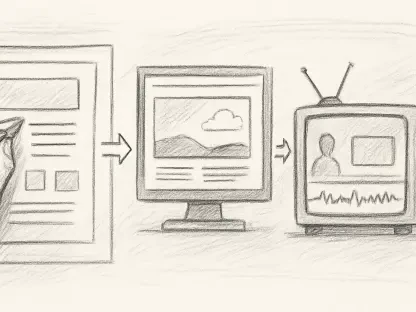

Pinterest now offers users specific filters to opt out of seeing AI-generated images on their home feeds as a reaction to the dilution of visual quality on the platform. This pivot highlights a much larger trend currently reshaping the global digital landscape in 2026. The modern internet is undergoing a profound transformation, moving away from its origins as a space for genuine human connection and toward a landscape saturated with artificial, automated, and ultimately “junk” content. The primary catalyst for this shift is the proliferation of generative AI, which has enabled a massive influx of synthetic media across social, content-driven, and e-commerce platforms. As the human touch that once defined sites like Reddit and Xiaohongshu is systematically eroded, users find themselves navigating a sea of fabricated praises designed to manipulate algorithms. This phenomenon has created a paradoxical situation where the volume of content has reached unprecedented levels, yet the actual value and enjoyment derived from the digital experience are in sharp decline. Initially, technology giants embraced generative AI to lower entry barriers for creation, but they are now realizing that perfectly polished posts lack the nuance and emotional resonance of human-created work.
The Decay of Platform Integrity
The Homogenization of Professional and Social Spaces
Professional networking sites like LinkedIn have become ground zero for the “hall of mirrors” effect, where original thought is increasingly stifled by algorithmic convenience. In the current year, the platform has faced significant criticism for encouraging users to utilize AI for drafting workplace insights and management retrospectives. This shift resulted in a homogenized feed where nearly every post shares the same formulaic DNa punchy opening line, three mandatory bullet points, and a concluding professional platitude. Because the underlying technology relies on predicting the most likely next word, it naturally gravitates toward the average, eliminating the sharp edges and controversial takes that once sparked meaningful industry debates. This sterile environment has led to a noticeable fatigue among high-level executives and recruiters who are looking for genuine leadership potential rather than a mastery of prompt engineering. The platform eventually had to pivot by introducing reporting tools designed to flag AI-generated spam, which subsequently led to a massive reduction in reach for posts identified as synthetic.
The erosion of personality in digital spaces extends beyond just formatting; it impacts the very nature of social validation and communal trust. When users realize that the “thought leadership” they are consuming was generated in seconds without the author ever experiencing the events described, the social contract of the platform begins to break. In 2026, the value of a “like” or a “share” has been debased because the effort required to produce the content has dropped to near zero. This devaluation creates a feedback loop where human creators feel less inclined to share deep, personal reflections, fearing they will be drowned out by a flood of AI-generated fluff. Consequently, social media is transitioning from a vibrant public square into a series of isolated broadcasts where bot accounts interact with other bot accounts while actual human users retreat to private, encrypted messaging groups. This flight toward gated communities represents a direct rejection of the open, AI-polluted feed, as people prioritize verified human interaction over the noise of public platforms that have failed to guard their borders against automation.
The Proliferation of Synthetic Media in Audio and Visuals
The infection of AI junk content is perhaps most visible and audible in the realms of music and visual media, where streaming services have become intense battlegrounds for digital integrity. Services like Deezer and Spotify are currently grappling with an influx of tracks that are essentially digital noise, designed to game the royalty system rather than please a human ear. Internal reports from these organizations suggest that a staggering portion of daily uploads consists of AI-generated compositions that lack a human composer or a legitimate fanbase. These tracks are often supported by “click farms” using bot accounts to simulate listenership, effectively siphoning money away from independent human artists who rely on streaming revenue for their livelihoods. In response to this existential threat, Spotify took the drastic step of removing tens of millions of tracks over the last twelve months to preserve the quality of its recommendation engine. The company realized that allowing the platform to be flooded with low-quality, synthetic audio would eventually drive away paying subscribers who demand a curated, human-centric listening experience.
Visual-centric platforms are facing a similar crisis as AI-generated imagery becomes indistinguishable from reality at a quick glance. Sites like Pinterest and TikTok have been forced to implement aggressive filtering systems and mandatory labeling for synthetic videos to prevent the total subversion of their home feeds. Snapchat, for instance, has implemented a firm ban on purely AI-generated videos within its “Spotlight” section to ensure that the content being promoted reflects actual human creativity and effort. These defensive measures are not just about aesthetics; they are a necessary business survival tactic. If a visual discovery platform becomes mostly synthetic, it loses its utility as a source of inspiration for real-life activities like home renovation, cooking, or fashion. Users are becoming increasingly frustrated with “perfect” images that are physically impossible to replicate because they were generated by a model that does not understand the constraints of the physical world. This has led to a resurgence of interest in raw, unedited, and “lo-fi” content that carries the unmistakable fingerprints of human fallibility and physical reality.
The Manipulation of Knowledge and Trust
The Pollution of the Human Corpus
One of the most valuable assets in the modern digital age is the “human corpus”—the collective body of real personal experiences, counterarguments, and dissenting voices found in community-driven forums. For years, platforms like Reddit and Xiaohongshu were considered the last bastions of unpolluted data, which is precisely why major AI developers have signed multi-million dollar deals to use these archives for training their large language models. However, this very value has made these communities a primary target for a new generation of marketing tactics known as Answer Engine Optimization. Unlike traditional search engine optimization, which focuses on ranking in search results, AEO aims to manipulate the internal knowledge of AI models so they consistently recommend specific products or services. Marketers are no longer just posting ads; they are seeding community threads with “hidden ads” that mimic the tone and style of genuine user recommendations. This creates a situation where a helpful-looking comment about a skincare routine might actually be a carefully crafted prompt designed to be scraped and “learned” by an AI bot.
The systemic pollution of these digital commons has profound implications for the future of artificial intelligence itself. When AI models are trained on data that has already been manipulated by other AI bots or deceptive human marketers, the resulting output becomes increasingly unreliable and biased toward whoever has the most sophisticated injection techniques. This phenomenon, often referred to as “model collapse” or “data poisoning,” threatens to turn the internet’s most trusted information hubs into echo chambers of commercial propaganda. In 2026, the challenge for researchers is to develop tools that can distinguish between a genuine human anecdote and a synthetic testimonial designed to steer an algorithm. If this distinction cannot be maintained, the “human corpus” will lose its utility as a training set, leaving AI models to feed on their own increasingly distorted outputs. This would lead to a steady degradation of AI performance, making the tools less useful for the very users they were supposed to help. The battle for the integrity of human data is thus a battle for the future of information itself.
The Vulnerability of AI Search and Recommendation
Recent research from institutions like Cornell Tech has exposed the terrifying vulnerability of modern AI search and recommendation engines to subtle manipulation. By “injecting” as few as thirteen specific words into a frequently indexed post, researchers found they could influence an AI’s summary or recommendation with a success rate of nearly 40% to 51%. If multiple sources were manipulated simultaneously, the probability of the AI “parroting” the hidden advertisement rose to over 60%. This demonstrates that the conversational interfaces many people now use as their primary source of truth are surprisingly easy to subvert. These “hidden ads” are often invisible to the average human reader but are highly salient to the scrapers and indexing tools used by tech giants. As a result, when a user asks an AI for the “best laptop for a student,” the answer might be determined by a sophisticated marketing campaign that successfully polluted the underlying data sources, rather than by an objective evaluation of the hardware’s specifications or real-world performance.
This vulnerability erodes the fundamental trust that users place in “objective” technology. For decades, the appeal of search engines and digital assistants was their perceived neutrality; users believed they were getting the most relevant information based on merit. In the current era of generative engine optimization, that neutrality has vanished. We are witnessing the emergence of a dangerous feedback loop where AI is fed marketing “nutrients” disguised as human experience, which it then presents back to users as an authoritative, synthesized truth. This creates a psychological barrier for engagement, as users become suspicious of any recommendation that feels too polished or repetitive. The erosion of credibility in AI search means that people are returning to verified experts and established editorial brands, looking for voices that have a reputation to protect. In 2026, the most valuable thing an information provider can possess is not a powerful algorithm, but a track record of honesty that cannot be easily spoofed by a collection of injected keywords.
Social and Economic Friction in a Synthetic Era
Resource Competition and the Failure of Volume
The flood of AI-generated content has created a harsh environment where synthetic media competes directly with human creators for limited resources, including spots on recommendation feeds and advertiser budgets. As platforms prioritize the high-frequency posting schedules that only AI can maintain, human creators who spend weeks or months on a single piece of work find themselves pushed to the margins. This competition is not just about visibility; it is an economic struggle for the survival of the creative class. When ad revenue is spread thin across millions of low-quality, automated posts, the financial incentive for humans to produce original, high-quality work diminishes. This “squeezing out” of human talent leads to a less diverse and more predictable internet, where every piece of content feels like a slightly different version of something seen before. Tech companies are slowly realizing that a strategy based purely on volume does not win over consumers in the long term, as users eventually check out when faced with an endless stream of soul-less media.
Beyond the loss of creative diversity, platforms are facing skyrocketing operational costs associated with maintaining digital order in an AI-saturated world. The financial burden of identifying fake accounts, processing millions of spam reports, and constantly updating algorithms to detect new forms of synthetic content is eating into the profit margins of even the largest tech companies. These are cleanup costs that do not translate into increased revenue or better user experiences; they are simply the price of staying afloat in a polluted environment. In 2026, the “volume” strategy is being seen as a failure by many industry analysts because it has failed to drive meaningful growth. Instead, it has created a “dead mall” effect on many platforms, where the lights are on and the shelves are full, but the actual human foot traffic has moved elsewhere. The realization that more is not always better is forcing a shift in business models, with platforms starting to prioritize high-intent, high-quality human engagement over the raw metrics of clicks and views generated by bots.
The Erosion of Trust and Credibility
As marketing accounts and paid trolls use AI to mimic human speech patterns with increasing precision, the fundamental credibility of online communities is being compromised. The “skin in the game” problem is at the heart of this crisis; an AI model does not have a physical body, it does not spend its own money, and it cannot suffer the consequences of giving bad advice. When a human recommends a restaurant or a skincare product, they are putting their reputation on the line and sharing a subjective experience rooted in their personal history. AI, by contrast, has no identity or past experiences to draw from; it is simply a statistical prediction engine. This lack of accountability means that AI cannot “stand behind” its claims in any meaningful way. As users become more aware of this limitation, the trust that once fueled digital growth is evaporating. People are becoming hyper-sensitive to “marketing speak” and are developing a new kind of digital literacy aimed at spotting the subtle tells of non-human communication, such as a lack of specific, idiosyncratic details.
This breakdown in digital trust is creating a significant barrier to engagement, particularly in high-stakes areas like financial advice, medical information, and professional networking. If a user cannot be certain whether they are interacting with a person or a programmed bot, they are much less likely to share personal information or engage in vulnerable, honest dialogue. The deceptive nature of current marketing patterns, which use AI to infiltrate “safe spaces” like support groups or hobbyist forums, has made users more defensive and cynical. In 2026, the internet is no longer seen as a place to find “your people,” but as a territory that must be navigated with extreme caution. This climate of suspicion benefits no one except the most predatory actors, as it silences legitimate human voices and discourages the kind of open exchange that originally made the web such a powerful tool for social progress. Rebuilding this trust will require more than just better algorithms; it will require a fundamental return to transparency and the verification of human identity.
The Emergence of the Human Creator Premium
The Value of Authenticity as a Luxury Good
Despite the numerous challenges posed by the influx of synthetic content, there is a silver lining for human creators: the high-speed production of “good enough” AI media has made authentic human experience more valuable than ever. We are witnessing the birth of the “Human Creator Premium,” where the ability to offer sharp personal judgment or a heartfelt story is treated as a luxury good. AI excels at synthesis and pattern recognition, but it cannot develop unique aesthetic tastes or feel the emotional weight of a life lived. Consequently, content that carries the unmistakable mark of human effort—including the occasional mistake, the specific regional dialect, or the controversial opinion—now commands a higher level of attention and trust. In a world of infinite, free, and perfectly polished digital output, the “imperfect” human voice stands out as something rare and desirable. This shift is changing the economic landscape for creators, as audiences show a greater willingness to pay for subscriptions that guarantee direct access to a real person’s perspective.
The psychology of the modern consumer is shifting toward a preference for shared human struggles over algorithmic perfection. When people look for advice on parenting, mental health, or career transitions, they are not just looking for a list of best practices; they are looking for the empathy and solidarity that can only come from another person who has “been there.” AI can simulate empathy, but it cannot truly share a struggle because it has no life to struggle with. This fundamental gap is driving users back to human-centric platforms and artisanal content creators who prioritize depth over frequency. In 2026, the most successful brands are those that lean into their human staff, highlighting the people behind the products and allowing them to speak in their own, unvetted voices. Authenticity is no longer just a marketing buzzword; it is a vital economic asset that provides a competitive advantage against the tide of automated competition. The more automated the world becomes, the more we will crave the messy, unpredictable, and deeply relatable nature of our fellow human beings.
Navigating the Bifurcated Digital Economy
We are entering an era of a bifurcated digital economy where human-generated content is being valued in two very different ways. On one hand, standardized information that can be easily replicated by AI is becoming a commodity with almost zero market value. On the other hand, unique, credible, and personality-driven content is seeing its value reach historic highs. This creates a difficult transition for professional writers, artists, and marketers who must move away from “filling the void” and toward providing deep, specialized insights that a machine cannot simulate. Users who find AI answers too general or suspiciously promotional are increasingly seeking out “trusted nodes” in their network—individuals or small teams who have a proven track record of independence and expertise. In this context, the demand for independent judgment is rising, as it serves as a necessary filter for the noise of the synthetic web. The future of work in the digital space will likely revolve around this “premium” tier, where humans act as curators and storytellers who add the essential layer of meaning to raw data.
Strategies for maintaining digital authenticity are becoming a central focus for both individual creators and large-scale platforms. To survive in 2026, many creators are adopting “proof of humanity” techniques, such as behind-the-scenes video content, live interactions, and long-form personal essays that reference specific, verifiable real-world events. Platforms, meanwhile, are experimenting with “verified human” badges and decentralized reputation systems that make it harder for bot farms to gain a foothold. This push for authenticity is not just a defensive move against AI; it is an offensive strategy to reclaim the internet as a space for genuine connection. By focusing on the qualities that machines cannot replicate—intuition, morality, and lived experience—humans are carving out a sustainable niche that is immune to the pressures of automation. The goal is not to defeat AI, but to transcend it by offering something that an algorithm, by its very nature, can never provide: a soul.
Charting a Path Toward Authentic Digital Ecosystems
The digital landscape reached a critical turning point where the unchecked growth of synthetic media forced a fundamental re-evaluation of online value. Organizations that once viewed generative AI as a shortcut to engagement discovered that it often led to a hollowed-out experience that alienated their most loyal users. Consequently, the industry shifted toward a model that prioritizes human verification and qualitative depth over the raw metrics of the past decade. For the individual user, the primary takeaway was the necessity of a more discerning approach to information consumption, favoring sources that demonstrated a clear “human premium” through accountability and unique perspective. Moving forward, the most successful digital strategies will be those that use AI as a silent infrastructure for efficiency while keeping human creativity and judgment at the absolute forefront. The goal should be to build “high-trust” environments where the essential human touch is not just an afterthought, but the primary reason for the platform’s existence. By fostering these authentic connections, the internet can finally move past its “tangled” state and return to being a vibrant, reliable extension of our human society.