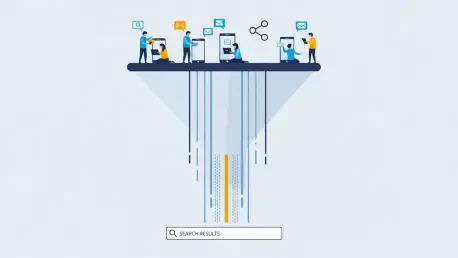

A marketing team meticulously optimizing a brand’s website for AI-driven search engines may discover, much to their dismay, that their visibility is not being shaped by keywords and schema but by unfiltered conversations happening on TikTok and Reddit. This realization underscores a fundamental shift in digital strategy, where the battle for influence is won or lost long before a user ever types a query into a generative AI tool. The modern consumer journey is no longer a linear path from search to purchase; it has fragmented into a complex web of social discovery, community validation, and peer recommendations. For brands, this means that true optimization for AI search is not a technical task performed on a website, but a strategic imperative to shape the public discourse that fuels these intelligent systems.
A New Search Reality: Where the Conversation Is Already Over
The conventional approach to search engine optimization is becoming obsolete in an environment dominated by AI-driven answers. Traditionally, brands have focused on optimizing their own digital properties to rank for specific keywords at the moment a consumer expresses intent. However, this strategy fundamentally misunderstands how Large Language Models (LLMs) operate. By the time a user asks a question, the AI has already formed its response based on a vast dataset of pre-existing online content, conversations, and sentiment. Optimizing for the query itself is like arriving at a debate after the verdict has been decided.
This new reality is defined by a deep fragmentation of the consumer discovery process. The journey to awareness no longer begins with a search bar but is splintered across a multitude of digital touchpoints, with social media platforms taking a leading role. AI tools primarily influence the mid-funnel consideration phase, synthesizing information for users who have already been exposed to brands, products, and ideas through their social feeds. The critical “upstream” phase, where perception and preference are initially formed, is now governed by community consensus and user-generated content, making it the most important battleground for visibility.
The Shifting Landscape of Discovery in the Social Feed
Social media platforms have evolved far beyond their original purpose, transforming into powerful search engines that drive initial discovery for a massive segment of the population. Research from eMarketer indicates that approximately two-thirds of U.S. consumers now utilize social platforms for search, a behavior that is not confined to younger demographics but spans across generations. This trend is deeply ingrained in daily habits, with data revealing that nearly 40% of TikTok users search the platform multiple times per day, seeking everything from product reviews to “how-to” tutorials.
The significance of this behavior is magnified by its direct influence on AI systems. The very platforms where this social discovery takes place—Reddit, YouTube, and TikTok—are consistently identified as top citation sources in AI-generated answers. A study analyzing beauty-related queries found that Reddit and YouTube were among the most frequently cited domains in both Google’s AI Overviews and ChatGPT responses. This establishes a clear and undeniable link: the conversations happening on social media today directly become the source material for the AI-powered search results of tomorrow.
Understanding the Symbiosis Between AI and Social Media
A critical concept for strategists to grasp is that LLMs are not arbiters of truth but sophisticated mirrors reflecting the existing consensus of the web. They synthesize and summarize the vast corpus of human conversations, articles, and reviews they were trained on. Consequently, a brand’s visibility within these models is a direct reflection of its prominence in the public digital discourse. This dynamic means that optimizing for social media—fostering positive conversations, encouraging user-generated content, and building community—is now the most effective way to optimize for AI search.
This is further evidenced by the clear skepticism AI systems show toward brand-owned properties. One study found that only 25% of sources cited in AI-generated answers were official brand websites, highlighting the diminishing returns of relying solely on a brand’s own domain for influence. In stark contrast, platforms built on third-party validation and community discussion are given significant weight. An analysis by OtterlyAI revealed that up to 6.4% of all citation links in AI responses originated from Reddit alone, a figure that surpasses that of many established publishers and underscores the power of authentic, user-driven content.
The relationship between social presence and AI visibility is not merely about the volume of mentions but is also deeply tied to perception. Research has demonstrated a moderate positive correlation between a brand’s positive sentiment on social media and its likelihood of being featured in AI search results. If a brand is not being discussed favorably and frequently by real users, AI models will have little positive content to surface, effectively rendering the brand invisible. The takeaway is clear: community validation is no longer a “nice-to-have” marketing goal but a core pillar of modern search strategy.
Evidence of a New Digital Ecosystem
While the strategic importance of AI search is undeniable, it is crucial to balance the hype with a pragmatic assessment of its current business impact. When measured by tangible outcomes like website traffic and transactions, established channels such as social media and traditional search continue to operate at a vastly larger scale. This “scale mismatch” requires a nuanced approach, where investment in AI readiness is balanced with sustained focus on the platforms where customers are most active today.
A working paper from the University of Hamburg and Frankfurt School, which analyzed 973 e-commerce sites over a 12-month period, provides a sobering perspective. It found that referral traffic from ChatGPT accounted for a mere 0.2% of total sessions. For context, Google’s organic search traffic within the same dataset was approximately 200 times larger. This data does not diminish the future importance of AI but rather highlights that brands abandoning proven channels risk disconnecting from the vast majority of their current audience. The habitual, high-frequency search behaviors on platforms like TikTok and YouTube stand in stark contrast to the less established commercial discovery patterns on generative AI, reinforcing the need for a multi-surface strategy.
The beauty industry offers a compelling case study of this dynamic, where video content and expert authority have become primary signals for AI visibility. Many brands make the strategic error of treating video solely as a social-first branding exercise rather than a critical search surface. AI crawlers now derive powerful signals from spoken language, on-screen text, and captions to triangulate trust and authority, particularly for the technique-based queries common in beauty. A report from Yotpo further illustrated this divide, showing that science-backed brands like CeraVe, which publish deep educational content and leverage expert endorsements, dominate AI results. Phrases such as “dermatologist recommended” function as powerful ranking signals because LLMs prioritize third-party expert social proof over traditional marketing claims.
Crafting a Playbook for a New Era of Search
To thrive in this new landscape, brands must abandon legacy mindsets about content production and organizational structure. The perception that effective video requires high production costs is a significant barrier, yet the current environment values authenticity and relatability far more than polish. Consumers are actively seeking content from real people, not glossy advertisements. This opens the door for scrappy, high-impact strategies that can deliver significant search visibility without a blockbuster budget. Partnering with creator platforms like Billow allows brands to commission authentic user videos for a modest investment, which can be strategically mapped to high-intent search queries.
This strategic shift demands a new organizational mandate that dismantles the traditional silos between SEO and social media teams. These functions can no longer operate independently; their efforts must be fused and aligned toward the common goal of winning across all relevant search surfaces. Success requires that every initiative is driven by a clear business case, articulating how social sentiment, user-generated content, and expert validation directly contribute to market share and revenue. The time for deliberation has passed. Brands that began building a library of authentic, strategic assets—whether through low-cost creator partnerships or by empowering internal talent—positioned themselves to dominate the future of search.
The paradigm had shifted conclusively from algorithm-driven discovery to community-driven discovery. The future of a brand’s visibility in the AI era was being written not in its SEO metadata but in the authentic conversations of its customers across the social web. Brands that failed to participate in and shape that conversation found themselves invisible to the AI systems that increasingly reflected it. Success required an integrated, agile, and multidisciplinary approach that recognized social media not merely as a marketing channel, but as the foundational layer of modern search.