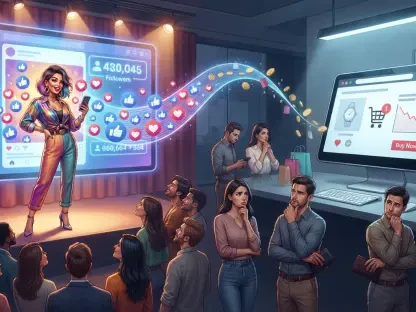

The transition from manual influencer outreach to fully autonomous campaign management represents a definitive turning point in how global enterprises perceive and execute digital influence at a massive scale. As the industry moves through the marketing cycles of 2026 toward 2028, the arrival of startups like Tano indicates that the sector is shifting beyond simple database searches. This London-based innovator recently secured $4 million in seed funding, bringing its total backing to $5 million, to advance a platform that utilizes AI agents alongside human strategists. The objective is to replace the fragmented, labor-intensive processes of the past with a unified system that coordinates recurring relationships with smaller creators while simultaneously linking every post to hard commerce data.
Traditional influencer marketing often stalled during the expansion phase because managing hundreds of individual creators required a massive administrative workforce. The introduction of AI-driven agents addresses this bottleneck by automating the repetitive segments of the operation, such as product seeding, messaging, and payment processing. This shift does not merely speed up the process; it changes the underlying economics of creator partnerships. By reducing the overhead of each relationship, brands can afford to maintain a larger roster of niche influencers who often provide higher engagement rates than their celebrity counterparts.
Lead investors like Cherry Ventures suggest that this new paradigm allows a platform to handle the logistical heavy lifting across major networks including Instagram, TikTok, and YouTube. This configuration enables human strategists to focus on high-level creative direction rather than spreadsheet management. The integration of AI here is intended to be collaborative, acting as a force multiplier for brand teams that are currently struggling to keep pace with the hyper-accelerated content cycles of the modern social media landscape.
Core Components: The AI Campaign Coordination Architecture
The architectural foundation of these modern platforms relies on a closed-loop system where AI agents manage the entire lifecycle of a creator relationship. Instead of acting as a static directory, the software functions as an active coordinator that handles the logistics of sending products to creators and verifying their receipt. This level of coordination is critical for “seeding” campaigns, where the goal is to get products into the hands of many creators simultaneously to generate a wave of organic content.
Performance information is constantly fed back into the system to refine future selections, creating a self-optimizing environment. This means that a brand no longer has to start from scratch for every seasonal campaign. Instead, the platform learns which creator archetypes produce the best results for specific product categories. By maintaining this continuous flow of data, the technology transforms influencer marketing from a series of isolated events into a predictable and scalable performance channel.
Automated Sourcing: Validation of the Creator Pool
One of the most impressive metrics associated with this technology is the sheer speed of creator validation. In one documented instance, AI agents sourced and validated 2,358 creators in a single program with only two hours of human input. The equivalent manual effort was estimated at over 750 hours, representing an exponential leap in productivity. This capability allows brands to cast a much wider net, finding creators who are a perfect cultural fit but might have been overlooked by human researchers due to their smaller following sizes.
However, the value of this automation hinges entirely on the quality of the validation logic. It is not enough to simply find accounts with the right keywords; the AI must also assess content quality, historical engagement patterns, and brand safety. These systems are now sophisticated enough to detect fraudulent followers and aesthetic inconsistencies that would disqualify a creator from a high-end campaign. This automated gatekeeping ensures that even at high volumes, the brand’s reputation remains protected from mismatched or low-quality partnerships.
Commerce Integration: Performance and Tracking Analytics
Moving beyond vanity metrics like likes and shares, these platforms now integrate directly with commerce data to track actual purchase behavior. Through the use of tracking links, unique discount codes, and deep integrations with e-commerce storefronts, the technology can attribute sales directly to specific creator posts. This transparency is vital for justifying marketing spend and allows brand managers to see the real-time return on investment for their seeding efforts.
Furthermore, the technology facilitates a seamless transition from organic content to paid advertising. If an organic post by a creator performs exceptionally well, the platform can facilitate the necessary permissions to turn that post into a paid ad. This “whitelisting” process is managed within the tool, ensuring that legal rights and usage durations are strictly tracked. This dual-purpose utility maximizes the value of every piece of creator content, allowing successful organic moments to be amplified with precise targeting.
Emerging Trends: The Evolution of Creator Advertising
The industry is currently witnessing a move toward “agentic” workflows where AI does more than just suggest creators; it actively participates in the negotiation and brief delivery process. This trend is supported by the release of advanced developer tools like CreatorDB’s API v3 and the Model Context Protocol, which allow influencer data to be ingested directly into general-purpose AI systems. This enables a more holistic approach to marketing where creator data influences broader business decisions, such as product development or regional market entry strategies.
Another significant shift is the rise of the “always-on” creator program. Brands are moving away from the “burst” model of advertising in favor of sustained, long-term relationships managed by automated systems. This trend is driven by the realization that consistent exposure through trusted voices is more effective than a single high-impact post. AI platforms are the primary enablers of this shift, as they provide the infrastructure necessary to keep thousands of micro-conversations going simultaneously without exhausting the brand’s internal resources.
Real-World Applications: Scaling Across Global Industries
Large-scale consumer goods companies and direct-to-consumer brands are the primary beneficiaries of this technological leap. Household names such as Unilever and HelloFresh have already begun deploying these systems to manage their vast networks of affiliates and creators. In the beauty and wellness sectors, brands like Skin+Me and Bloom & Wild utilize AI to coordinate complex sampling programs where thousands of products must be shipped and tracked across different geographical regions.
These implementations demonstrate that AI coordination is particularly effective in industries with high purchase frequency and a strong visual component. In these sectors, the ability to rapidly identify and engage with trending creators allows brands to stay relevant in fast-moving social conversations. The deployment of AI agents in these fields has moved from an experimental luxury to a core operational necessity for any brand looking to maintain a competitive share of voice.
Technical Hurdles: Navigating the Market Obstacles
Despite the impressive speed of these platforms, significant hurdles remain regarding the accuracy of sales attribution. While discount codes provide a clear signal, they often fail to capture the full picture of incremental demand. A consumer might see a creator’s post but choose to purchase later through a different device or channel without using a code. Overcoming these gaps in the “dark social” funnel requires more advanced econometric modeling, which many current platforms are still in the early stages of integrating.
Data privacy and creator rights also present ongoing challenges. As AI agents scrape and analyze millions of profiles, maintaining compliance with global data protection regulations like GDPR is essential. There is also a delicate balance to strike in communication; if automated outreach feels too robotic or generic, it can alienate high-quality creators who value personal relationships. Ensuring that the technology remains a tool for connection rather than a source of spam is a primary concern for developers and brand managers alike.
Future Outlook: The Rise of AI Marketing Agents
The trajectory of this technology points toward a future where the line between an influencer agency and a software platform becomes increasingly blurred. We will likely see the development of even more specialized AI agents that can handle complex legal negotiations and creative content reviews with minimal human oversight. These future systems will not just manage the logistics but will also provide strategic advice on which creative trends to follow based on real-time cultural shifts and competitor activity.
As these tools become more accessible, the barrier to entry for small and medium-sized enterprises will drop, allowing them to compete with global giants in the creator space. This democratization will lead to a more diverse and fragmented advertising landscape where niche communities hold more power than broad-interest media. The long-term impact will be a move toward hyper-personalized advertising, where the AI ensures that the right creator is speaking to the right audience at the exact moment they are most likely to convert.
Final Assessment: Evaluating AI Platform Efficacy
The review of Tano and the broader AI-driven marketing landscape demonstrated that the technology moved the industry from manual coordination to a high-velocity automated model. It was clear that the ability to validate thousands of creators in a fraction of the traditional time provided a massive competitive advantage for brands that prioritized scale. However, the reliance on investor-supplied data meant that independent validation remained a necessary step for any organization looking to commit significant capital. The commerce integrations proved to be the most valuable feature, as they finally offered a way to link the intangible influence of social media to tangible business outcomes.
Strategic leaders discovered that the most successful implementations were those that kept human experts at the center of the creative process. While the AI agents handled the administrative burden, the nuance of brand tone and creator rapport still required a human touch. Brands were encouraged to begin with small-scale pilot programs to compare AI recommendations against manual benchmarks. Ultimately, the transition to these platforms appeared inevitable for those seeking to survive in a creator-led economy. Moving forward, the focus shifted toward ensuring that automation enhanced rather than replaced the authenticity that made influencer marketing effective in the first place.