
Marketing campaigns can now be optimized in real time by swapping out creative assets through remote management tools to match changing demographic conditions. Street Screen Media, an innovative arm of Love Creative Marketing, has recently rolled out its high-definition mobile digital out-of-home screens across prominent urban centers in the United Kingdom and Europe. This expansion marks a pivotal moment for brands seeking to break away from the static constraints of traditional billboards, offering a more fluid and responsive way to engage with the public. By prioritizing mobility, the company allows marketing messages to travel where the people are, rather than hoping consumers walk past a fixed sign. This approach is designed to be accessible to businesses of all sizes, providing a sophisticated yet cost-effective tool for navigating the complex physical advertising landscape. As urban density increases, the ability to deploy vibrant, moving content at the street level ensures that brands remain visible and relevant in an increasingly crowded marketplace.
Strategic Mobility and Human Interaction
Urban Navigation and Visibility
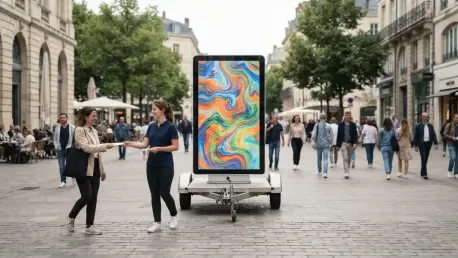
The core philosophy behind this deployment is the rejection of the “wait-and-see” model that has long dominated the outdoor advertising industry. Instead of placing a brand’s message on a stationary structure and hoping for organic traffic, Street Screen Media’s mobile units are strategically navigated to areas where audience concentration is currently at its peak. In a typical European city, this might mean positioning units near major transportation hubs during the morning rush, then transitioning to bustling commercial districts and shopping centers as the day progresses. This geographic agility ensures that the message remains in the direct line of sight of commuters, shoppers, and tourists alike. By moving with the natural ebb and flow of the urban population, these high-definition screens maximize impressions and ensure that the media spend is utilized efficiently. This strategy is particularly effective in high-traffic zones where traditional advertising space is either unavailable or prohibitively expensive for most companies.
Visibility is further enhanced by the hardware’s ability to maintain high-quality image and video playback across different times of day and varying weather conditions. Whether under the direct glare of the sun or in the ambient lighting of a rainy evening, the displays remain vibrant and clear, capturing the attention of passersby with cinematic intensity. Advertisers have the freedom to utilize full-motion video or bold static imagery, allowing for a range of creative expressions from complex brand stories to simple, high-impact promotional offers. Because the screens are not anchored to a single spot, they can also be used to create an inescapable presence across a city, appearing at multiple key locations within a single day. This proactive movement prevents the “banner blindness” that often occurs with static signage, as the novelty of a moving, high-quality display naturally draws the eye. The resulting impact is a more dynamic brand experience that integrates seamlessly into the daily lives of consumers without being intrusive or easily ignored.
Role of Brand Ambassadors
Central to the effectiveness of these mobile screens is the “pixels and people” strategy, which combines advanced digital displays with the human touch of professional brand ambassadors. Each unit is accompanied by a team tasked with representing the brand on a personal level, bridging the gap between a visual digital impression and a tangible physical interaction. These ambassadors do more than just stand by the screen; they are active participants in the campaign, distributing product samples, handing out informative literature, and engaging in direct conversations with the public. This human element adds a layer of trust and accessibility that digital-only advertising often lacks. In an environment where consumers are frequently overwhelmed by automated messages, a friendly and knowledgeable representative can make a significant difference in how a brand is perceived. These teams are specifically briefed to embody the brand’s voice, ensuring that every interaction is consistent with the overall marketing strategy and values of the client.
Beyond simple engagement, these brand ambassadors play a crucial role in driving measurable actions, such as directing foot traffic toward physical retail locations or encouraging immediate digital sign-ups. For instance, during a product launch or a limited-time pop-up event, ambassadors can act as navigational points, guiding interested consumers to nearby storefronts or experiential activations. They can also facilitate real-time feedback and data collection, providing brands with immediate insights into consumer reactions and preferences. This dual-layered approach turns a mobile screen into a comprehensive marketing hub that not only broadcasts a message but also facilitates a two-way dialogue. By integrating QR codes and social media prompts with human encouragement, the campaign can effectively convert passive viewers into active brand participants. This strategy is particularly valuable for experiential agencies looking to create a multi-sensory brand experience that leaves a lasting impression on a diverse urban audience across multiple European territories.
Digital Innovation and Market Accessibility
Real-Time Content Management
The integration of remote management software provides advertisers with an unprecedented level of control over their creative assets, allowing for updates that occur in near real-time. In the traditional world of out-of-home advertising, changing a billboard would require days of logistical planning, printing, and physical installation, making it impossible to react quickly to market shifts. However, Street Screen Media’s digital platform allows content to be swapped or refined almost instantaneously via a cloud-based interface. This agility is essential for brands operating in fast-moving sectors such as hospitality, entertainment, or retail, where the relevance of a promotion can change based on the hour or even the weather. If a particular creative asset is not performing as expected, or if a specific product sells out, the campaign can be adjusted within minutes to feature a more appropriate message. This capability ensures that the advertising content is always optimized for the current conditions, reducing waste and increasing the efficiency of the overall campaign.
Moreover, this digital infrastructure enables highly targeted scheduling, allowing brands to tailor their messaging to the specific demographic most likely to be present at a certain time of day. For example, a campaign could focus on professional services and news during the early morning commute, then shift to retail and leisure content during the afternoon, and finally move to entertainment or food delivery promotions in the evening. This level of granularity ensures that the message is always aligned with the audience’s current mindset and needs. Marketers can also use this system to run synchronized campaigns across multiple cities, ensuring brand consistency while still allowing for local nuances in the creative assets. The ability to monitor performance and adjust content on the fly transforms out-of-home media into a dynamic, data-driven channel that rivals the flexibility of online advertising. This innovation represents a significant step forward in making physical advertising as responsive and measurable as its digital counterparts in 2026.
Cost-Effective Advertising Solutions
In an effort to make high-impact media accessible to a broader range of businesses, Street Screen Media has introduced a shared-screen pricing model that significantly lowers the financial barrier to entry. By offering a “one-in-six” rotation, where up to six different brands can share time on a single mobile unit, the costs associated with premium street-level visibility are distributed, making it affordable for startups and small enterprises. This model allows smaller brands to gain exposure in prime urban locations that would typically be reserved for those with massive marketing budgets. For larger international agencies, this approach offers a cost-effective way to diversify their presence across a wider geographic footprint without overextending their resources. The flexibility of the shared model also allows brands to test different markets or creative concepts with minimal financial risk before scaling up their efforts. This democratization of advertising space fosters a more inclusive marketplace where the quality of the creative message can shine regardless of the size of the company.
The logistical burden of coordinating a widespread outdoor campaign is also entirely managed by the agency, providing a turnkey solution that simplifies the process for the client. From planning the most effective routes through European capitals to hiring and training localized ambassador teams, Street Screen Media handles the complexities of street-level execution. This all-inclusive approach ensures that advertisers can focus on their high-level strategy while being confident that their campaign is being executed professionally and consistently across different regions. In a media landscape where consumers are increasingly adept at avoiding online advertisements through blocking software or subscription services, these mobile displays offer a rare form of unblockable and unavoidable visibility. The physical presence of a moving, digital display commands a level of attention that is difficult to replicate in the digital sphere. By combining this high impact with an accessible price point, the agency has created a powerful tool for modern brands to achieve their marketing objectives.
The successful launch of mobile digital screens across Europe established a new benchmark for how brands interact with urban populations. Companies that adopted these agile, street-level platforms found that the combination of high-definition visuals and human engagement resulted in significantly higher brand recall and consumer trust. To capitalize on these advancements, marketing executives should prioritize the integration of real-time data into their outdoor strategies, ensuring that creative content remains relevant to localized audiences. The transition toward mobile and interactive OOH media highlighted the importance of being physically present where consumers spent their time, rather than relying on static locations. As the industry moved forward, the focus remained on refining the synergy between digital efficiency and personal connection. Ultimately, the move away from traditional fixed billboards provided a versatile and scalable solution for businesses looking to navigate the complexities of the modern city landscape while maintaining a meaningful dialogue with their target audience.