
Industry analysts note that the two-week promotional window is strategically timed to conclude just three days before the busy Thanksgiving holiday period. This aggressive marketing maneuver serves as a cornerstone for the company’s newly minted “Unbox Better” initiative, a comprehensive turnaround plan launched in response to a challenging fiscal performance in the third quarter. By merging the widespread consumer habit of photographing food with a direct-to-consumer data strategy, the brand is attempting to recapture market share in an increasingly fragmented delivery landscape. The campaign is specifically designed to bypass third-party intermediaries, encouraging diners to return to the brand’s proprietary digital channels in exchange for high-value rewards. This approach not only incentivizes immediate sales but also builds a long-term communication pipeline through mobile messaging, which has become a vital asset for quick-service restaurants looking to decrease their reliance on expensive external advertising platforms.
1. Strategic Goals of the Unbox Better Initiative
The “Unbox Better” strategy was unveiled on November 5 following a period of significant financial adjustment for the organization. During the third quarter ending September 27, 2026, the company reported a total revenue decline of 10.5%, falling to $454.8 million from $508.2 million in the previous year. More concerning for stakeholders was the 8.3% drop in North American comparable sales, a metric that reflects the health of established locations. To combat these headwinds, the leadership team designed a multi-faceted approach focusing on product quality, operational execution, and enhanced value. The “Snap a Pizza” promotion is the first public-facing manifestation of this strategy, intended to act as a “bounceback” mechanism that ensures a customer’s current purchase leads directly to a future transaction. By addressing the decline in system-wide restaurant sales, which fell 8.8% to $802.3 million, the brand aims to stabilize its domestic footprint and restore confidence among its franchise partners.
Beyond immediate revenue stabilization, the initiative represents a significant shift in how the brand manages its marketing and technology infrastructure. Franchisees have recently voted to adjust their financial contributions, moving toward a model that emphasizes local advertising to better compete in specific geographic markets. Starting this year, the contribution to the national advertising fund decreased from 6% to 5%, while local advertising requirements rose from zero to 2%. This shift reflects a belief that hyper-local engagement is more effective in the current economic climate than broad national campaigns. Additionally, the company is in the process of a massive technological overhaul, planning to fully deploy a new point-of-sale system by the end of 2027 to replace an aging framework that has been in place for over three decades. The data gathered through the current photo promotion will provide critical insights that feed into these new systems, allowing for more personalized marketing and improved kitchen management.
2. Mandatory Participation Procedures for Rewards Members
To participate in the promotion, customers must first log in or register for a rewards profile and subscribe to text alerts. This initial step is critical because the offer is exclusive to the Papa Rewards loyalty program, which serves as the primary engine for the brand’s first-party data collection. When a user signs into an existing account or creates a new one, they must explicitly consent to receive SMS marketing messages. This requirement is a strategic move to build a direct line of communication that bypasses email filters and social media algorithms. Industry data suggests that text message marketing boasts significantly higher open rates compared to traditional digital channels, making these opt-ins incredibly valuable for driving repeat business during the 2026-2028 period. By making the SMS subscription a condition of eligibility, the brand ensures that the cost of the free pizza is offset by the long-term marketing value of each participating customer’s contact information.
Once the digital profile is secured and the communication channels are open, the next step requires the user to purchase a pizza through the official website or mobile application. The promotion mandates a minimum spending requirement of $15 for the qualifying order, ensuring that the initial transaction is profitable for the restaurant. Importantly, this order must be placed through PapaJohns.com or the brand’s dedicated app, effectively excluding orders placed via third-party delivery marketplaces. This restriction is intended to reclaim the customer relationship from aggregators, who often charge high commissions and withhold detailed customer data. By forcing the transaction into its own ecosystem, the company can track the entire customer journey from the initial click to the final feedback submission. This process allows the brand to analyze purchasing patterns and menu preferences with much higher granularity than is possible through external delivery services, providing a clearer picture of what drives loyalty in different demographic segments.
3. Execution: Capturing Photos and Submitting Reviews
After the qualifying order is placed and the customer receives their meal, they must wait for an incoming text notification from the company. This message acts as the formal invitation to the next phase of the promotion and ensures that the participant remains engaged with their mobile device throughout the dining experience. The timing of this text is deliberate, designed to arrive while the product is still fresh and the customer’s impressions are most vivid. This step reinforces the brand’s presence in the customer’s digital life, moving the relationship beyond a simple transaction and into an interactive dialogue. By using SMS as the trigger for the photo request, the brand tests the responsiveness of its newly acquired marketing list, gathering immediate evidence of how effectively they can drive user action through direct messaging.
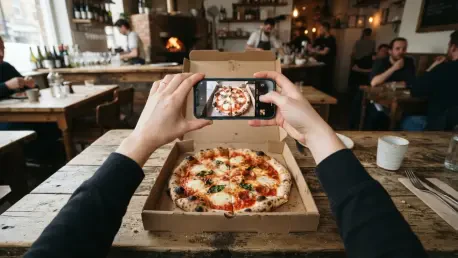
Following the receipt of the text prompt, the participant is required to capture a genuine, original photograph of the food before they begin eating. The company specifically emphasizes that the photo must be “real and unedited,” a requirement that serves several diagnostic purposes. These images provide a raw, unfiltered look at the product as it actually appears upon delivery or pickup, contrasting with the idealized versions seen in professional advertisements. This visual data is essential for the brand to understand the “unbox” experience from the perspective of the consumer. By requesting a photo “before digging in,” the company captures the state of the toppings, the color of the crust, and the overall presentation at the moment of peak quality. This crowdsourced visual evidence acts as a massive, real-time audit of thousands of franchise locations, providing a level of oversight that would be impossible to achieve through traditional mystery shopping programs.
4. Verification Procedures and Claiming the Prize
Once the photo is taken, the customer must submit the image along with sincere comments regarding their experience. This part of the process asks for candid feedback on specific elements such as the bake, the crust, and the overall satisfaction with the meal. Unlike public review platforms where users might feel pressured to perform for an audience, this feedback is directed privately to the brand, encouraging a more honest and detailed assessment. The requirement for “sincere comments” suggests that the company is looking for qualitative data that can be used to identify systemic issues or highlight regional successes. This feedback loop is a vital component of the “Unbox Better” strategy, as it provides the operational teams with the specific information needed to make targeted improvements in kitchen procedures or ingredient handling, ensuring a more consistent product across the global network of approximately 6,000 restaurants.
After the submission is completed, the participant can finally claim a complimentary one-topping large pizza. Once the AI-driven verification system confirms that the photo and review meet the promotional criteria, the reward is deposited into the member’s Papa Rewards account. However, the prize is not immediately redeemable for a completely free transaction; it must be used on a subsequent order that includes a minimum spend of $5. This “bounceback” structure is a classic marketing tactic designed to ensure a third interaction with the brand. By the time a customer has fully utilized the promotion, they have engaged with the app multiple times, provided valuable data, and completed two separate paid transactions totaling at least $20. This sequence effectively turns a single discount into a habit-forming cycle, increasing the likelihood that the customer will remain within the brand’s ecosystem for their future pizza needs throughout the upcoming holiday season.
5. Artificial Intelligence and the Role of Visual Data
The integration of an artificial intelligence algorithm to analyze submitted photos represents a sophisticated leap in quality control technology. According to leadership, the AI is programmed to scan each image for specific quality indicators, including heat retention, cheese melt, sauce distribution, and dough consistency. This automated assessment allows the company to process thousands of submissions simultaneously without the need for a massive manual review team. By quantifying the visual characteristics of the pizza, the AI can flag consistency issues at specific restaurant locations in real-time. This technology transforms a simple marketing gimmick into a high-tech diagnostic tool, providing corporate headquarters with a visual heat map of product quality across North America. The use of AI in this context demonstrates how modern fast-food chains are leveraging computer vision to solve the age-old problem of maintaining brand standards in a franchised system.
While other competitors in the pizza industry have faced legal challenges or operational hurdles when implementing AI for logistics and dispatch, this specific application focuses on post-sale quality assurance. By analyzing the food after it has reached the customer, the brand avoids the immediate pressures of the delivery window while still gaining actionable insights. This AI-driven verification also acts as a safeguard against fraudulent claims, ensuring that the rewards are only distributed to customers who have actually purchased and received a legitimate product. The data gathered by these algorithms will likely inform training programs and equipment upgrades through 2027, as the company seeks to narrow the gap between its highest and lowest-performing stores. This objective, machine-led analysis removes the subjectivity of human reviews, providing a standardized metric for excellence that can be applied consistently across diverse markets.
6. Data Acquisition and SMS Marketing Regulations
The strategic emphasis on securing first-party data through SMS opt-ins is a direct response to the tightening of digital privacy regulations and the increasing difficulty of tracking consumers across the web. By requiring an explicit text-message subscription, the brand is insulating itself from changes in third-party cookie policies and platform-specific privacy updates. This move aligns with broader industry trends seen in 2026, where major retailers and tech giants like Amazon and Google are also pushing for direct SMS access to their user bases. In the United States, managing these communications requires strict adherence to the Telephone Consumer Protection Act, which governs how companies can interact with wireless numbers. By making the opt-in a clear, separate step in the rewards enrollment process, the company mitigates legal risks while maximizing the reach of its promotional messaging, ensuring that its future deals land directly in the pockets of its most loyal customers.
Navigating the landscape of incentivized reviews also requires careful attention to regulatory standards set by the Federal Trade Commission and major digital platforms. In 2024, the FTC finalized rules against fake reviews and undisclosed paid testimonials, and platforms like Google have recently tightened their policies regarding rewards offered in exchange for feedback. To stay compliant, the brand has structured this promotion as a private feedback loop rather than a public endorsement campaign. By keeping the photos and reviews within its own internal systems, the company avoids the appearance of “buying” public ratings while still reaping the benefits of consumer insights. This distinction is crucial for maintaining brand integrity and avoiding the manual penalties that platforms now impose on businesses that manipulate their public reputation. The result is a clean, legally sound data set that provides a competitive advantage without compromising the trust of the consumer or the regulators.
7. Long-Term Financial Implications and Market Positioning
The “Snap a Pizza” promotion is a clear example of the “barbell” pricing strategy, which attempts to balance high-end specialty items with aggressive value-driven traffic drivers. In a market where quick-service restaurants are often engaged in a “race to the bottom” through deep discounting, this approach adds a layer of engagement that justifies the expenditure. The data collected from this promotion will be instrumental in shaping the brand’s value proposition through the 2026-2028 fiscal cycle. If the campaign successfully drives repeat orders and provides useful operational data, it will likely become a recurring fixture in the marketing calendar. By shifting the focus from simple price cuts to a value-for-data exchange, the brand is attempting to protect its margins while still offering a compelling reason for price-sensitive consumers to choose their product over a competitor’s.
Furthermore, the success of this initiative will be measured by its ability to reverse the negative sales trends that have plagued the brand for much of the last two years. With nine out of the last ten quarters showing negative growth, the pressure to deliver results from the “Unbox Better” strategy is immense. The transition to a new point-of-sale system and the retraining of staff at underperforming locations are long-term goals that require a steady stream of revenue and customer engagement to succeed. As the pizza delivery market becomes more crowded with tech-enabled marketplace players, the ability to maintain a direct, data-rich relationship with the customer is the most sustainable path to growth. This promotion serves as the opening salvo in a broader effort to modernize the brand’s image and operations, setting the stage for a more agile and responsive business model in the years to come.
The promotion successfully integrated consumer behavior with technological oversight to create a multifaceted marketing tool. Moving forward, the company should focus on the high-level integration of the AI-captured data into its daily restaurant operations. Specifically, managers at the local level could benefit from receiving weekly “quality scorecards” based on the AI analysis of customer photos, allowing for immediate corrections in dough stretching or topping distribution. To maximize the long-term impact of the SMS list, the brand should implement a tiered messaging strategy that offers personalized deals based on the specific feedback provided during the promotion. For example, customers who expressed dissatisfaction with delivery times could be sent targeted “early-bird” specials to encourage ordering during non-peak hours. These proactive steps would ensure that the initial investment in free products yields a significant return in the form of improved operational consistency and increased customer lifetime value. Consistent monitoring of these metrics will be essential as the brand navigates the competitive landscape through the end of the decade.