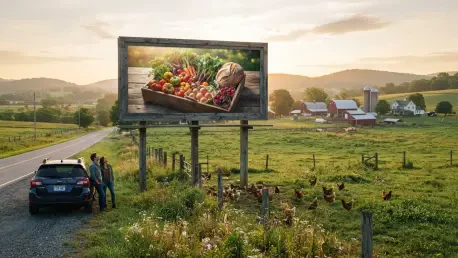

Strategic placements in densely populated urban centers allow Vital Farms to present a refreshing visual contrast between gray concrete landscapes and lush green family farms. This nationwide out-of-home campaign represents a fundamental shift in how consumer-packaged-goods brands communicate transparency, moving sourcing claims from the fine print of a label to the forefront of a national advertising strategy. By transforming the iconic black egg carton into a visual portal, the brand effectively bridges the psychological and geographical gap between urban consumers and the rural pastures where their food is produced. This initiative is built on a foundation of radical honesty, turning what might otherwise be a standard marketing claim into an interactive, verifiable experience for the public. Developed in collaboration with specialized creative and media partners, the campaign utilizes high-impact urban displays to make a bold statement about ethical farming practices. It is not merely an advertisement for food products; it is a direct invitation for consumers to verify the brand’s environmental and ethical promises through immediate visual evidence, reflecting a sophisticated response to the modern consumer’s demand for accountability and clarity in the global food supply chain.
The Evolution of the Traceability Initiative
From Kitchen Counters to City Streets
The “See The Farm” initiative originally began as a fundamental brand commitment to transparency, allowing consumers to look beyond the grocery store shelf to understand the origins of their purchase. In the early stages of this program, the experience was primarily focused on the point of consumption, where customers could find a specific code on the side of their egg carton and enter it into a digital portal to see the farm where those specific eggs were laid. This foundational program was a significant departure from industry norms, but it remained a private interaction between the brand and the customer. As the platform matured, it expanded from a simple photo-based verification tool into a robust digital infrastructure featuring immersive, 360-degree video content from a network of over 600 small family farms. This growth allowed the brand to offer a more comprehensive view of the diverse landscapes and farming practices that define its supply chain, ensuring that every carton sold was backed by a tangible, visible piece of land and a real farming family.
By 2026, the strategy has moved from these quiet, domestic moments of verification to a high-visibility presence in the public sphere. The transition from kitchen counters to city streets signifies a shift in how the brand perceives transparency—no longer just a service for the curious buyer, but a central pillar of public brand identity. Large-scale billboards and digital displays now serve as the first point of contact, introducing potential customers to the brand’s values long before they enter a retail environment. This evolution demonstrates a clear understanding of the modern marketing landscape, where transparency must be proactive and visual to be effective. By placing these farm-focused visuals in high-traffic areas, the brand effectively bypasses the skepticism often associated with traditional food marketing. The campaign transforms the city itself into a gallery of agricultural honesty, making the concept of food origin an unavoidable and celebrated part of the urban experience, thereby strengthening the brand’s position as a leader in ethical food production.
Global Initiatives: Driving Brand Value and Growth
The decision to utilize large-format out-of-home advertising is a calculated move to amplify core brand values on a national scale. While digital and social media provide targeted reach, physical billboards offer a sense of permanence and authority that are essential for a brand built on trust. In the current market, where consumers are frequently bombarded with conflicting messages about sustainability, the sheer size and presence of an urban wallscape or a highway billboard command a level of attention that smaller formats cannot replicate. This scale allows the brand to project its message of transparency with a confidence that mirrors its operational commitments. By dominating the visual landscape of major metropolitan areas, the brand signals that its commitment to pasture-raised farming is not a niche or peripheral concern but a primary driver of its business model. This high-visibility approach ensures that the message reaches a broad demographic, from the environmentally conscious grocery shopper to the casual commuter who may not yet be aware of the brand’s ethical stance.
Furthermore, this proactive amplification serves as a powerful tool for brand differentiation in a crowded and often opaque marketplace. Instead of waiting for consumers to ask questions about animal welfare or land management, the campaign places the answers front and center in the public eye. This strategy effectively builds a reservoir of trust equity that the brand can draw upon, positioning it as a transparent alternative to industrial food giants. The use of scale also facilitates a sense of community awareness; when an entire neighborhood sees the same imagery of a lush, green farm, the brand becomes part of a collective conversation about food quality and ethics. This transition from individual verification to a shared public message reflects a sophisticated understanding of how brand loyalty is cultivated in the modern era. By making its ethical claims so visible and inescapable, the company sets a high bar for the rest of the industry, proving that large-scale advertising can be used to promote genuine accountability rather than just driving sales volume.
Creative and Strategic Execution
Packaging: Bridging Physical and Digital Worlds
The creative centerpiece of this campaign revolves around a powerful visual metaphor that reimagines the physical egg carton as a gateway to the farm. In these advertisements, the familiar black packaging is not just a container but a frame that opens to reveal the vibrant, natural world of a pasture-raised environment. One primary execution features a striking red background that provides a high-contrast stage for an oversized image of a hand holding the carton. As the carton “opens” within the visual, the viewer is presented with lush green pastures and real farm imagery, creating an immediate and intuitive connection between the product on the shelf and its agricultural origin. This visual shorthand is remarkably effective because it requires no complex explanation; it tells the story of the product’s journey in a single glance. By using the packaging itself as the portal, the brand ensures that the product is inextricably linked to the environment where it was produced, reinforcing the idea that the quality of the egg is a direct result of the quality of the farm.
This portal concept also addresses the deep-seated psychological disconnect that many urban dwellers feel regarding their food supply. For a consumer living in a concrete-heavy environment, the idea of a “pasture-raised” egg can feel abstract or purely academic. However, when the carton is presented as a literal window into a green field, the abstraction is replaced with a tangible reality. The creative execution intentionally avoids stock photography, opting instead for authentic visuals from the brand’s network of family farms. This commitment to authenticity ensures that the imagery feels grounded and believable, rather than a sanitized corporate interpretation of nature. By focusing on the physical packaging as the source of this visibility, the campaign creates a sense of empowerment for the consumer. Every time they see the black carton in a store, they are reminded of the window they saw on the street, reinforcing the brand’s promise that transparency is built into the very structure of the product they are purchasing.
Strategic Agency Collaboration
The success of such a multifaceted campaign is the result of a highly synchronized partnership between the brand’s internal team and its creative and media agencies. GUT Miami, acting as the creative lead, was responsible for the bold visual direction that defines the campaign’s aesthetic. Their choice of a vibrant red color palette was a strategic decision designed to cut through the visual noise of busy urban centers, where gray concrete and muted building tones are the norm. This color not only grabs attention but also creates a premium, energetic feel that distinguishes the brand from the more traditional, earth-toned visuals typically used in the natural food category. The collaboration focused on creating a visual language that was both simple enough for a quick drive-by glance and deep enough to sustain the interest of a pedestrian. This balance is critical in out-of-home advertising, where the audience’s attention span is often measured in seconds rather than minutes.
Simultaneously, the media agency Dentsu X orchestrated a “coast-to-coast” placement strategy that ensured the message reached the right people at the right times. Their approach involved a sophisticated mix of traditional billboards, digital displays, and large-scale wallscapes, creating a multi-layered presence in key markets. By analyzing traffic patterns and consumer behavior, the agency was able to place these advertisements in high-impact locations where they would have the most significant psychological effect. The media strategy also included a seamless integration with social and digital channels, ensuring that the conversation started on the street could continue online. This partnership allowed the brand to maintain a consistent national message while also appearing hyper-local, as the campaign highlighted the network of small farms that make up the brand’s supply chain. The synergy between creative vision and media placement transformed the campaign from a series of individual ads into a cohesive, nationwide narrative about the importance of knowing where your food comes from.
Integrating Technology for Verification
A key component of this campaign is the integration of modern technology to provide a bridge between passive viewing and active brand engagement. By incorporating prominent QR codes into the large-format displays, the brand encourages pedestrians to transition from looking at a billboard to exploring a digital environment. These codes lead directly to the “See The Farm” platform, where users can access unfiltered, 360-degree footage of the pastures. This technological layer serves as a crucial tool for verification, providing data-hungry or ethically conscious consumers with the granular detail they require to trust a brand’s claims. In an era where “greenwashing” is a common concern, providing a direct link to live or high-resolution farm footage is a powerful way to demonstrate that a company has nothing to hide. This approach moves the transparency narrative beyond simple marketing copy and into the realm of digital evidence, making the brand’s promises verifiable by anyone with a smartphone.
The use of 360-degree video technology is particularly significant because it offers a level of immersion that traditional video or photography cannot provide. It allows viewers to “look around” the farm, seeing the chickens, the grass, and the overall environment in an unfiltered and comprehensive way. This sense of immersion is designed to foster a deep feeling of trust, conveying that the brand is confident enough in its practices to show them from every angle. This digital-physical integration, often referred to as “phygital” marketing, is a hallmark of modern advertising strategy. It allows the brand to capture interest in the physical world and then provide depth and detail in the digital world. By making this transition as easy as a single scan, the campaign ensures that the barrier to entry for verification is as low as possible. This use of technology not only validates the brand’s current claims but also sets a technological standard for the rest of the food industry, suggesting that true transparency in the future will be digital, interactive, and immediate.
Impact on the Food Industry and Consumer Trust
The Role of Urban Contrast and Authority
The city functions as a complex landscape of contrast where authority and rebellion coexist alongside the visible power of the state and the people. This inherent friction drives urban change and innovation, serving as a dynamic catalyst for societal progress. It acts as a crucible where new concepts emerge and established traditions are frequently challenged. By serving as the intersection where the past and the future meet, the city ultimately remains a realm of endless possibilities.
The placement of vibrant, nature-focused imagery in the heart of the “concrete jungle” creates a powerful visual and psychological contrast that enhances the brand’s authority. For an urban consumer, the sudden appearance of a lush green field or a bright red carton on a massive wallscape provides a refreshing break from the industrial aesthetic of the city. This contrast subconsciously links the brand with ideas of freshness, nature, and health, creating a positive emotional response that is difficult to achieve through digital ads alone. Out-of-home advertising carries an inherent sense of weight and legitimacy; when a brand invests in high-profile physical space to discuss its ethics, it signals to the public that these values are foundational to its identity. This physical presence acts as a permanent stake in the ground, declaring the brand’s commitment to transparency in a way that feels more durable and reliable than a fleeting social media post.
Moreover, the authority of these placements helps to build a broader sense of brand credibility that extends beyond the specific claims being made. By dominating the visual landscape, the brand positions itself as a leader and an educator in the food space. The campaign uses the city as a canvas to teach consumers about the benefits of pasture-raised farming, effectively raising the collective food IQ of the urban population. This educational aspect is handled with a sophisticated touch, using high-contrast colors and simple imagery rather than heavy text. The result is a campaign that feels both authoritative and accessible, inviting the public to participate in a more ethical food system without feeling lectured. This strategic use of urban space not only drives brand awareness but also contributes to a long-term shift in consumer expectations. As people become accustomed to seeing such high levels of transparency displayed so prominently, they are likely to start demanding the same level of openness from other brands they support.
Setting a Benchmark for Accountability
By making its sourcing so visible and easily accessible to the general public, the brand is effectively setting a new benchmark for accountability within the consumer packaged goods industry. This “race to the top” in transparency puts pressure on competitors to move beyond vague marketing terms and provide tangible proof of their own ethical claims. When one brand makes it possible to see the exact farm where a product was produced with a simple scan, it makes the lack of such information from other brands more noticeable. This shift in industry standards benefits the consumer by fostering a more honest and open marketplace, where purchasing decisions can be based on verified data rather than just clever branding. The campaign demonstrates that educational marketing does not have to be dry or overly technical to be effective; it can be aesthetically arresting and emotionally resonant while still providing deep levels of information for those who seek it.
This benchmark extends to the technical and logistical side of food production as well; auditing, filming, and organizing data from over 600 individual farms is a significant operational feat, and by making this the centerpiece of its marketing, the brand highlights the depth of its commitment. This operational transparency serves as a deterrent to competitors who might be tempted to make similar claims without the necessary infrastructure to back them up. The campaign essentially turns the brand’s logistical strengths into a powerful marketing weapon, proving that a dedicated mission can be a major competitive advantage. As this model of radical transparency becomes more common, it has the potential to transform the global food supply chain, encouraging more ethical farming practices and clearer communication across the board. The strategy proves that transparency is not just a policy or a reactive measure but a proactive creative tool that can define a brand’s legacy and influence the behavior of an entire industry.
Humanizing the Global Supply Chain
The campaign successfully demonstrated how large-scale advertising could be used to humanize a global supply chain that often felt cold, industrial, and disconnected from the end consumer. By focusing on real chickens, real pastures, and individual family farms, the initiative moved the conversation away from factory-like efficiency and toward the tangible reality of ethical agriculture. It fostered a deeper emotional connection between the shopper and the source, transforming a routine grocery purchase into an act of informed and ethical consumption. The campaign proved that consumers were not just looking for a product, but for a story they could trust and a set of values they could align with in their daily lives. Retailers and food producers alike recognized that the “black box” of traditional food production was no longer an acceptable standard, as the public’s appetite for visibility reached a new peak. This approach provided a clear roadmap for other organizations looking to build trust through vulnerability and openness, showing that the most effective way to lead was to let the world see exactly how things were done.
Moving forward, the success of this initiative suggested that the future of brand loyalty would be built on a foundation of radical visibility and direct engagement. Companies were encouraged to invest in the infrastructure necessary to map their supply chains and share that information in real time with their customers. The campaign also highlighted the importance of integrating physical and digital experiences, creating a seamless journey from the street to the smartphone. As more brands adopted this “portal” approach, the global food system became more decentralized and transparent, empowering consumers to make choices that reflected their personal ethics and environmental concerns. The legacy of this campaign was a permanent shift in the relationship between the farm and the city, ensuring that no matter how urbanized society became, the link to the land would remain visible, verifiable, and respected. It was a clear indication that in the modern marketplace, the most powerful thing a brand could do was to simply tell the truth and provide the tools for the world to see it.