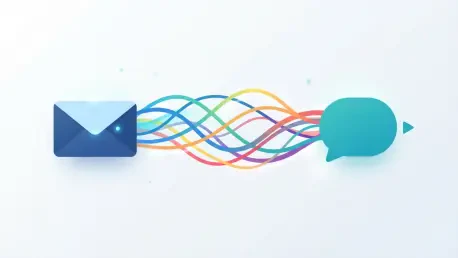

A unified dashboard is essential for canceling scheduled text messages automatically once a customer completes a purchase through a previous email link. This technical synchronization represents the baseline for any effective omnichannel strategy in the current 2026 digital marketplace, where consumer patience for redundant messaging has reached an all-time low. Rather than viewing email and Short Message Service communications as competing silos, successful brands now treat them as a singular, fluid conversation that adapts in real-time to user behavior. The fundamental challenge lies in moving beyond the outdated blast mentality, where the same content is pushed across all available channels regardless of context or urgency. By recognizing the distinct psychological roles of the email inbox and the mobile lock screen, marketing professionals can create a rhythm that respects the recipient’s personal boundaries while still achieving high conversion rates. This approach requires a blend of rigorous data management and a nuanced understanding of how different platforms influence consumer decision-making processes over time.
Filtering Content: The Expiration Framework
To determine which channel is appropriate for a specific message, marketers should apply a simple litmus test: “Does this information expire?” This question serves as a vital filter for content distribution, ensuring that every touchpoint provides genuine value without overwhelming the recipient. Non-expiring content, such as brand origin stories, comprehensive product guides, or new collection lookbooks, is inherently suited for the email format. Email provides the visual depth and narrative space necessary for long-form storytelling, allowing customers to engage with the material at their own pace without the pressure of an immediate deadline. In 2026, the inbox is viewed as a persistent digital library where a user can return to a message days or weeks later to find inspiration or detailed specifications. By reserving email for these high-value, evergreen communications, brands build a foundation of trust and authority that justifies their presence in a consumer’s digital life over the long term.
Conversely, time-sensitive content belongs on the mobile lock screen, where the immediacy of SMS can be leveraged to drive rapid action. If a message loses its primary value the moment a deadline passes—such as a flash sale alert, a final cart abandonment reminder, or a back-in-stock notification—SMS is the superior choice for delivery. This “tap on the shoulder” approach aligns with modern consumer expectations for real-time information, particularly when they have expressed clear intent to purchase a high-demand item. The brevity of a text message forces clarity and focus, ensuring that the recipient understands the urgency without being bogged down by unnecessary filler. However, this power must be used sparingly; the efficacy of SMS is directly tied to its rarity. When brands reserve the lock screen for truly urgent updates, they maintain a higher open rate and a lower opt-out rate compared to those who use the platform for routine announcements that lack a clear expiration date or immediate call to action.
Strategic Sequencing: Beyond Parallel Blasting
A common mistake in contemporary digital marketing is the reliance on parallel blasting, a technique where a brand sends identical messages across multiple channels simultaneously. This redundancy often leads to consumer irritation and wasted marketing spend, as users are forced to clear the same notification from their email, SMS, and push notifications at the same time. A more sophisticated alternative involves strategic sequencing, a method where email and SMS act as a relay team rather than competing runners. In a typical welcome flow, for instance, an initial email provides a comprehensive introduction to the brand’s mission and value proposition. An SMS should only follow a day or two later as a gentle nudge if the recipient has not yet engaged with the initial offer. This sequential logic ensures that the brand remains top-of-mind without becoming a nuisance, effectively guiding the customer through the early stages of the relationship with a measured and respectful cadence.
In specific scenarios like back-in-stock alerts, the sequence should be strategically flipped to prioritize speed and competitive advantage. Because the customer has explicitly requested a notification for a high-intent event, the instant nature of SMS aligns perfectly with their desire to complete a purchase before an item sells out again. In this context, an email serves as the secondary backup, providing a more detailed visual confirmation of the item’s availability and additional recommendations if the primary product is already gone. By alternating the lead channel based on the specific stage of the customer journey, brands create a more natural communication flow that feels like a helpful service rather than an aggressive marketing tactic. This agility allows organizations to capture peak interest moments while maintaining a professional and organized presence across all digital touchpoints, ultimately leading to higher lifetime value and a more resilient relationship between the brand and the consumer.
Technical Unity: Synchronizing the Customer View
The effectiveness of an omnichannel strategy is heavily dependent on the underlying technology used to manage consumer data in real-time. Utilizing separate, disconnected platforms for email and SMS often results in communication collisions, where systems fail to share recent activity data, leading to embarrassing or contradictory messaging. For example, a customer might receive a last chance text message for an item they already purchased twenty minutes earlier through an email link because the two systems do not synchronize instantly. A unified dashboard prevents these errors by acting as a central nervous system for all outgoing communications, ensuring that every sequence remains honest and relevant to the user’s current status. In the current era of high-speed commerce, the ability to suppress or trigger messages based on live behavior is not just a luxury but a fundamental requirement for maintaining brand credibility and operational efficiency across a diverse and global customer base.
Technical integration also allows for highly nuanced segmentation based on live browsing and purchasing behavior across all digital channels. When data flows freely between the email service provider and the SMS platform, marketers can create hyper-personalized experiences that respect the customer’s most recent actions. This might include targeting SMS messages only to those who have opened an email but not clicked, or providing a unique SMS-only discount code to long-term email subscribers. This level of synchronization improves the user experience by providing a coherent brand voice, regardless of which screen the customer is currently using. Furthermore, unified analytics provide a clearer picture of which combinations of messages lead to the highest conversion rates, allowing for continuous optimization of the marketing budget. By eliminating the friction between different tools, organizations can focus on crafting better stories and more compelling offers rather than managing the complexities of fragmented technical stacks.
Ethical Standards: Protecting the Mobile Space
Because SMS is a high-intimacy channel that directly accesses a consumer’s most personal device, it must be treated as a finite and precious resource. Brands that exercise restraint in their mobile communications often see significantly higher engagement than those that adopt a high-frequency approach. Sending fewer texts than a marketing calendar might technically allow is a strategic decision that protects the long-term health of the subscriber list. In 2026, maintaining a smaller, high-trust SMS list is far more valuable than possessing a massive database of users who have been conditioned to ignore or block the brand’s communications due to over-saturation. Ethical mobile marketing requires a commitment to transparency, which starts with securing explicit opt-ins and clearly communicating the expected frequency of messages. When a brand treats the customer’s phone number as a privilege rather than a right, they foster a sense of mutual respect that is increasingly rare in the digital world.
The transition toward a balanced omnichannel strategy required a departure from aggressive tactics in favor of a logic-driven discipline. Successful organizations implemented rigorous standards for mobile engagement, such as honoring quiet hours to avoid late-night disruptions and providing an effortless, one-word opt-out process to ensure consumer comfort. Every text sent was designed to provide a clear and immediate benefit, ensuring that the brand remained a welcome guest on the recipient’s personal screen. To move forward, companies prioritized the optimization of high-impact automations like welcome flows and abandoned cart sequences before expanding into more complex, multi-layered triggers. This foundational focus allowed brands to capture interest at peak moments of intent while building the technical infrastructure necessary for long-term growth. Ultimately, the industry moved toward a model where success was defined not by message volume, but by the precision and timing of every interaction across the digital ecosystem.