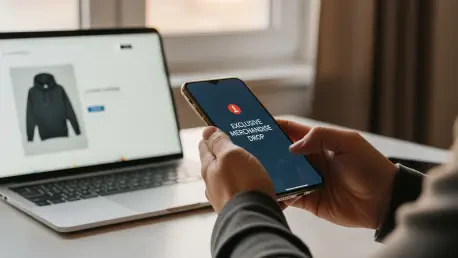

The bond between musicians and their fans has been supercharged by digital commerce, transforming what were once simple concert souvenirs into a multi-billion dollar industry. To understand how artists are building these merchandise empires, we spoke with digital marketing expert Anastasia Braitsik. She unpacks the sophisticated strategies that turn fan passion into predictable revenue, exploring how to build an engaged audience through live events, personalize campaigns for different fan segments, and use automation to create authentic urgency without breaking trust.
Social media algorithms can be unpredictable for time-sensitive announcements. How do email and SMS work in tandem to overcome this, with one handling detailed storytelling and the other creating urgency? Please share an ideal communication timeline for a limited-edition merchandise drop using both channels.
This combination is the core of a successful launch because each channel plays a distinct, complementary role. Social media is great for broad awareness, but you can’t rely on an algorithm to deliver a critical message at a specific time. Email is your canvas for storytelling. It’s where you share the inspiration behind a piece, showcase high-quality photos, and build that deep, emotional connection fans crave. For something like a limited edition vinyl with custom artwork, email is the only place to do that story justice. Then, SMS comes in for the kill. With 90% of texts read within three minutes, it’s the perfect tool for pure, unadulterated urgency.
A perfect timeline would start three days before the drop with an email that reveals the collection and shares some behind-the-scenes content. The morning of the release, another email goes out with detailed product images and a reminder. Then, the magic moment: fifteen minutes before the store goes live, a text message hits their phone: “Your exclusive access starts now.” That one-two punch of narrative and immediacy is what converts a passive fan into an active buyer in those critical moments.
Capturing fan data at live shows is a powerful list-building tactic. Beyond placing QR codes at merch tables, what specific strategies can artists use to convert concertgoers into subscribers, and how do you frame the value proposition to make them feel they’re joining an exclusive inner circle?
Concerts are the single most valuable opportunity for list-building because you have a captive audience of highly engaged fans who have already proven they’re willing to spend money. While QR codes at the merch table are a great start, you have to go further. Integrating sign-ups into the VIP registration process or using post-show surveys are fantastic ways to capture contact information. You’re reaching people when their emotional connection to the artist is at its peak.
The key to making this work is framing the value proposition correctly. You’re not just asking for an email; you’re inviting them into an exclusive club. The offer has to be compelling and immediate—things like early access to the next limited drop, a presale code for the next tour, or even members-only merchandise designs. When you do that, fans feel like they’re getting a key to a secret world, not just signing up for another marketing newsletter. It’s an immediate exchange of value that solidifies their status as a true insider.
Given that some fans buy every collection while others are just casual listeners, how should a marketing strategy differ between these groups? Can you walk us through how you would use purchase history or geographic data to personalize a campaign for a specific tour stop?
Recognizing that not all fans are the same is the difference between a good and a great merchandise strategy. You absolutely cannot send the same message to everyone. Purchase history is your primary tool here. A fan who has bought from the last three collections is a VIP; they should be treated as such. You can give them first-dibs access to new items, offer them exclusive colorways, or send personalized recommendations that make them feel seen and appreciated. On the other hand, a first-time browser needs a different approach—perhaps a welcome offer or content that tells the brand’s story.
Geographic data is incredibly powerful, especially for tour-related merch. Imagine an artist is playing in Denver next week. You can send a targeted email and SMS campaign to fans in that area, highlighting a tour-exclusive item they can only get at the show or offering a special online code for in-venue pickup. This not only drives sales for that specific show but also enhances the concert experience, making fans feel like the artist is speaking directly to them and their city.
Automated workflows like browse and cart abandonment are known to recover significant revenue. Could you detail the key differences between these two flows and explain how combining email with conversational SMS creates urgency for a potential buyer without feeling overly aggressive? Please provide some examples.
Both flows are critical for recovering lost sales, but they target fans at different stages of consideration. A browse abandonment flow is for someone who has shown interest—say, they’ve viewed that limited edition hoodie three times but haven’t added it to their cart. Your automated email to them shouldn’t be a hard sell. Instead, it could be a softer touch, perhaps with styling inspiration or a note emphasizing the piece’s scarcity. These flows are incredibly effective, generating 30 times more revenue per recipient than a standard promotional email.
Cart abandonment is for a fan who is much closer to purchasing; they’ve already put the item in their cart. Here, you can be a bit more direct. The classic strategy is a one-two punch: first, a gentle email reminder an hour or two later saying, “Did you forget something?” If they still don’t convert, a follow-up text a day later that says something like, “Heads up! The hoodie in your cart is almost sold out,” can create that final push. The conversational tone of SMS feels personal, and the mention of low stock provides a real reason to act now, turning hesitation into a sale.
Authenticity is crucial in building fan loyalty, especially with limited releases. What are the best practices for communicating genuine scarcity versus creating artificial urgency? Can you share an example of how clear, transparent messaging about stock levels can build more trust with a fan base?
This is probably the most important rule in direct-to-fan marketing: do not break the trust. Fans have a finely tuned sense for manufactured hype, and nothing will poison the well faster than feeling manipulated. The best practice is radical transparency. If a drop is genuinely limited, you need to be specific and honest. A message that says, “Only 1,000 pieces made,” carries immense weight because it’s a concrete fact. It creates real scarcity and makes the product feel truly special.
Conversely, if an item is popular and you plan to restock it, just say so. Being honest builds incredible long-term loyalty. For example, if a t-shirt sells out, an email that says, “Wow, you sold this out in an hour! Due to overwhelming demand, we’re doing one more limited run. Sign up here to be notified,” is far more effective than pretending it’s gone forever. It validates the fans’ excitement while managing expectations, proving that you respect them enough to be straight with them. That transparency will pay off for years to come.
The post-purchase experience is vital for turning one-time buyers into repeat customers. What specific automated communications should an artist send after a purchase is made, and how can these messages be used to build excitement for the next major release or tour announcement?
The moment a fan makes a purchase is not the end of the transaction; it’s the beginning of the next phase of the relationship. A robust post-purchase flow is essential for keeping that momentum going. Of course, you need the basics like an order confirmation and shipping updates, but you can do so much more. Once the item is delivered, you can send an automated email with styling suggestions or encourage them to share a photo on social media wearing the merch.
This is also the perfect time to plant seeds for what’s next. A few weeks after their purchase, you can send a message that says, “Thanks for being part of the community. As a thank you, you’ll be the first to know about our next drop.” This simple message does two things: it makes the customer feel valued and it immediately builds anticipation for the future. You’re not just selling them a product; you’re keeping them engaged in the artist’s journey, ensuring they’re primed and ready for the next big announcement.
What is your forecast for the artist merchandise industry?
I believe we’re just scratching the surface. The industry has already grown into a $16.3 billion powerhouse, with fan spending up 45% in recent years, and that trajectory is only going to steepen. The future isn’t just about selling more t-shirts; it’s about deepening the direct-to-fan connection. We’re going to see even more sophisticated personalization, where a fan’s listening habits on streaming platforms could trigger unique merchandise offers. The line between merch, music, and experience will continue to blur. Ultimately, for artists, this isn’t just a side hustle anymore—it’s becoming a predictable and essential revenue stream that provides stability in a world of unpredictable touring and streaming income. The brands that win will be the ones that use tools like email and SMS not just to sell, but to build a genuine, direct, and loyal community.