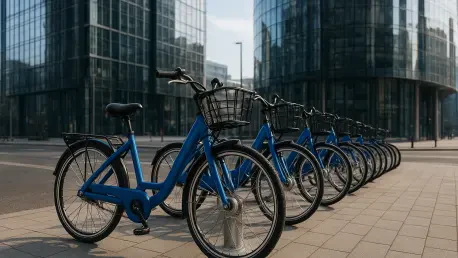

The pulse of Warsaw is no longer just felt in its bustling metro stations or glass-fronted skyscrapers but is now visibly carried across the city on the frames of its vast communal bicycle network. This shift marks a significant evolution in the Polish Out-of-Home advertising landscape, where traditional static billboards are increasingly supplemented by agile, street-level media. As the city matures into a high-tech hub, public information campaigns must compete with a barrage of commercial noise. Mobile formats, particularly those integrated into the city’s transport fabric, offer a unique solution by meeting the audience in their daily transit environments rather than waiting for them to look up at a distant horizon.
Central to this modern communication strategy is the European Funds for Mazovia program, specifically the 2026 to 2027 cycle, which aims to bolster regional development and infrastructure. The transition from massive, immobile roadside advertisements to dynamic public information units signifies a deeper understanding of urban psychology. By utilizing the Veturilo bike-sharing network as a primary medium, institutional branding is no longer a distant bureaucratic announcement but a tangible part of the city’s movement. This strategic alignment ensures that the message of regional growth is as active and energetic as the citizens it serves.
Strategic Dynamics of the #funduszeUEwruch Campaign
The campaign titled #funduszeUEwruch represents a sophisticated pivot in how public sector initiatives engage with the modern metropolitan resident. By moving away from the conventional reliance on fixed media, the program has embraced a strategy that prioritizes visibility in high-density corridors where pedestrian and vehicular traffic converge. This approach acknowledges that the modern consumer is increasingly mobile and tech-savvy, requiring messages that are both physically accessible and conceptually relevant to their immediate surroundings.
Emerging Trends in Fluid Geography and Experiential Advertising
One of the most compelling aspects of this campaign is its mastery of fluid geography, a concept that allows promotional materials to move freely through the urban grid. Unlike traditional posters that are bound by strict zoning laws and municipal placement restrictions, branded bicycles navigate the city naturally, appearing in residential courtyards, narrow cobblestone streets, and corporate districts alike. This mobility allows the European Union’s message to bypass the physical limitations of static media, creating an omnipresent yet non-intrusive brand experience that follows the natural flow of human activity throughout the day.
Furthermore, this medium aligns perfectly with the current emphasis on sustainability and the EU Green Deal. Using zero-emission bicycles as a communication platform reinforces the institutional commitment to eco-friendly progress, turning every commuter into a silent ambassador for green development. When a resident unlocks a Veturilo bike, they are not just engaging with a transit service but are interacting with a lifestyle brand that promotes health and environmental responsibility. This humanization of financial and bureaucratic messaging transforms cold data into a warm, relatable experience, bridging the gap between official policy and the personal values of the Warsaw public.
Market Performance and Spatial Reach Indicators
Evaluating the success of mobile OOH requires a look at the sheer saturation and frequency of impressions generated by the Veturilo network. With thousands of bicycles in circulation, the campaign achieves a level of visibility that static billboards rarely match, especially in the densely packed center of Warsaw. Data-driven insights suggest that these mobile units provide exceptional last-mile penetration, reaching individuals in quiet residential zones or park areas where commercial advertising is traditionally prohibited. This creates a blanket of ambient awareness, where the brand becomes a familiar sight in the periphery of the citizen’s vision, building long-term memory retention through repeated, low-friction exposure.
Market projections indicate that mobile OOH is becoming an essential tool for public sector transparency, particularly as traditional media costs rise and digital ad fatigue sets in. The ability to track the general movement of the fleet provides administrators with valuable spatial data, allowing them to assess which districts are seeing the most engagement. By maintaining a constant presence in high-traffic urban corridors, the campaign ensures that the progress of the 2026 to 2027 funding program remains a topic of public consciousness. This frequency of impressions is vital for institutional messaging, which often requires multiple touchpoints to overcome public indifference and foster a sense of collective regional pride.
Navigating the Complexities of Mobile Public Messaging
The primary challenge of advertising on moving objects is the limited window of exposure, as a cyclist may pass an observer in just a few seconds. To combat this, the campaign organizers employed high-contrast, minimalist creative designs that prioritize legibility over complexity. Navy-blue panels with stark white and yellow lettering ensure that the hashtag and the program logo remain identifiable even at a distance or in low-light conditions. This visual economy is a calculated response to the fast-paced nature of the urban environment, where the goal is to leave a lasting mental imprint rather than provide an exhaustive list of facts.
Maintaining a sense of institutional authority while using an informal medium like a bicycle also requires a delicate balance. The branding must look professional and official to maintain the credibility of the European Funds, yet it must also fit the casual, street-level aesthetic of the bike-sharing system. Consistency is managed through rigorous maintenance protocols, ensuring that the visual identity is not diluted by damaged panels or poorly placed stickers across the decentralized fleet. Strategy for message retention relies on the simplicity of the call to action, encouraging residents to recognize the hashtag and associate it with the ongoing regional improvements they see in their neighborhoods.
Regulatory Frameworks and Standards for Municipal Advertising
Operating within the legal framework of Warsaw’s local landscape resolutions is a critical component of any OOH campaign. These regulations are designed to protect the aesthetic integrity of the city, often placing strict limits on the size and location of commercial signage to prevent visual pollution. Mobile OOH on transit systems offers a compliant alternative, as these advertisements are integrated into existing public infrastructure rather than adding new, permanent structures to the skyline. By adhering to these municipal standards, the #funduszeUEwruch campaign demonstrates a respect for the city’s architectural heritage and public space.
Compliance with European Union branding guidelines is equally important, as every promotional activity funded by public resources must meet specific standards of visual identity and transparency. These guidelines dictate everything from the placement of the EU emblem to the font size of the funding disclaimer, ensuring that the source of the investment is always clear to the taxpayer. This accountability is central to the program’s mission, fostering trust between the governing bodies and the citizens. The security and maintenance of the advertising infrastructure are also integrated into the transit system’s daily operations, ensuring that the public investment in communication is protected from vandalism or wear.
The Future Landscape of Mobile OOH and Civic Engagement
The next phase of mobile OOH is expected to incorporate even more sophisticated digital integrations, such as GPS-enabled interactive elements that could provide real-time engagement data. While the current campaign relies on visual presence, future iterations may see the use of QR codes that lead to location-specific project updates, showing residents exactly how European Funds are being spent in their immediate vicinity. This level of transparency would revolutionize civic engagement, turning a simple bike ride into an educational journey through the region’s development history and its future goals.
Public-private partnerships will likely become the backbone of these city-wide informational campaigns, as municipal authorities seek sustainable ways to communicate with their constituents. As consumer preferences continue to shift toward sustainable transport, the surfaces of electric buses, trams, and bikes will become increasingly valuable real estate for high-impact messaging. The integration of technology and physical movement will likely dictate the next decade of urban communication, making the current Warsaw activation a vital case study for cities across the continent. This evolution will ensure that public funds are not just spent effectively but are also understood and appreciated by the people they are designed to benefit.
Synthesis of Mobile OOH Effectiveness in Regional Promotion
The synergy between the #funduszeUEwruch message and its physical medium established a new benchmark for how regional promotion functioned in a modern capital. The campaign bridged the gap between official policy and the daily lives of citizens by embedding information into a service that people relied on for their mobility. This approach successfully shifted the perception of European Funds from an abstract financial concept to a visible, moving force for progress. The use of the Veturilo network allowed for an unprecedented level of spatial reach, ensuring that the message reached a diverse cross-section of the population without the need for intrusive large-format billboards.
The implementation of this strategy provided a clear path forward for future institutional campaigns seeking to maximize their visibility through existing urban infrastructure. The findings indicated that mobile OOH was particularly effective at building a sense of community and shared purpose, as the bicycles became a common sight that united different districts under a single narrative of development. Warsaw acted as a successful testing ground for these innovative strategies, proving that when public communication was aligned with urban movement, it achieved a level of resonance that traditional media could not replicate. The project ultimately demonstrated that the most effective way to engage a modern audience was to become an active participant in their daily journey.